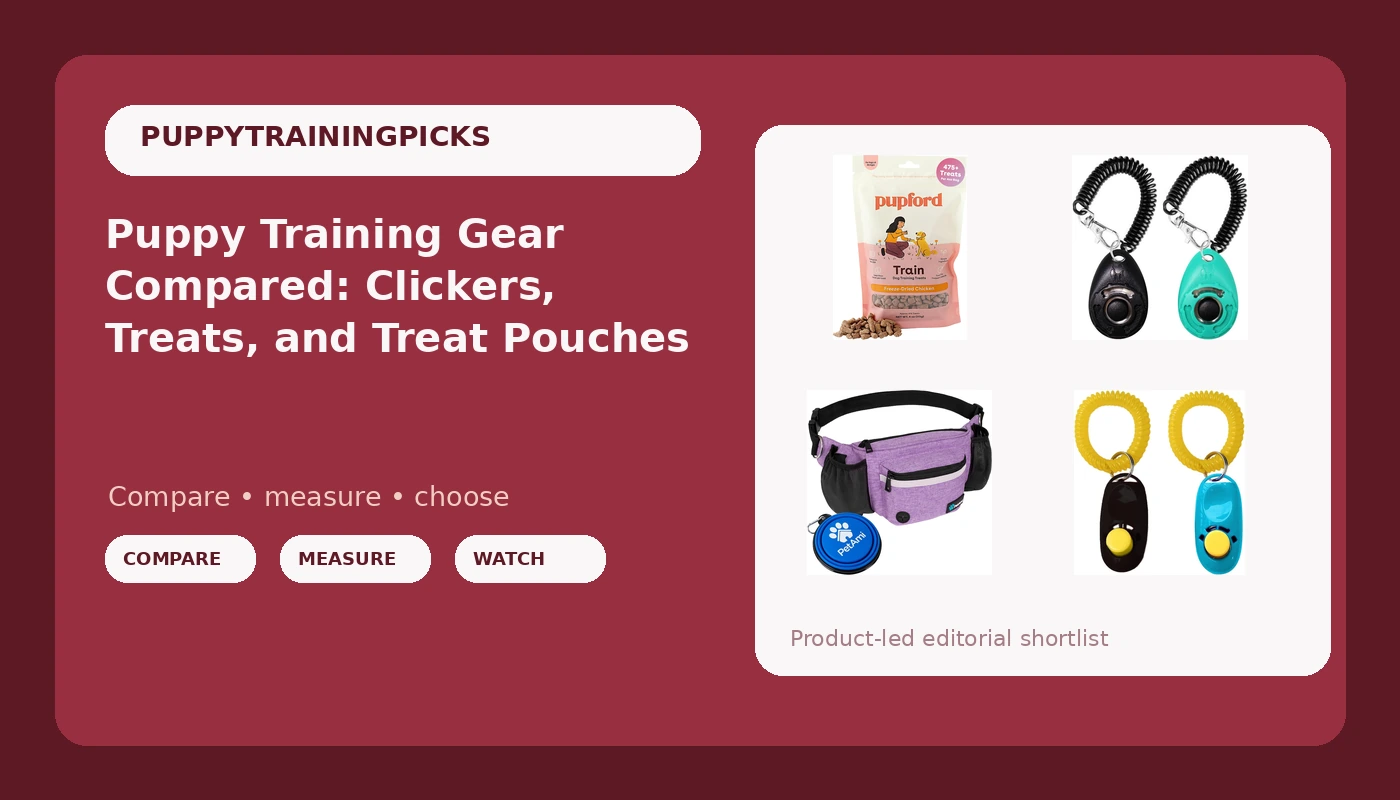
Four things show up in nearly every puppy class I run in Denver: a clicker, a bag of treats, something to carry those treats in, and an owner who left the first three in the car. This comparison covers the puppy training gear I get asked about most, two clicker sets, a bag of freeze dried training treats, and a treat pouch, and it explains what each piece actually does inside a real training session. None of it is magic. The tool is maybe ten percent of the work. But the right ten percent removes friction, and friction is what kills practice in week three.
If you only buy one thing, buy a clicker. The combination I would hand a first-time owner is the OYEFLY clicker two-pack plus the Pupford freeze dried treats, with the PetAmi pouch added once you know you will actually carry rewards on walks.
Here are the four products side by side, with what each one does well and where each one leaves you on your own.
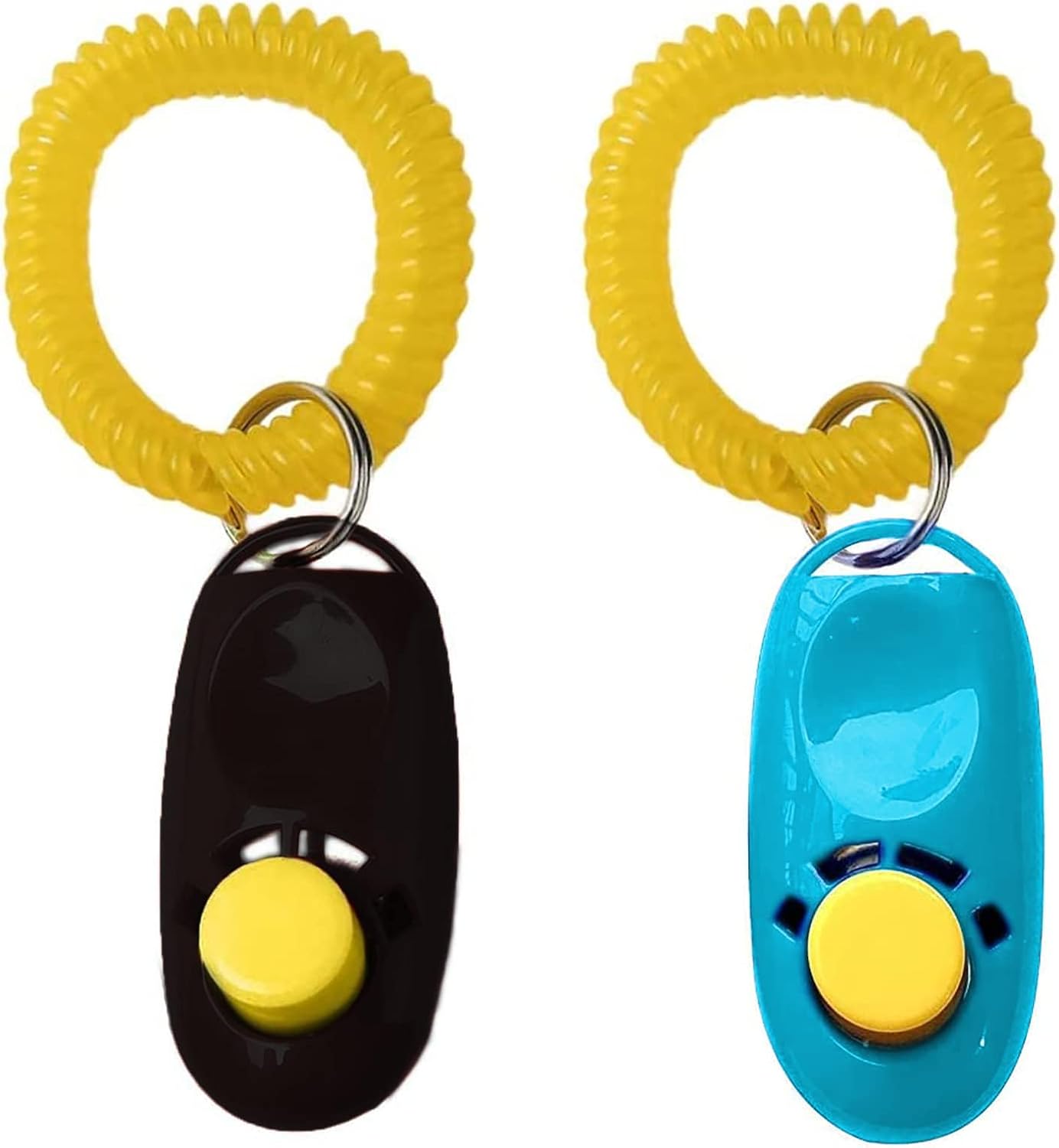
SunGrow 2-Pack Dog Clicker for Training with Wrist Bands
Two clickers with wrist bands, so one can live in the kitchen and one in your walking bag. Multicolor pair is easy to tell apart in a two-person household.
No training instructions included, and the simple button means you build your own timing habits from scratch.
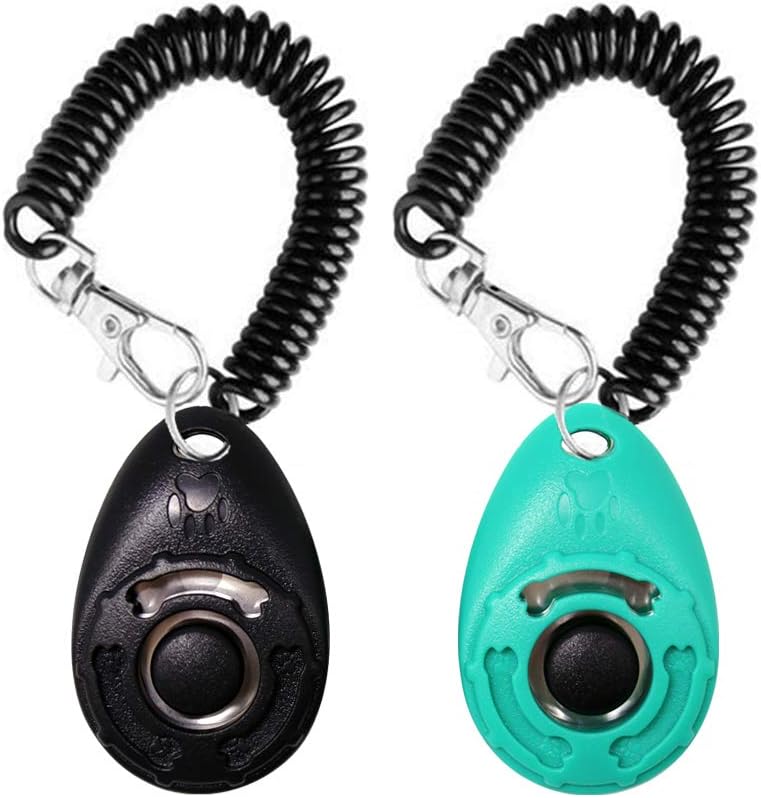
OYEFLY Dog Training Clicker with Wrist Strap, 2-Pack
Also a two-pack, with a wrist strap on each clicker and a lightweight body that suits small hands as well as large ones.
The wrist strap is the whole feature set, so click loudness and button feel are things you discover only after it arrives.
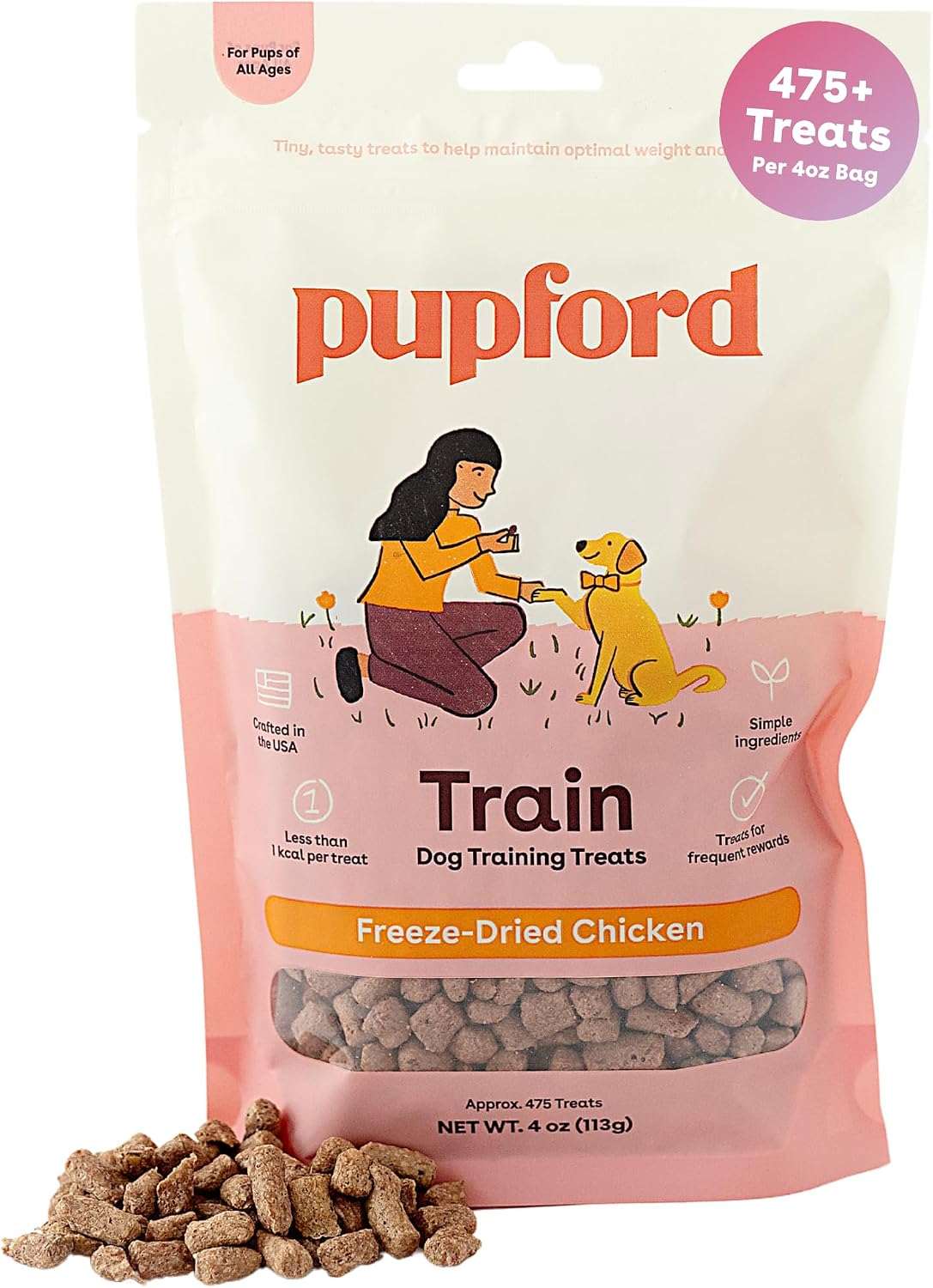
Pupford Freeze Dried Training Treats for Dogs & Puppies, Chicken, 4 oz
Freeze dried chicken that snaps into small pieces, which is exactly what a session with twenty repetitions demands.
Crumbles in a jacket pocket, so it really wants a pouch, and a 4 oz bag disappears faster than new owners expect.
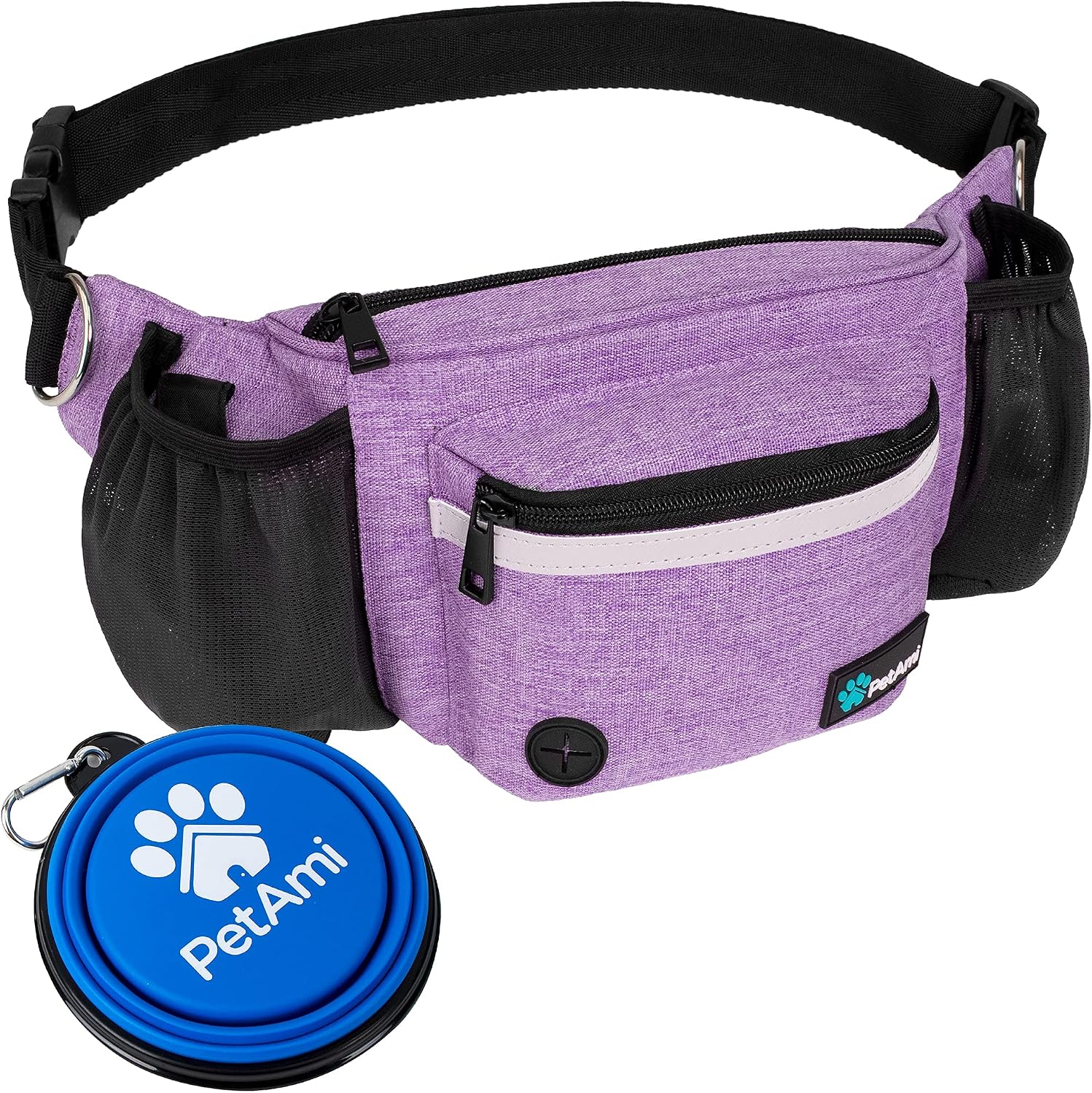
PetAmi Dog Fanny Pack, Treat Pouch for Dog Walking Training, Purple
A wearable pouch designed around training walks, so your hand can find a reward without digging through a coat.
It is purple, it is a fanny pack, and a listing photo will not tell you whether the opening suits the size of your hand.
Prices and availability were captured from Amazon Creators API and may change.
What each piece of gear actually does
A clicker is a marker, not a reward. The click does not teach your puppy anything by itself. It marks the exact instant a behavior happened, and the treat that follows tells the puppy that the click was worth something. That is why the order matters: click first, treat second, every single time, and keep the gap between them short enough that a puppy can connect them.
Treats are payment, not bribery. The problem in most households is never that treats were used. It is that treats were never faded. You pay for a new behavior generously at the start, then you move to a variable schedule, then you replace food with praise and play for behaviors your dog already knows cold. Owners who skip that last step are the ones who tell me their dog only listens when food is visible.
A pouch is a delivery system. The click has to land inside a second of the behavior, and your hand has to find a treat inside a second of the click. If you are unzipping a bag or patting down four pockets while your puppy wanders off, you are training your puppy that the click is meaningless. A pouch solves a timing problem, not a storage problem.
The two clicker sets
Both clicker options here are two-packs, and I want to explain why that matters more than it sounds. A single clicker gets left in the car, or in the pocket of the coat you are not wearing, or on the kitchen counter under a stack of mail. Two clickers means one stays in the room where you do most of your reps and one travels. In a household with two people training the same puppy, two clickers also mean two people can mark behavior without passing anything back and forth, and two colors make it obvious whose is whose.
The OYEFLY set gives each clicker a wrist strap. That is the feature I care about most, because it lets you hold a treat in the same hand that is wearing the clicker, which shortens the gap between mark and reward. It is described as durable and lightweight, which is what you want in something that lives on a wrist during a walk.
The SunGrow set uses wrist bands instead of a strap and ships as a multicolor pair. The practical difference between the two sets is small, and honestly the click sound and the button resistance are the two things that decide whether a clicker works for your hand. Neither listing will tell you that. If you have a strong preference for a softer or louder click, order one set, use it for a week, and decide before you buy a second.
One warning I give every class: a clicker sold without instructions is a pet peeve of mine, because the tool is useless if you pair it wrong. Charge the clicker before you use it anywhere real. Ten reps of click and treat, in your kitchen, with no behavior attached, at a distance where your puppy notices what you are doing but is not excited about it. That is your threshold for a first session.
The treats
Pupford's freeze dried chicken is built for the way training actually works. Freeze dried treats snap instead of squishing, so you can break one piece into three or four pea-sized rewards, and a single piece carries you through several repetitions. For a puppy learning something new, that matters. A treat the size of a golf ball is not a reward, it is a meal, and you will blow through a puppy's daily calorie budget in one session.
Chicken as the primary protein is a reasonable default for most puppies, though not for every one. If your puppy has a sensitive stomach or a known poultry issue, this is not the bag to gamble on. The other trade-off is texture: freeze dried product crumbles, so a pocketful of it turns into powder, and powder is hard to deliver quickly. That is the honest case for pairing it with a pouch rather than carrying it loose.
One more thing about freeze dried treats in general. Because they are light and dry, they are easy to overfeed without noticing. Count them. A training session with thirty reps is thirty rewards, and that has to come out of dinner, not on top of it.
The treat pouch
The PetAmi fanny pack is the piece of gear that makes the other three usable on an actual walk. It is designed as a treat pouch for walking and training, worn on the body rather than clipped to a belt loop, and the purple color means you will not lose track of it in a pile of gear.
What I would check before committing: the size of the opening. Your hand needs to enter and exit without looking, and without scraping your knuckles. Second, whether the liner wipes clean, because freeze dried crumbs and soft treats both leave residue. Third, the belt fit over the layers you actually wear in winter, which in Denver is not a small consideration. None of that is knowable from a product photo, which is why I tell owners to test a pouch with a handful of dry kibble before a real walk.
If you never train outside your living room, skip the pouch. Buy the clicker and the treats, keep a small bowl on the counter, and save the money. A pouch only earns its place when you are training on sidewalks, in parks, and in the ten minutes before your puppy gets bored.
How I would sequence the purchases
Buy the clicker first. It is the cheapest part of the whole setup and it is the part that changes how your puppy learns, because it gives you a way to communicate that does not depend on your voice or your mood. Charge it, practice your timing on a stuffed animal, and use it for one new behavior before you try anything else.
Buy the treats second, and buy them in a size that lets you reward a lot without overfeeding. Buy the pouch third, once you know you are walking and training at the same time. That order also spreads the cost out, which matters more than any of these individual products.
What I would not do is buy all four at once and assume the gear is the plan. The plan is twenty repetitions a day, five days a week, with a marker, a reward, and a trainer who quits while the puppy is still winning. The gear just makes that easier to repeat.
Questions I get from new owners
Do I need two clickers? No, but you will want two. One stays where you train, one travels, and a spare costs less than the gas you burn driving home for the one you forgot.
Are freeze dried treats okay for a young puppy? For most puppies, yes, in small pieces counted against daily food intake. Ask your vet if your puppy has a sensitive stomach or a food allergy.
Can I use a clicker without treats? At the start, no. The click has to be paired with something the puppy wants before it means anything. Later, once a behavior is solid, you fade the food and keep the click or replace both with praise.
How long does the clicker stay in the picture? As long as you are teaching something new. It is a teaching tool, not a permanent leash on your relationship with your dog.
Bottom line
The OYEFLY two-pack and the Pupford freeze dried chicken are the two pieces I would buy first, because together they cover marking and payment, which is the entire foundation of clicker training. The SunGrow pair is a fine alternative if you want a multicolor set with bands instead of straps, and the difference between the two clicker packs is small enough that either one gets you started. Add the PetAmi pouch when your training moves outdoors, and treat it as a timing tool rather than a fashion purchase. Then put the gear in a drawer, practice for five minutes, and let your puppy tell you what still needs work.