I have been a professional dog trainer for seven years, and for the last four I have run a puppy kindergarten that graduates more than 30 puppies a month out of a church basement in Denver. That means I have watched hundreds of first-time owners walk in with a bag of gear they bought at 11 p.m. after a rough night, and I have watched most of that gear fail by week six. This puppy training gear comparison is the short list I actually hand to clients: a clicker with a target stick, a no-pull harness, a plain nylon collar, and a set of potty door bells. Four tools, and only one of them does the actual teaching.
If you buy one thing, buy the clicker with the target stick. It is the least expensive item here and the only one that teaches your puppy how to learn rather than managing a symptom. The harness manages pulling, the bells manage potty signaling, and the collar holds a tag. None of them replace a marker and a plan.
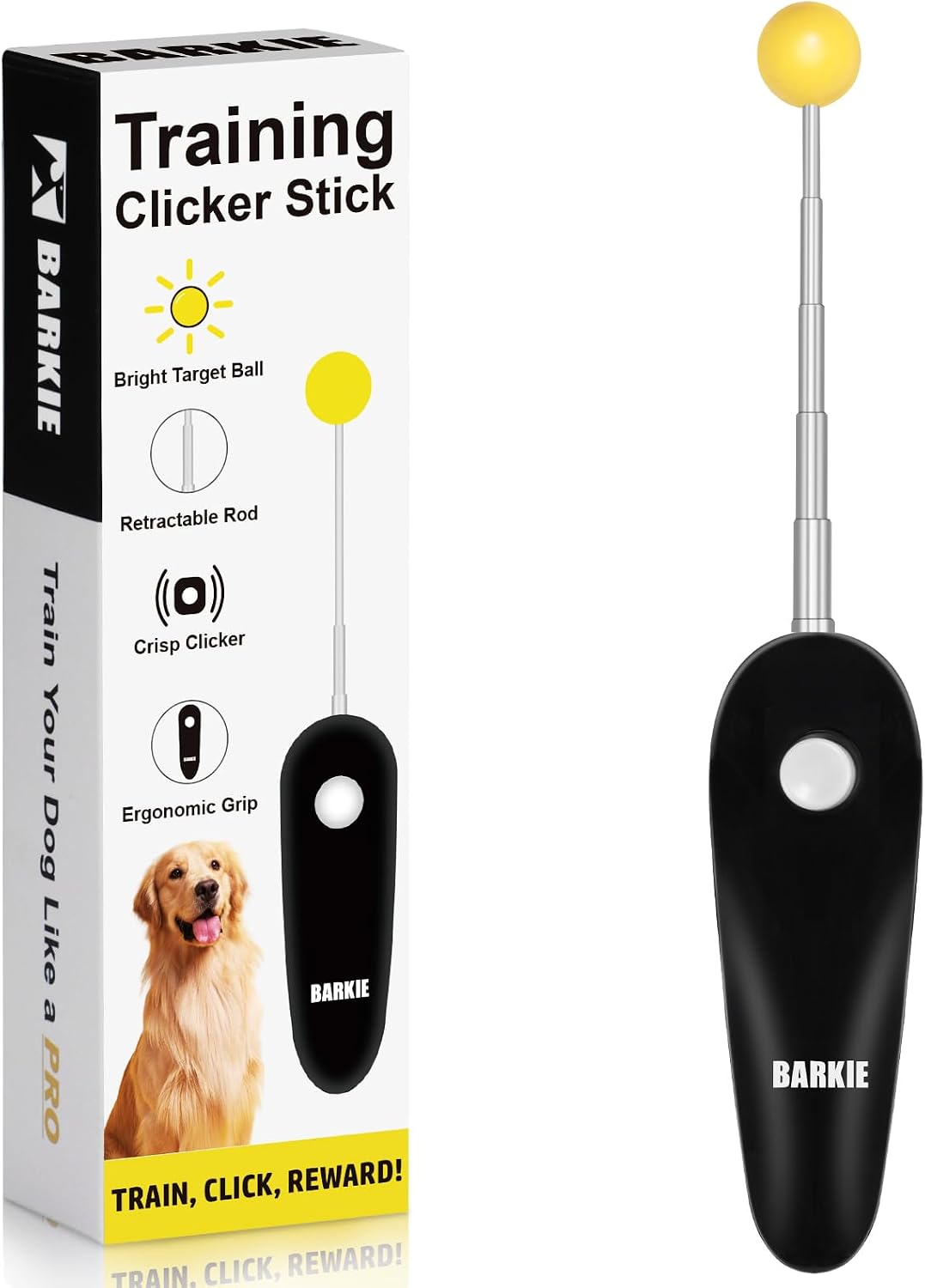
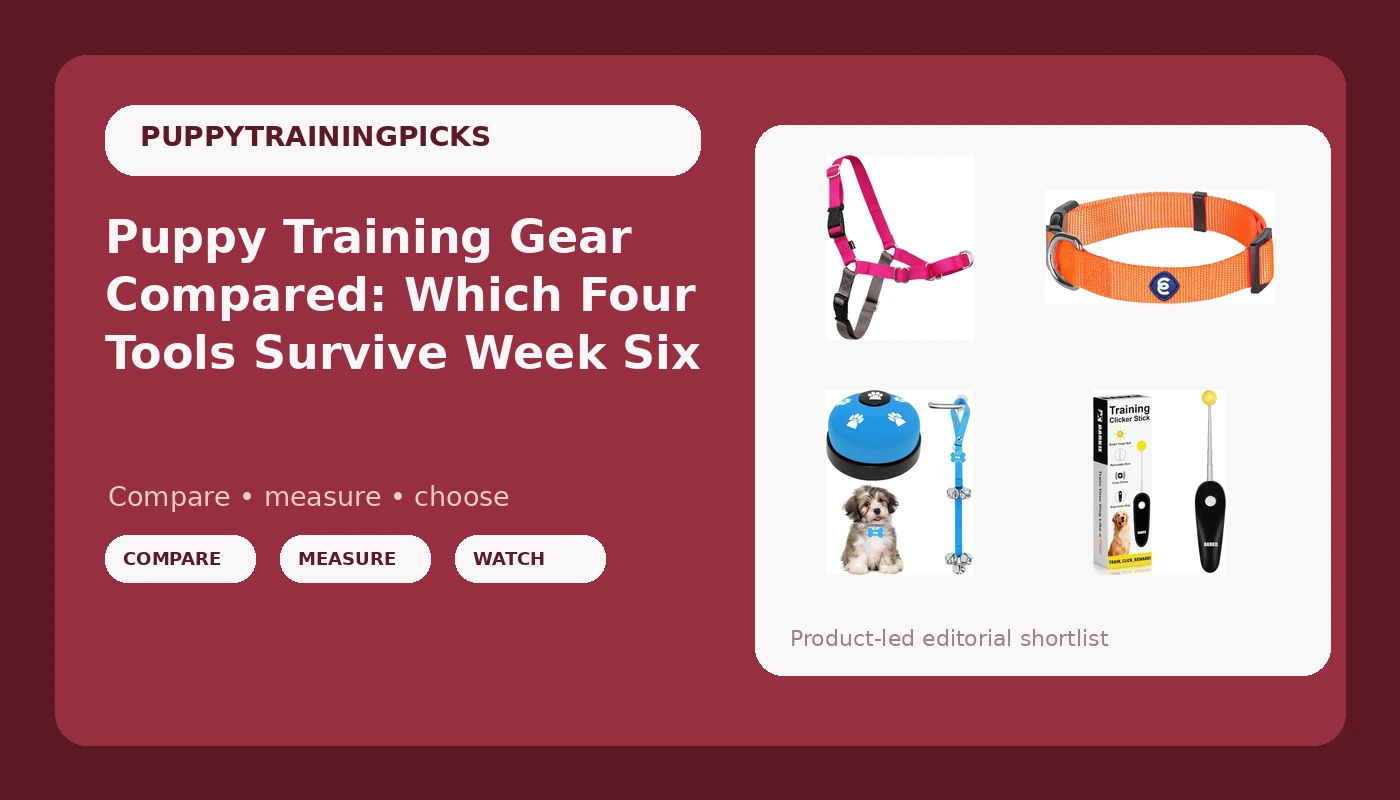
Dog Training Clicker with Target Stick
The target stick turns luring into real targeting, which is the foundation for crate, mat, and vet exams
Retractable cord tangles in new hands, and the handle is sized for adults
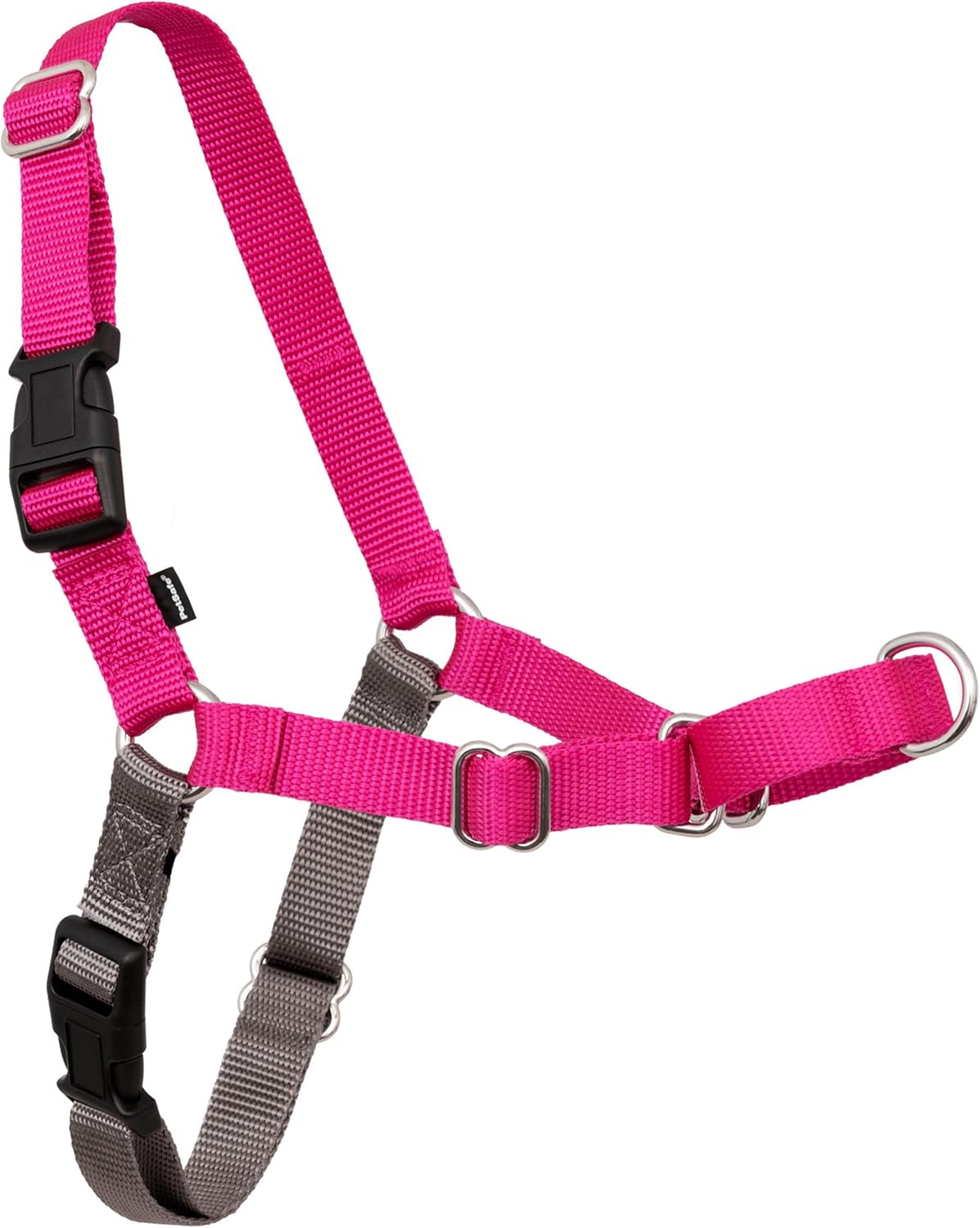
PetSafe Easy Walk Harness, No Pull, Medium, Raspberry
Front clip turns a pulling puppy back toward you instead of letting him lean into pressure
Fit is unforgiving, and it is management, not a training plan
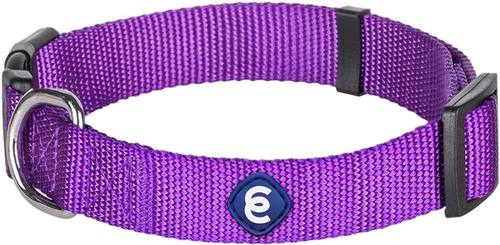
Blueberry Pet Essentials Adjustable Nylon Collar for Small Dogs, Orange
Holds a tag with your phone number, which is the one piece of gear that gets a lost puppy home
Not a training tool, and owners keep trying to use it like one
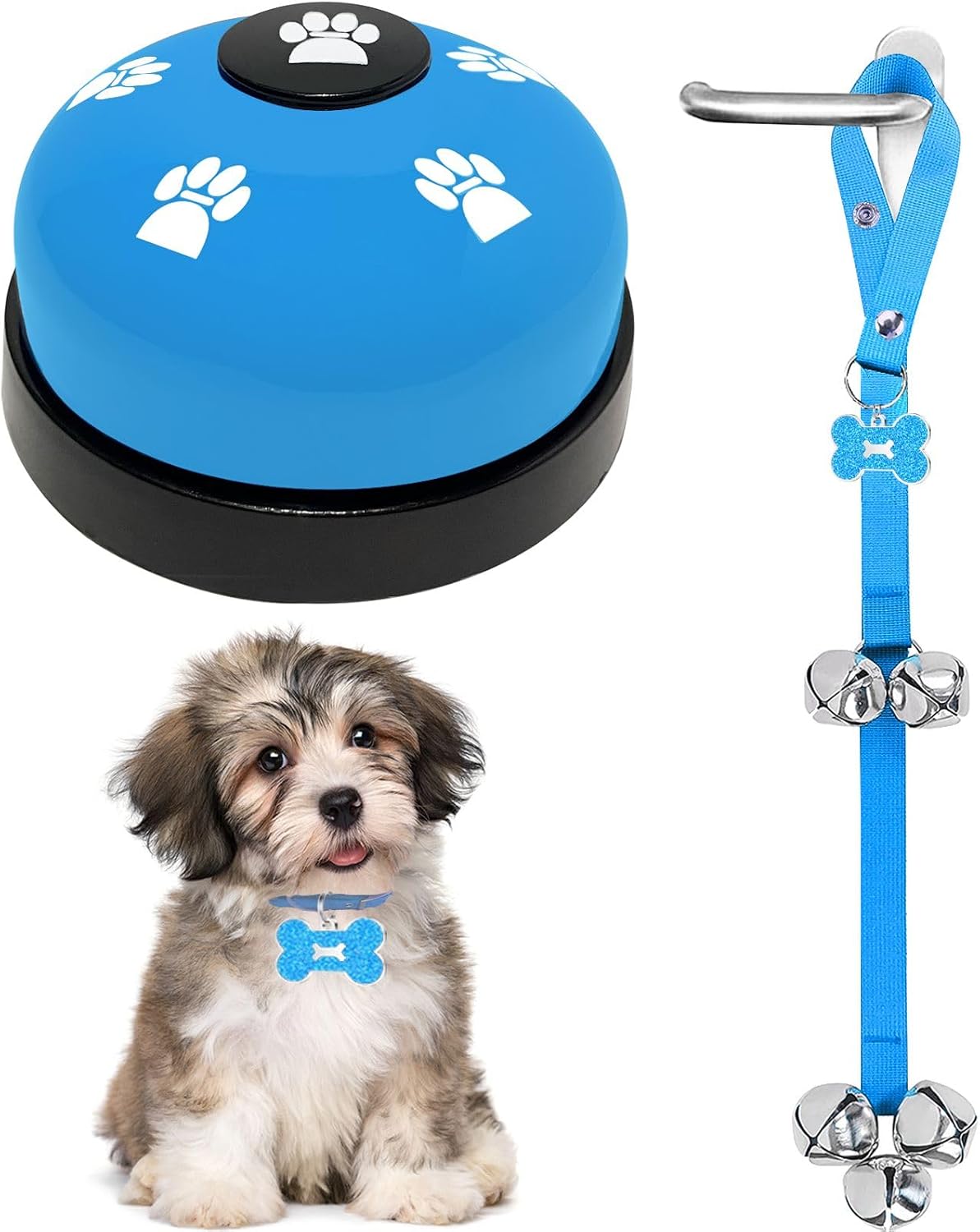
2 Pcs Dog Door Bells for Potty Training, LightBlue
Captures a potty signal your puppy can actually give you from across the room
Only works if you ring it every single trip outside
Prices and availability were captured from Amazon Creators API and may change.
How I test puppy training gear
Every tool in this article goes through the same eight-week structure my classes use. Real puppies, real distracted sidewalks, real owners who do not practice between sessions. I do not review anything after one session with one puppy, because one session tells you nothing except how that puppy felt that particular morning.
My filter for a new product is four questions. Does it rely on pain or fear? Can a first-time owner use it correctly without a class? Does it survive week six, when the puppy has opinions and the attention span of a teenager? Would I put it in my own class bag? Two of these four items are in that bag right now. The other two are situational, and I will tell you exactly when each one earns its place.
The clicker with target stick: the cheapest tool that changes everything
A clicker is the best small purchase in dog training, and almost nobody uses it past day three. The reason is not that clickers fail. The reason is that owners click without charging the clicker first, or they click late, or they click and forget to pay. The tool is 10 percent of training. Timing, consistency, and practice are the other 90 percent.
What makes this set worth recommending is the target stick. Targeting is the most useful single behavior you can teach a puppy, because "touch this" becomes "go to your mat," which becomes "get in the crate," which becomes "stand still on the scale at the vet." A bright target ball on a retractable stick lets you move the target away from your body instead of luring with food in your hand. That distinction matters more than it sounds. Luring with food teaches the puppy to follow your hand. Targeting teaches the puppy to follow an object, and objects do not smell like chicken.
Two things I would change. The retractable mechanism is a convenience, not a necessity, and a first-time owner can absolutely get tangled in it during the first session. The handle is comfortable for adult hands, which is a problem if you have a nine-year-old in the house doing the clicking. Neither issue is a dealbreaker, and both are solved by slowing down. Visit on Amazon →
The criticism I will level at clickers generally: they are sold without instructions, and a clicker without a charging plan is a plastic noisemaker. Charge the click first. Ten clicks, ten treats, no behavior required. If you skip that step, the clicker teaches your puppy nothing and you will blame the tool.
The PetSafe Easy Walk harness: for necks that are still developing
This is the no-pull harness I recommend most, and I have recommended it for years. The design puts the leash attachment on the chest, so when your puppy pulls, the front clip turns him back toward you instead of letting him lean into the pressure. That is the whole trick, and it works on the vast majority of puppies the first time you put it on. Visit on Amazon →
Two honest notes. First, sizing matters more than brand loyalty here. A harness that is too loose will slide and rub the armpits raw, which is one of my pet peeves and one of the most common reasons owners give up on harnesses entirely. Measure the girth behind the front legs, not the neck, and check the fit again after two weeks, because puppies change shape fast. Second, a front-clip harness is a management tool, not a training plan. It stops the pulling while you teach loose-leash walking. If you never teach the behavior, you will be using the harness forever.
I would not put this on a puppy under about 12 weeks. The straps are built for a dog with some chest structure, and a tiny puppy will swim in even the smallest size. For a medium-sized adolescent in the middle of a pulling phase, it is the best option I have found, and it is far kinder than anything that tightens around the throat.
The Blueberry Pet nylon collar: identification, not training
A collar does one job: it holds a tag with your phone number. That is not a small job. The most common thing I hear from owners who lose a puppy is that the puppy slipped out of a gate with no identification on. This adjustable nylon collar in a solid color does that job well for a small dog. Visit on Amazon →
What it is not is a training tool. I see owners use a collar and leash to correct pulling, and I want to be clear about this: leash pops on a flat collar are aversive, they are delivered late almost every time, and they teach a puppy that walking near you is unpredictable. If you want to stop pulling, use the harness. If you want a place to hang an ID tag and a rabies tag, use the collar.
The other practical note is fit. You should be able to slide two fingers under a collar, no more. A collar loose enough to slip over the head is a collar that will slip over the head at the worst possible moment. Because this one is sized for small dogs, check the measurement against your puppy's actual neck before you order, since "small" means very different things to different brands.
The door bells: a potty signal that works if you use it right
Potty training is where most of my clients' frustration lives, and door bells are the tool that surprises them most. The concept is simple. You hang the bells on the door knob, you ring them with your puppy's nose or paw every time you take him out, and eventually he rings them to tell you he needs to go. This is capturing at its most practical. You are not forcing a behavior, you are marking one your puppy is already doing at the door. Visit on Amazon →
The reason this works is consistency, and the reason it fails is also consistency. If you ring the bells on the way out sometimes and just open the door other times, the puppy never learns the connection. If you ring them and then stand in the yard for ten minutes while he plays, you have taught him that bells mean outside time, not potty time. Take him out on a leash, go to the same spot, wait, pay, come back inside. Boring is the point.
One warning that matters more than any product review: some puppies learn to ring the bells for a walk, a sniff, or attention, not because they need to pee. If your puppy rings and produces nothing twice in a row, take him out on a leash, give him two minutes, and come back inside. Do not turn the bells into a vending machine.
And this is not a knock on this particular set, but the bells are a signal, not a solution. If you are using pee pads, you are teaching your puppy that indoors is a bathroom, and the bells will not fix that. Skip the pads entirely if your goal is outdoor potty training.
Trade-offs: what you actually get here
Here is the honest ranking for a first-time owner with an eight-week-old puppy. Buy the clicker with the target stick first, because it teaches you how training works. Buy the collar second, because identification is a safety issue and not optional. Buy the harness when your puppy hits the pulling phase, usually somewhere around 14 to 18 weeks, and measure before you order. Buy the bells when you start potty training in earnest, which should be day one, and hang them at a height your puppy can reach from the floor.
What none of these four items will do is train your puppy for you. I have watched owners buy every tool in this article and still end up with a six-month-old who pulls, jumps, and pees in the hallway. I have also watched owners buy nothing but a clicker and a bag of small soft treats and end up with a puppy who walks nicely and rings a bell at the back door. The difference was never the gear.
The two things I would skip entirely, if you are wondering: anything with a vibration or shock setting marketed for puppies, and any program that promises results in seven days. There is no version of the first that is okay, and the second is a promise no trainer can make, because training is a timeline, not a guarantee.
What I'm testing next
My current project is a treat and leash comparison: eight brands of training treats and six leashes, run through 30 puppies and a distraction test at a busy park, because most treats fail by session two. Soft, small, and swallowable beats fancy every time, and I have opinions about which ones hold a puppy's attention past the first five reps.
The other thing on my bench is a 15-foot long line for recall work with adolescent dogs. Recall is the behavior that keeps puppies alive, and most owners never practice it outside a fenced yard. When that review lands, it will come with the same rule I give every class: no tool works unless you pick it up and use it, on a schedule, with a puppy who thinks you are the most interesting thing in the room.