Puppy training gear is the easy part to buy and the hard part to buy well. A harness that fits a twelve-week-old puppy at the first fitting can rub the shoulders raw by month four. The leash you grab for a midnight potty break is not the leash you want on a busy sidewalk. And the treat pouch that looked like a great idea ends up in a drawer because nobody ever charged the clicker that came with it.
This guide is about the puppy training gear worth putting in your cart for the first six months: a no-pull harness built for training work, two Ruffwear leashes in different lengths, a wearable treat pouch with a clicker and a water bowl, and a set of doorbells for potty training. Each pick below is described by what the maker lists about it, so you can match the tool to the job you are actually doing this week instead of the job you pictured on adoption day. The tool is maybe ten percent of training. The rest is timing, repetition, and showing up. Gear just decides whether the other ninety percent is easier or harder.
Related: Puppy Potty Training Schedules That Actually Work
Quick answer
The Blue-9 Reflective Buckle-Neck Balance Harness is the strongest fit for no-pull leash training and everyday walks because it is built with a fully customizable fit, a buckle at the neck so it goes on without sliding over the head, and 3M reflective stitching for low-light walks, and it is made in the USA. Choose the Jalousie Dog Training Pouch instead when your priority is keeping treats, a clicker, and a water bowl on your body during short, high-repetition sessions.
Puppy training gear worth comparing
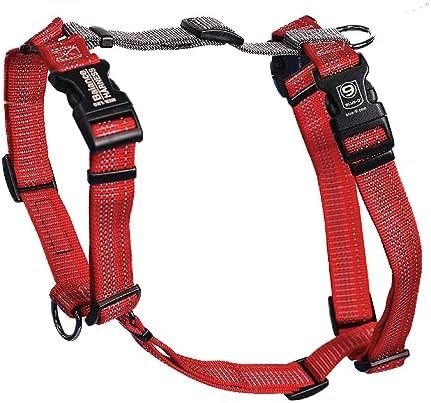
Blue-9 Reflective Buckle-Neck Balance Harness, Fully Customizable Fit No-Pull Harness with 3M Reflective Stitching, Ideal for Dog Training and Obedience, Made in The USA, Red, Medium/Large
A no-pull balance harness with a fully customizable fit, a buckle at the neck so it goes on without being pulled over the head, and 3M reflective stitching. Made in the USA, sized Medium/Large in red.
Visit on Amazon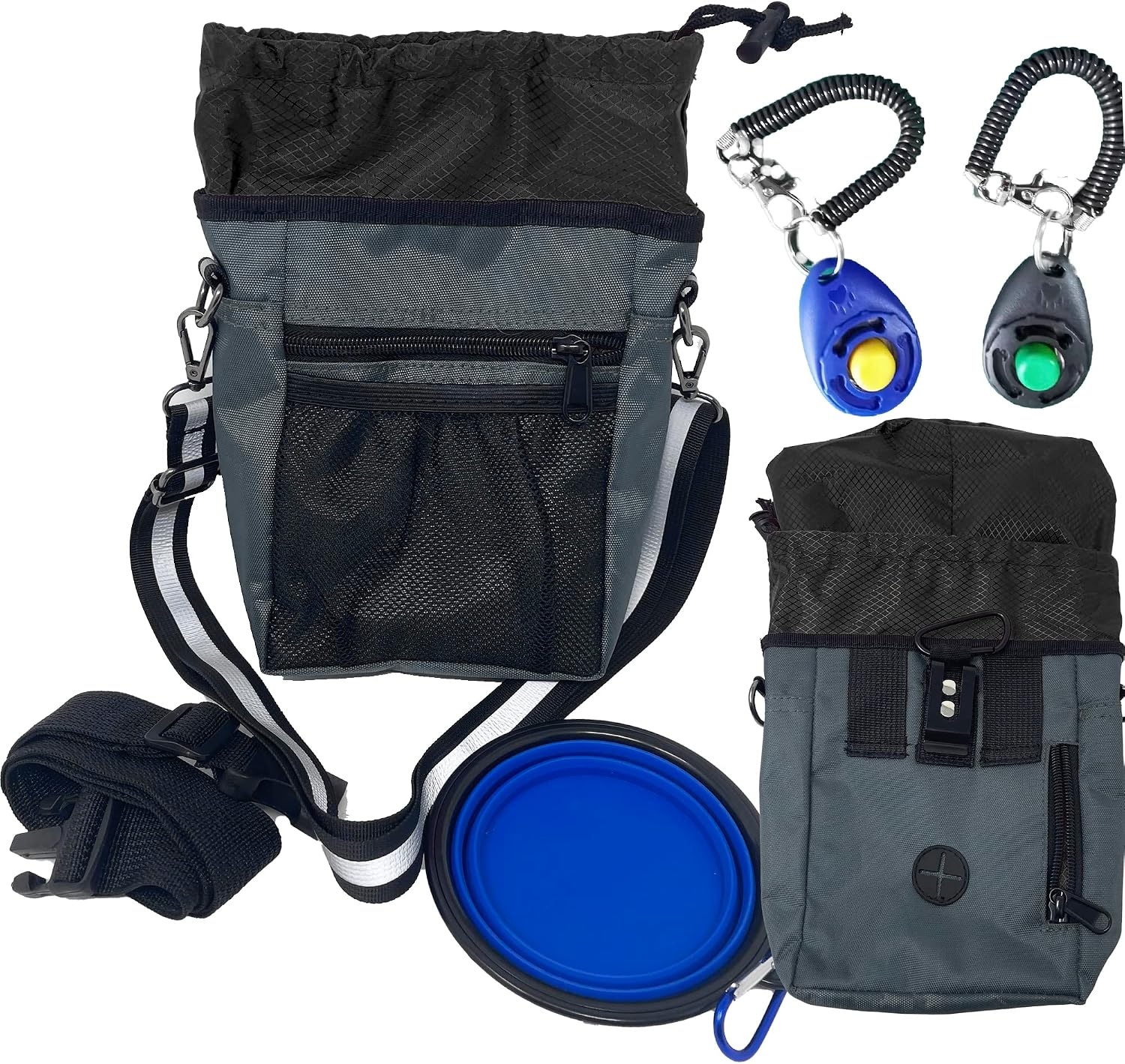
Jalousie Dog Training Pouch with Training Clicker and Water Bowl - 5 Ways to Wear - Carry Toys, Treats for Positive Reinforcement - Built-in Poop Bag Dispenser (Grey)
A wearable training pouch that carries toys and treats, includes a training clicker and a water bowl, can be worn five different ways, and has a built-in poop bag dispenser.
Visit on Amazon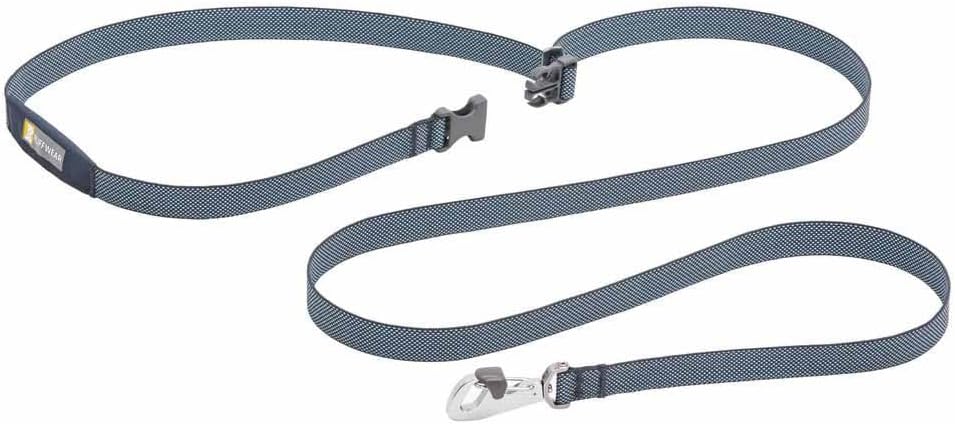
Ruffwear, Flagline Dog Leash, Lightweight 6.5 ft Lead, Basalt Gray
Check current Amazon price
A lightweight 6.5 ft lead in Basalt Gray, long enough to give a puppy room to sniff on decompression walks while keeping a hand on the other end.
Visit on Amazon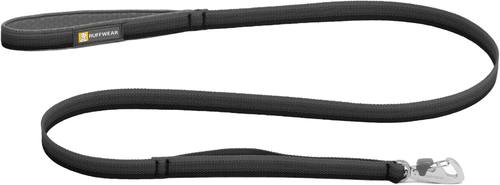
Ruffwear, Front Range Dog Leash, 5 ft Lead, Basalt Gray
Check current Amazon price
A 5 ft lead in Basalt Gray, the shorter everyday length for close leash manners, sidewalk training, and quick potty trips.
Visit on Amazon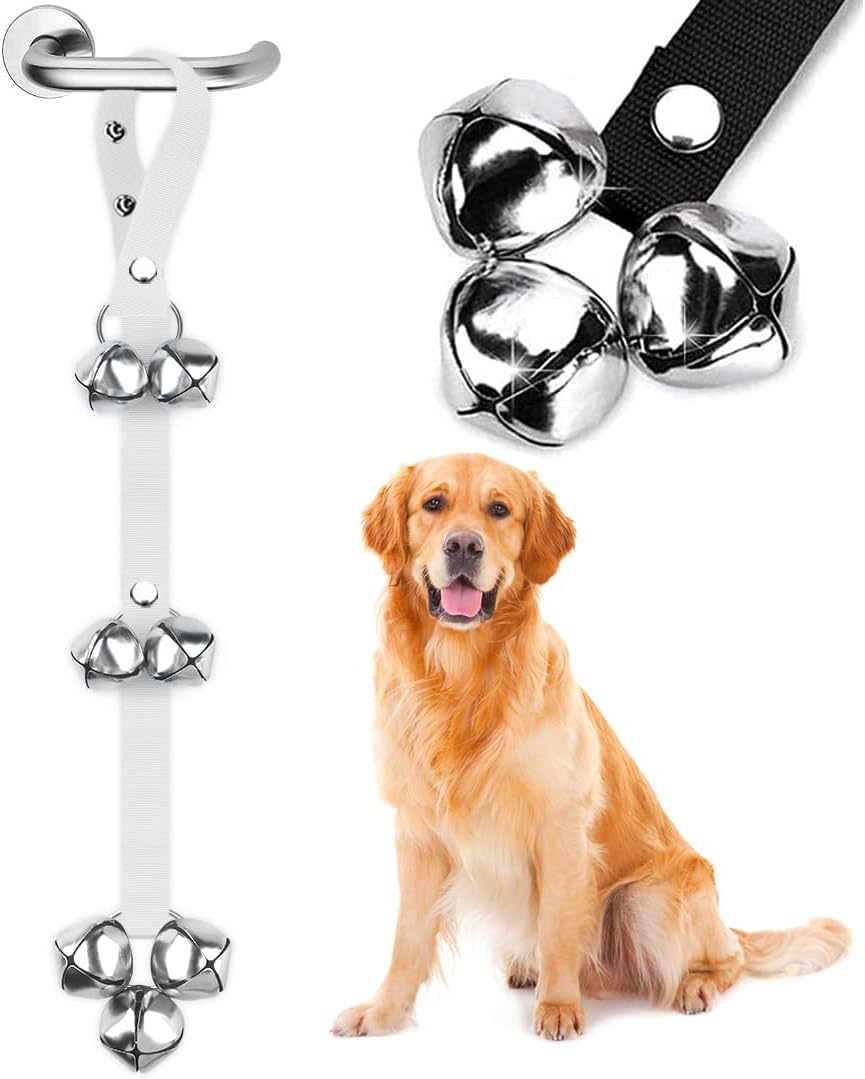
BLUETREE Dog Doorbells Premium Quality Training Potty Great Dog Bells Adjustable Door Bell Dog Bells for Potty Training Your Puppy The Easy Way - 7 Extra Large Loud 1.4 DoorBells
Seven extra large, loud doorbells on an adjustable strap, hung at the door so a puppy can ring to ask for a potty break instead of pacing or whining.
Visit on AmazonPrices and availability may change. Check the retailer for current details.
How these products were compared
This guide compares fit and adjustability, hardware and construction, how well each item supports reward-based training, how easily a first-time owner can use it correctly without a class, and the care each item needs. Product names, images, and retailer links are matched by product code so that every card points to the product shown. No pick here depends on a current price, because prices move; the cards link out to the retailer for the details that change week to week.
How to choose the right puppy training gear
Start with fit, because fit decides whether the gear gets used at all. Measure your puppy's girth at the widest point behind the front legs, then measure again every few weeks, since puppy bodies change faster than owners expect. A harness with a fully customizable fit at multiple points is worth the extra minute of adjustment, especially for a puppy who is still filling out. Look for a buckle at the neck if your puppy dislikes having straps pulled over the head, which is most of them. And check the armpit area before you commit. A harness that sits too low or rubs under the front legs creates a dog who slows down, sits, or chews at the straps every time you pick it up, and that is a training problem you manufactured with a sizing mistake.
Then match the leash to the walk you actually take. A 5 ft lead is the working length: close enough for sidewalk training, threshold work at the front door, and quick potty trips in the yard. A 6.5 ft lead gives a puppy room to sniff, and sniffing is decompression, which does more for behavior than most owners give it credit for. If you are buying one leash, buy the shorter one first and treat the longer one as the upgrade.
Finally, think about what you can carry. Treats and a clicker have to be reachable in under two seconds, or the timing that makes reward-based training work falls apart. That is the whole argument for a wearable pouch, and it is a stronger argument than any feature list. If your potty routine is still forming, pair the doorbells with a written schedule rather than hanging them and hoping.
Blue-9 Reflective Buckle-Neck Balance Harness
The Blue-9 Balance Harness is a no-pull harness designed around training and obedience work, and the details reflect that. The fit is fully customizable across multiple adjustment points, which matters for a puppy whose measurements change monthly. The buckle sits at the neck, so the harness opens, wraps around the chest, and closes, instead of being pulled down over the head, a small thing that makes a real difference with head-shy puppies. The 3M reflective stitching runs through the webbing for visibility on early morning and late evening walks. It is made in the USA and offered in red in Medium/Large.
The trade-off is adjustment time. A harness with this many points of fit takes longer to dial in the first time, and it needs rechecking as your puppy grows, because a harness that fit in March can be snug by May. It is also sized Medium/Large, so it is not the pick for a toy breed puppy at eight weeks. Plan on a few minutes the first time you put it on, check the fit with a little slack at the chest, and then recheck it weekly until your puppy's growth slows down. A harness that is correctly fitted is the one your puppy stops noticing.
Alternatives to consider
The Jalousie Dog Training Pouch is better suited to short, high-repetition training sessions, because it puts the reward where you need it: it carries treats and toys, includes a training clicker and a water bowl, can be worn five different ways, and has a built-in poop bag dispenser for the walk that turns into a training session. The Ruffwear Flagline Dog Leash is a stronger fit when you want a longer lead for sniff walks and decompression time, at 6.5 ft and lightweight in Basalt Gray, so it does not weigh down a small dog or drag through wet grass.
The Ruffwear Front Range Dog Leash and the BLUETREE Dog Doorbells cover the other two jobs. The 5 ft Front Range lead is the everyday working length for close leash manners, sidewalk practice, and potty runs. The doorbells hang on an adjustable strap and use seven extra large, loud bells, so a puppy can ask to go out with a nose or a paw instead of pacing, whining, or having an accident beside the door. The bell is a communication tool, not a house training shortcut.
Day-to-day use and maintenance
Gear that lives outdoors needs a routine. Rinse the harness and leash webbing with plain water when they get muddy, then air dry them away from direct heat. Harnesses sit against skin, and grit left in the webbing is what turns a good fit into a rub. Check stitching, buckles, and the leash clip every couple of weeks, especially with a puppy who is still mouthing everything, and retire anything with frayed webbing or a clip that no longer snaps shut positively.
Treat pouches have their own upkeep. Empty them after sessions, wipe the inside, and wash out the water bowl. Crumbs and residue turn into a pouch that smells like old cheese and a puppy who is more interested in your hip than in you. The doorbells need almost nothing beyond a quick wipe and a check that the strap is still snug at a height your puppy can reach with a nose or a paw. Move it up as the puppy grows, or you will get a dog who rings it by accident every time he walks past.
A few safety notes apply across the board. Do not leave a harness on a puppy unsupervised, since straps can catch on crate bars or furniture. Introduce new gear in a low-distraction room with treats before you take it out on a real walk. If a piece of gear makes your puppy freeze, tuck his tail, or refuse to move, the fit or the introduction is wrong, not the puppy. And skip anything that relies on pain or fear to work. There is no version of that which is okay, at any age.
Buying checklist
- Measure your puppy's girth at the widest point behind the front legs, and remeasure monthly.
- Choose leash length based on the walk you take most often rather than the occasional hike.
- Confirm that the exact model includes the feature you need, such as a buckle neck, reflective stitching, or a built-in bag dispenser.
- Read the cleaning and maintenance instructions before the first muddy walk.
- Verify the current retailer price, availability, and return terms.
Final recommendation
Choose the Blue-9 Reflective Buckle-Neck Balance Harness when you want one piece of training gear that will carry you from leash introduction through loose-leash work, with a fit you can adjust as your puppy grows. Choose the Jalousie Dog Training Pouch when your sessions are short and reward-heavy and you want treats, a clicker, and a water bowl on your body instead of on the kitchen counter. If sniffy walks are your priority, the Ruffwear Flagline lead is the longer option, the Front Range is the shorter everyday one, and the BLUETREE doorbells are the piece that teaches a puppy to tell you he needs out. Buy the harness first. Everything else on this list makes a good second purchase.