Clicker training for puppies is a timing problem, not a gear problem. The click is a marker, a sound that lands in the half second your puppy's rear end touches the floor, faster and more consistent than any word you can say out loud. That precision is the whole reason the tool works, and it is why I hand a clicker to every owner on the first night of my puppy kindergarten.
I have been a professional trainer for seven years, four of them running a kindergarten program that pushes 30-plus puppies a month through an eight week structure. I have watched a lot of gear die by week six of a puppy's life. The clicker does not die. The owner's habit does, usually around day three, which is exactly when the puppy starts offering behaviors on his own and the human stops marking them.
So here is the entire method: two tools, one loop, and a real plan for the step almost everyone skips, which is getting the treats back out of the picture.
Why you should trust me
Seven years of professional training, four of them spent running a puppy kindergarten that graduates more than 30 puppies a month. I have watched first time owners succeed and fail with the same gear in the same church basement, and the difference is almost never the product.
I keep a running list of which tools survive week six. Most of what gets marketed to new puppy owners does not make it. The clicker and a bag of soft treats are on the list every single year, and they cost less together than a single private lesson.
One rule governs everything I recommend: no tool that relies on pain or fear, ever, for any age of dog. That eliminates a whole aisle of the pet store, including every vibration and shock collar sold for puppies. There is no version of that which is okay, and there is no version of it that this article will teach you.
How I picked and what I looked for
I run any training product through four questions. Does it rely on pain or fear? Can a first time owner use it correctly without a class? Does it survive week six with a teenage puppy? Would I use it in my own class? A product has to clear all four.
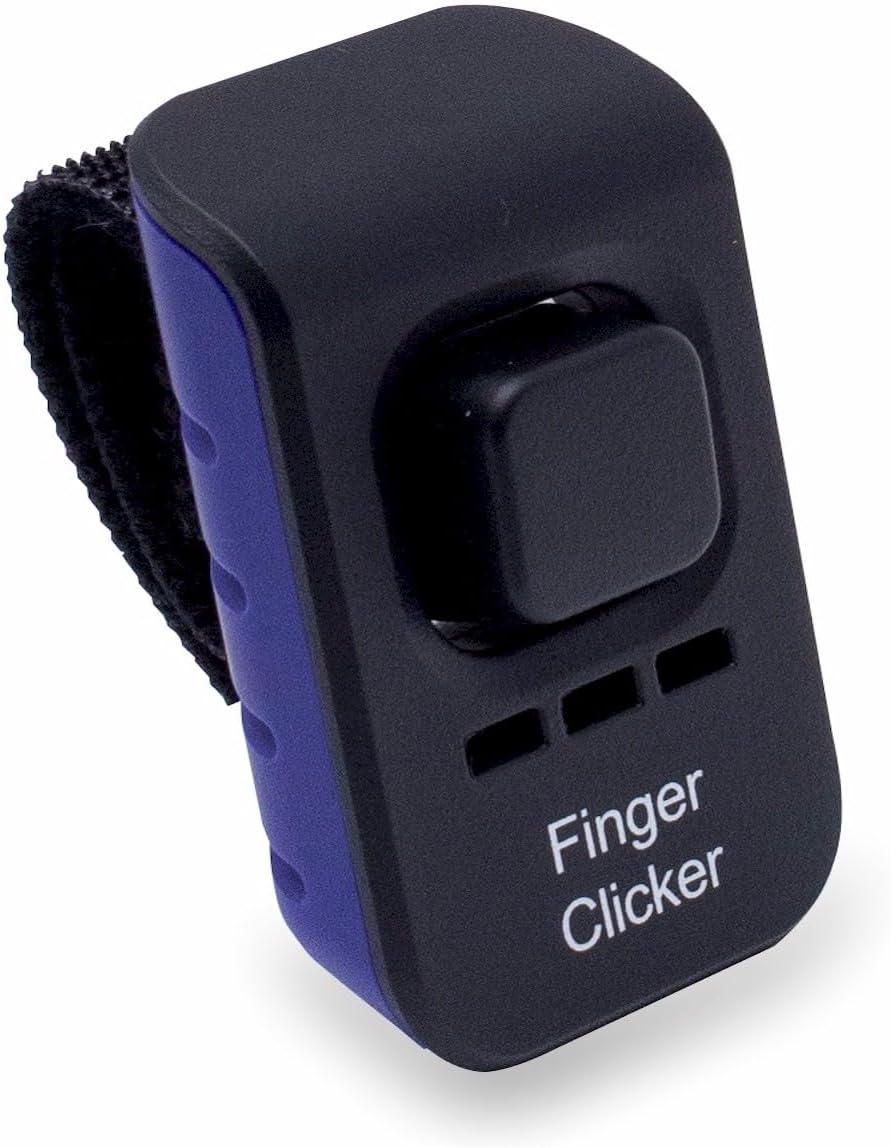
For a clicker, that shakes out to two practical requirements. The click has to sound identical every single time, because a marker is only useful if it is consistent. And it has to be reachable with one hand while the other hand holds a leash, which is why a finger clicker beats a box clicker for puppy work.
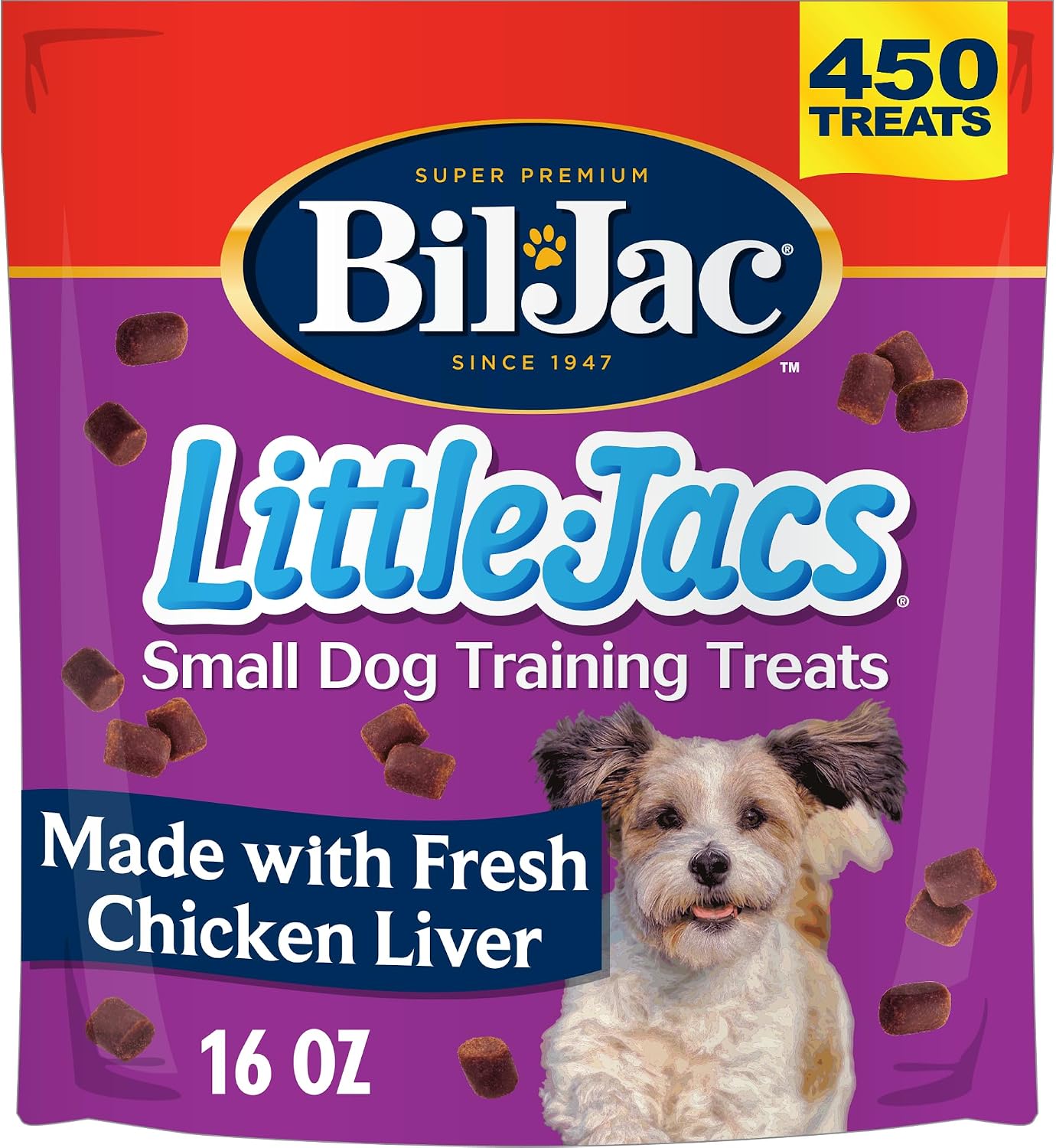
For treats, three things matter: soft, small, and worth working for outdoors. Soft matters because a puppy can swallow it in one motion and go straight back to work. A hard biscuit makes him stop and chew, and the loop dies while he chews. Small matters because you will hand out dozens in a single session. Worth working for is the hard one, and chicken liver clears that bar in a park full of smells.
I am not going to quote star ratings at you. A listing full of five star reviews is not evidence that a tool will work in your kitchen, and one session with one puppy is not a test. What I can tell you is how these two behave under a first time owner's thumb, which is the only test that matters.
The kit: two tools and nothing else
You do not need a training collar, a clicker app, a target stick, or a bag of gear. You need a marker and a payment. Everything else is technique, and technique is free.
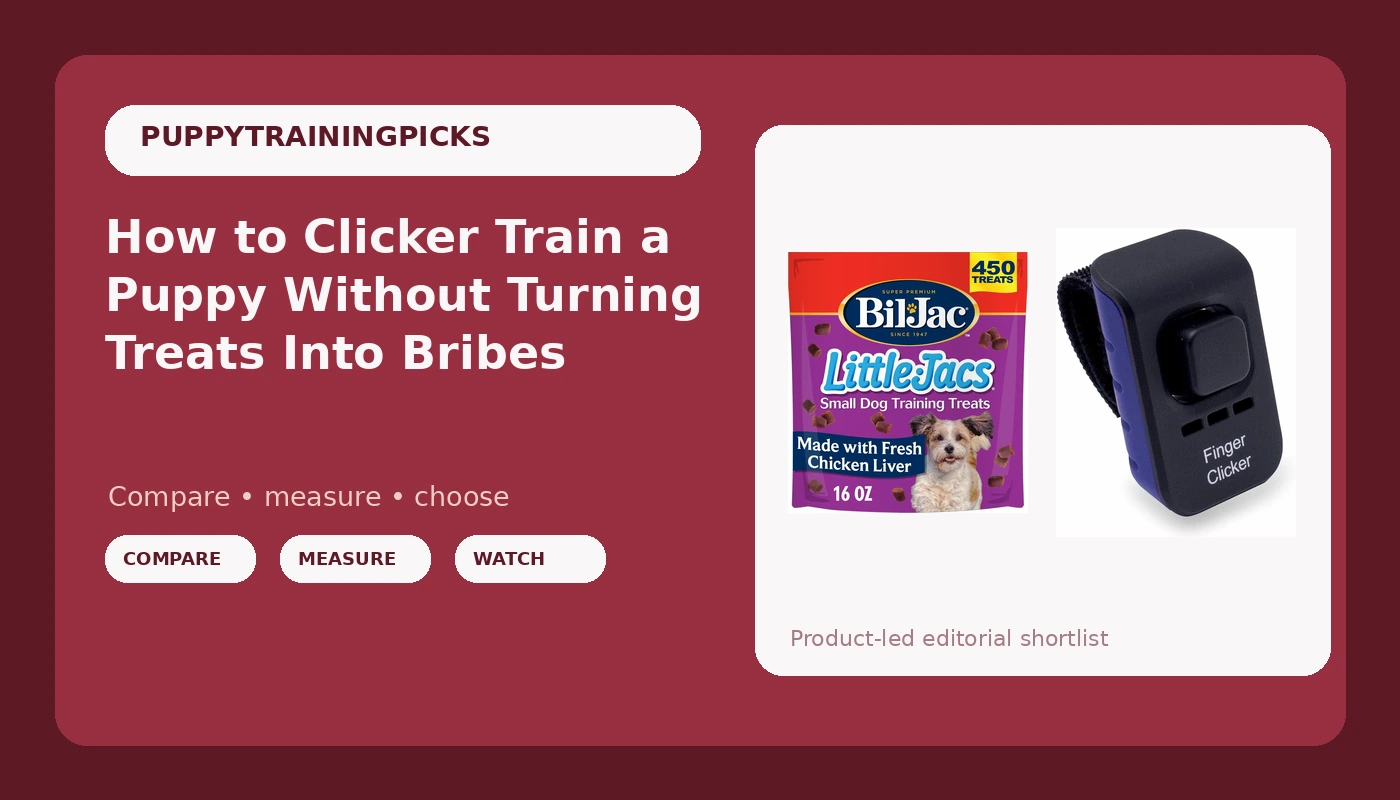
Our pick: Educator E-Collar Adjustable Dog Training Finger Clicker, Blue
 Visit on Amazon →
A finger clicker solves the one problem that kills box clickers in real life: you can hold a leash, hold a treat, and still click. The adjustable strap sits over your index finger, so your thumb does the work and your other hand stays free to deliver the treat exactly where you want the puppy's head to go. That is not a small detail. Half of leash work is teaching the puppy that good things happen at your left knee, and you cannot shape that with both hands occupied.
The click is crisp enough to cut through traffic noise, which matters more than people expect. Your kitchen is the easy room. The sidewalk is the room where the tool earns its keep.
Flaws but not dealbreakers: The strap is the weak point on any finger clicker, so check the fit before a session, not during one. Keep the clicker hand empty, too. If your puppy learns that the clicking hand is also the food hand, he will start mugging it, and you will spend a week undoing that.
It is a simple plastic tool, and that is the point. There is nothing on it to break except the strap.
Also essential: Bil-Jac Little-Jacs Soft Dog Training Treats with Chicken Liver | 16 oz
 Visit on Amazon →
Soft is the feature that matters here, not the flavor, though chicken liver is the reason a puppy will work for these in a park full of better smells. A soft treat goes down in one motion. The puppy swallows, looks back at you, and the session keeps moving. That is the entire job of a training treat: keep the rate of reinforcement high without turning your session into a snack break.
The 16 ounce bag is the practical size. You will go through it faster than you think, especially in the first two weeks, and running out mid session teaches a puppy that sometimes the click means nothing. That is the one lesson you cannot afford to teach.
Flaws but not dealbreakers: Soft treats crumble. Keep them in a pouch rather than a jacket pocket, unless you enjoy washing chicken liver out of a lining. They also smell like exactly what they are, which is a feature outdoors and a problem in a closed car.
Step one: charge the clicker
The click means nothing to your puppy yet. It is a random noise. You have to pair it with food before it carries any information.
Sit on the kitchen floor with ten or twelve treats in a pouch and the clicker on your finger. Click, then treat. Click, then treat. No behavior required, no cue, no puppy sit. You are buying the sound. Two minutes, fifteen repetitions, once or twice a day for two days is plenty.
Then test it. Wait until your puppy is looking away, click once, and watch his head. If it snaps around looking for the food, the click is charged and you can start using it as a marker. If he ignores it, do another round of click and pay. This is the step people rush, and it is the reason their clicker ends up in a drawer.
Step two: capture the first behavior
Capturing means marking a behavior your puppy does naturally instead of forcing it. Sit is the easiest one to capture, so start there.
Stand in front of your puppy with a treat hidden in one hand. Wait. Do not say anything, do not push his rear down, do not hover a treat over his nose. Puppies sit constantly when they are waiting for something, so you will not wait long. The instant his rear hits the floor, click, then deliver the treat at your knee so he has to come back to position to collect it.
Ten repetitions. That is one session. Do it again after his next nap.
The mark has to land while he is still sitting, which is the part owners get wrong. Click the second his rear touches down, not after he stands back up. If you are clicking late, the puppy is being paid for standing, and you will get a lot of standing.
Step three: put the cue on last
Do not say "sit" until the behavior is happening reliably on its own. This is backwards from how most people train, and it is why their puppies ignore them.
Once your puppy is offering sits four or five times in a row, say "sit" once, just before he does it, then click and pay when he lands. Repeat. Within a few sessions the word starts predicting the behavior instead of narrating it. That is the difference between a cue and background noise.
The same order applies to everything else. Capture the behavior, mark it, pay for it, then name it.
Step four: shape something bigger
Shaping is rewarding small steps toward a final behavior, and it is how a simple sit turns into something useful. Want a puppy who goes to a mat and lies down while you eat dinner? Break it into pieces: one paw on the mat, then two, then all four, then a down on the mat, then a down that lasts three seconds. Each piece gets clicked and paid.
Keep sessions short enough that the puppy is still succeeding when you stop. Three minutes, three times a day, beats one twenty minute session every time. End on a repetition he wins, put the clicker away, and let him be a puppy.
Where to practice, and when to stop
Start in the kitchen, then the hallway, then the front step, then the sidewalk, then the park. Every new place is a step down in your puppy's ability to focus, and that is normal.
The concept that saves you here is threshold, which is the distance at which your puppy notices a distraction. Training starts outside that distance, not inside it. If he can see the other dog but not react, you are outside threshold and you can work. If he is lunging and screaming, you are inside it, and no treat on earth will outbid that squirrel. Walk away, add ten feet, try again.
Step five: fade the treats
This is the step everyone skips, and then they wonder why the puppy stops listening in month four.
Treats are payment, not a bribe. The click is the paycheck, and you start by paying every single time because you are teaching a new skill. Once the behavior is solid, you move to a variable schedule: pay for three out of five reps, then for the best rep in a set, then at the end of a chain of behaviors instead of every step.
Then keep one treat in your pocket forever. Not as a bribe, as a lottery ticket. A dog who occasionally hits the jackpot keeps working. A dog whose owner quit paying entirely stops offering, and that is not stubbornness. That is a paycheck that stopped clearing.
When it stops working
Four things go wrong, and they are almost always the human's fault, not the puppy's.
The puppy ignores the treat. He is probably full, or the treat is not worth the distraction. Train before meals, and raise the value of the payment when you go outdoors.
The puppy only works when he can see the food. Move the treat hand behind your back and deliver from a pouch after the click. The click has to predict the food, not the sight of your hand.
The click is landing late. It always is. Practice your timing without the puppy: watch a video, click when the dog on screen sits, and check yourself. Nobody is born with a fast thumb.
You quit by day three. This is the most common failure in the entire sport. Set a phone alarm, do two three minute sessions, and stop trying to make training a big event. Small and daily is the whole trick.
What this all costs
The clicker is a one time purchase that outlives the puppy stage and works on the adolescent dog who eats your drywall at eight months. The treats are the recurring line item, and you should budget for them the way you budget for food, because a 16 ounce bag goes fast during a heavy training week. Check current Amazon price on both before you order, since both move around.
The honest math: the whole kit costs less than one private lesson with a trainer like me, and the clicker is still in your drawer when that lesson is a distant memory. The gear is the cheap part. The three minutes a day is the expensive part, and it is the only part that decides whether this works.
That is the job. Click the moment, pay the puppy, fade the payment, and keep the alarm set.