Puppy crate training is not a three-day party trick, but it is faster than most new owners expect. The puppies in my kindergarten class that go home with a written crate plan are usually settling in the crate and sleeping through the night by the end of the first week. The ones whose owners feel too guilty to close the door are still crying at 2 a.m. in week three, and by then the neighbor has opinions.
I have run an eight-week structured program out of a church basement in Denver for four years, and I trained dogs professionally for three years before that. We graduate more than 30 puppies a month, which means I have watched a lot of first-time owners try to shortcut this. The shortcut never works.
What works is boring and specific: the right crate size, meals inside the crate, rewarded door closes, and a potty schedule you actually follow. That is the whole method. The two tools below are the ones I hand out on orientation night, and the steps after them are the exact sequence I use in class.
Why you should trust me
I have been a professional dog trainer for seven years, and for the last four I have run a puppy kindergarten that puts more than 30 puppies a month through an eight-week program. That is a lot of puppies in real homes with real carpet and real owners who do not practice between sessions.
I keep a running list of which tools survive week six of a puppy's life, which is the week the novelty wears off and the adolescent attitude shows up. Anything that fails there does not make it into my handouts. I do not use tools that rely on pain or fear, at any age, and I do not recommend anything based on one session with one easy puppy.
My bias is simple: the tool is about 10 percent of the result. Timing, consistency, and an owner who shows up are the other 90 percent.
How I picked and how I tested
Everything in this guide has to pass four questions before it goes into a class handout. First, does it rely on pain or fear? If yes, it is out, no exceptions. Second, can a first-time owner use it correctly without me standing over their shoulder? Third, does it still work in week six, when the puppy is bigger, bolder, and less impressed by you? Fourth, would I use it in my own class, with my own name on the paper?
I test crate gear the way my classes use it: eight-week programs, real puppies, real distracted sidewalks, and owners who forget to bring treats. The kit below gets used in every single session, because a clicker, a treat pouch, and a potty signal are the three things that carry the first three days. The book below is the protocol I compare every new owner's schedule against, because a written plan beats a trainer's memory at 11 p.m. when the puppy is screaming.
What I am not doing is promising a specific number of days. The three in the title is the pitch. The honest version is that most puppies accept the crate in three to five days, and sleep through the night somewhere between week one and week three. Bladder size decides that part, not effort.
Two tools that carry the first three days
The short version of the shopping list: something to mark behavior with, something to carry rewards in, and a written schedule you can follow at 2 a.m. That is it.
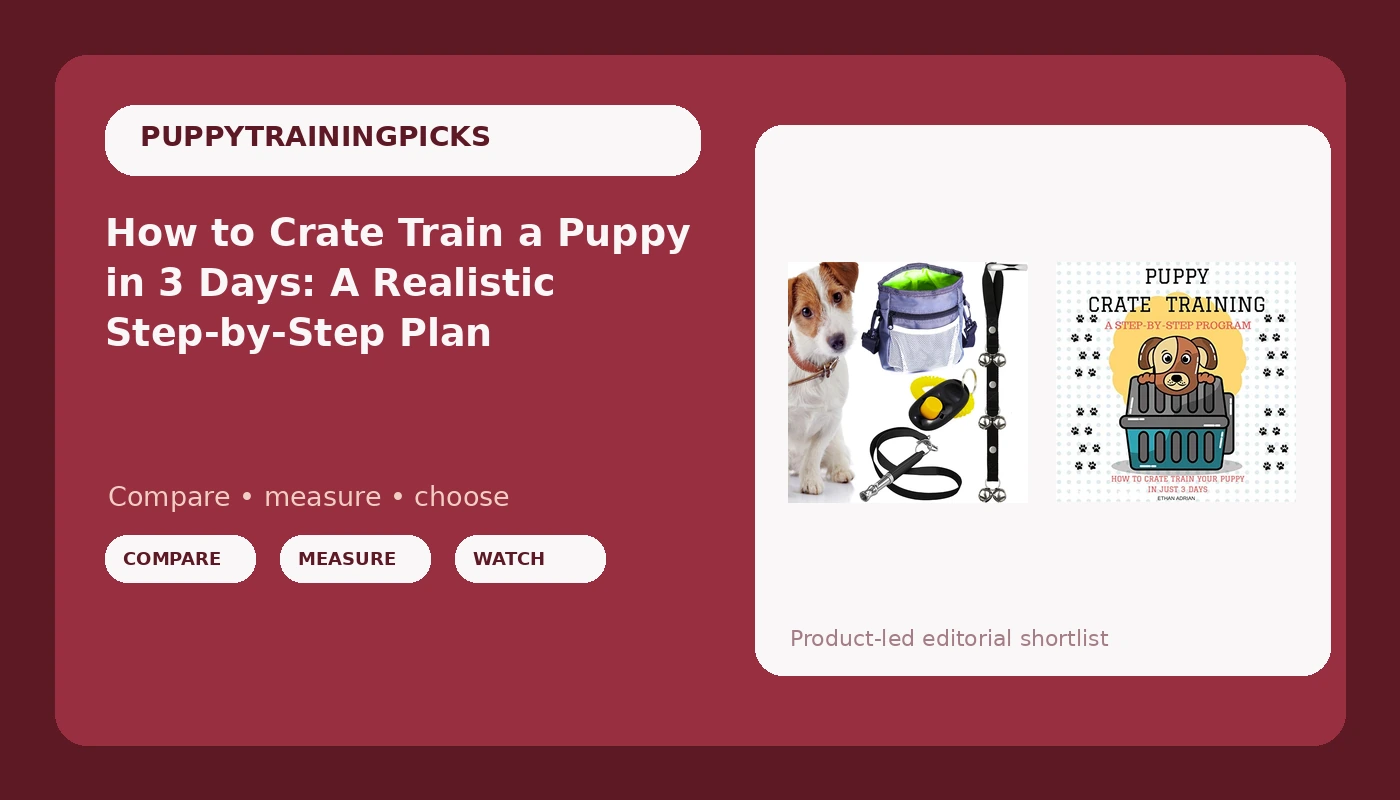
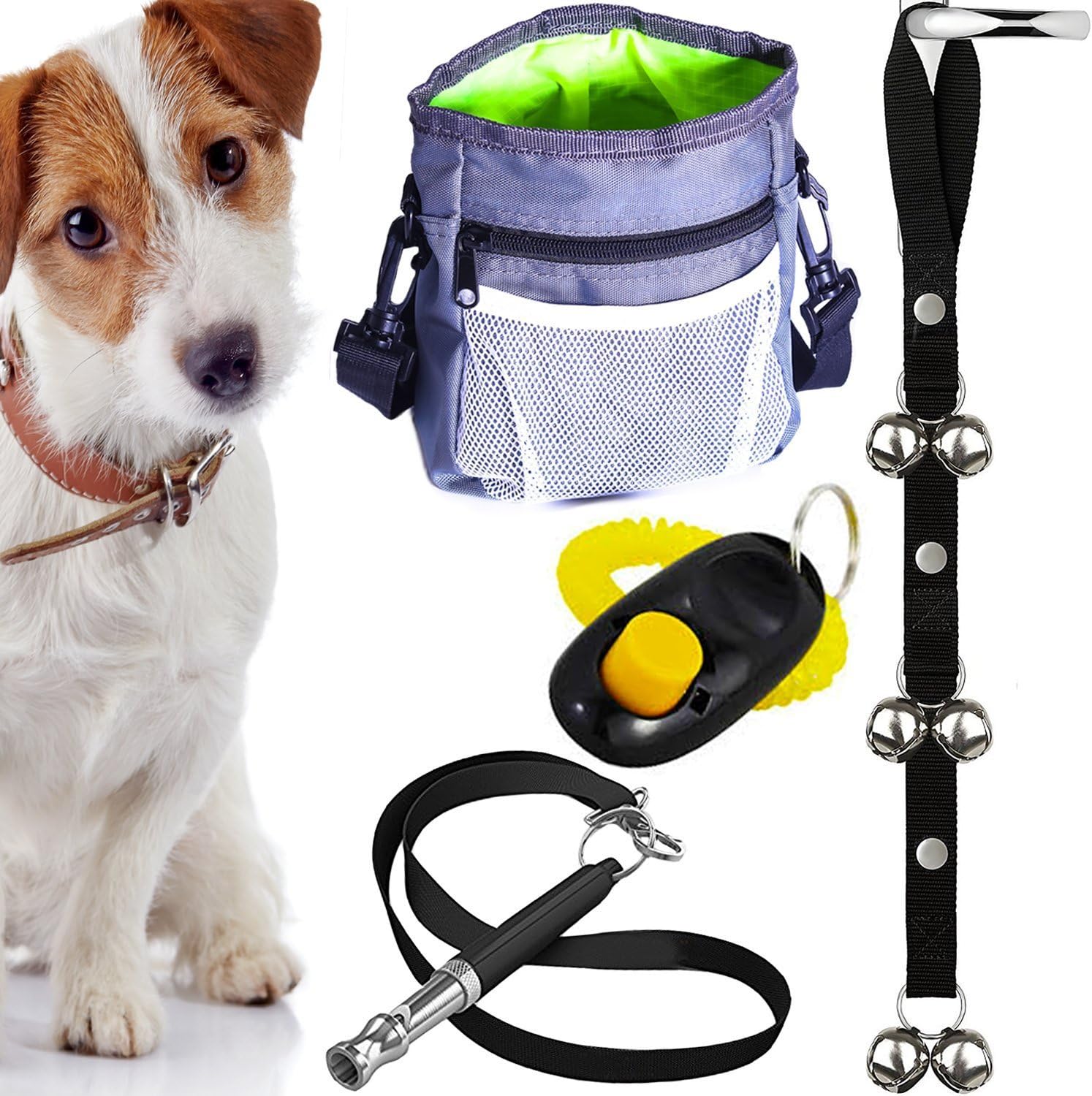
The starter kit: Dog Training Set, Puppy Supplies Starter Kit with Dogs Clicker, Treat Pouch Bag, Housetraining Door Bells, Ultrasonic Whistle, for Teaching Pet Commands, Bark Control, and Potty Training
 Visit on Amazon →
The clicker in this kit is the piece that matters most, and it is the piece almost nobody uses past day three. A clicker is a marker. It tells the puppy exactly which behavior earned the reward, and it does that faster than your voice can. Use it for the crate and the crate gets easier. Check current Amazon price.
The treat pouch is the second useful piece. If your treats live in a bag on the kitchen counter, you will not reward the quiet moment in the crate, because you will be walking to the kitchen when it happens. Wear the pouch. The whole point of a training session is that the reward is closer to the puppy than the distraction is.
The door bells are worth hanging on the potty door if you want a puppy that asks to go out instead of circling the rug. Ring them with the puppy's nose before every trip outside, and most puppies start ringing them on their own within a couple of weeks.
The ultrasonic whistle I would leave in the drawer. It is marketed for bark control, and barking at the crate is usually a training-timeline problem, not a whistle problem. Adding a noise to a puppy that is already upset does not teach anything useful.
Flaws but not dealbreakers: The pouch is a basic single-pocket design, so if you are training two puppies at once you will want two. The clicker is loud enough to hear across a room, which is a feature, not a bug.
First-time owners who want the marking, the rewards, and the potty signal in one box will get their money's worth here.
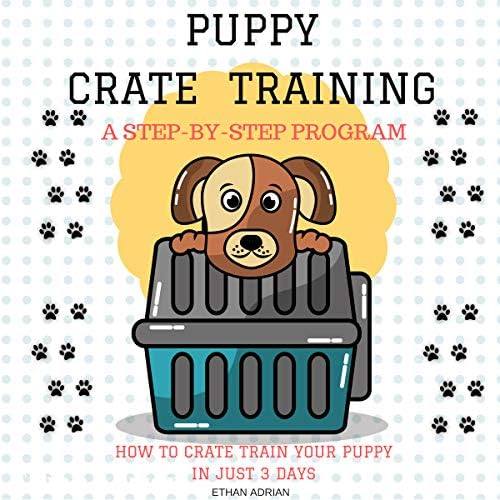
The written protocol: Crate Training for Puppies: How to Crate Train Your Puppy in Just 3 Days: A Step-by-Step Program so Your Pup Will Understand You!
 Visit on Amazon →
A book is not a gadget, and that is exactly why it belongs in this guide. The failure mode I see most often is not a bad crate or a bad clicker. It is an owner with no plan, improvising at 1 a.m., and opening the door during a whine because they cannot remember what they were supposed to do next. Check current Amazon price.
This program gives you a sequence: what to do before the first door close, how to time the potty breaks, how to handle the first night, and how to stretch duration without teaching the puppy that crying opens the door. I compare every new owner's schedule against a written protocol, and this is the one I point them to because it is short enough that people actually read it.
Treat the three days in the title as a marketing line, not a promise. The structure underneath is sound. The timeline depends on your puppy's bladder and your consistency, and I have never met a puppy that hit a calendar instead of a routine.
Flaws but not dealbreakers: No book fits every puppy. If your puppy came home at seven weeks or has a medical issue, adjust the schedule with your vet. The writing is plain and repetitive, which is a compliment in a book you will be reading at 2 a.m.
Owners who want a plan they can follow without calling a trainer every night should start here.
The actual three-day plan
Now the sequence. This works with a crate that has a divider panel, a clicker, a pouch of small soft treats, and about 20 minutes a day of real practice.
Before day one: size the crate correctly. A crate should be big enough for the puppy to stand up, turn around, and lie down flat, and no bigger. If there is room to potty in one corner and sleep in the other, the puppy will use it that way. Use the divider panel and move it back as the puppy grows.
Step one: feed every meal inside the crate. Door open for the first meal. Door closed while the puppy eats for the second. Open the door before the puppy finishes and starts to whine. You are teaching a simple equation: crate equals food, and the door always opens again.
Step two: run ten crate games a day. Toss a treat in, let the puppy walk in after it, click, reward, and let the puppy come back out on their own. Ten reps, twice a day. This is capturing, not forcing. You are not pushing the puppy in, ever.
Step three: close the door for ten seconds. Click and reward before the whine starts, then open the door. Build from ten seconds to thirty, then a minute, then five. If the puppy whines, you moved too fast. Go back one step.
Step four: write down a potty schedule and follow it. Out on waking, after every meal, after every play session, and right before bed. Young puppies cannot hold it for long, so plan on middle-of-the-night trips for the first couple of weeks.
Step five: handle night one through night three. Crate in the bedroom where the puppy can hear you breathe. No talking, no lights, no play. Out for a quiet potty break, straight back in. Nights are not training sessions.
Step six: build duration with a chew. Once the door closes calmly, give a long-lasting chew or a stuffed toy and walk out of sight for a minute. Come back before the puppy finishes. This is how the crate becomes a place where good things happen while you are gone.
Step seven: fade the treats. This is the step everyone skips. Start rewarding every third or fourth crate entry with food, and use praise and the clicker for the rest. If the puppy's enthusiasm drops, go back to food for a few days. Treats are payment, not a bribe, and payment gets smaller as the job gets easier.
Step eight: open the door on a pause, never on a whine. If you are sure the puppy is empty and safe, wait for two seconds of quiet before you reach for the latch. Open during a whine and you have just taught the puppy that volume works.
Where most owners go wrong
The crate is too big and there is no divider, so the puppy potties in the back corner and the owner blames the puppy.
Pee pads are used inside or right next to the crate. If your goal is outdoor potty training, skip them entirely. They teach a puppy that going indoors is fine, and unteaching that takes longer than teaching it right the first time.
The door opens mid-whine. Every single time you do this, you pay for it with a longer training timeline.
The crate is used as punishment. If the crate is where the puppy goes when you are angry, you have turned the den into a jail cell.
The crate is overused. A puppy should not spend the whole day in there because you have meetings. Build a pen or hire a walker. Crate training works when the crate is a good place, and it stops working when it is the only place.
Daytime practice gets skipped and the crate only appears at bedtime. Puppies learn fastest when the crate is boring and normal during the day.
What this all costs
The two items in this guide are the whole shopping list on the training-tools side. A crate with a divider panel is the other purchase, and it is the one you should not cheap out on, because a wobbly crate with a bad latch undoes good training. Check current Amazon price on the kit and the book and you will see the total is a fraction of what a single in-home session runs in most cities.
The math that matters is the timeline, not the receipt. Three to five days of structured practice gets you a puppy that walks into the crate on their own. One to three weeks gets you a full night of sleep. The gear is the cheap part. The 20 minutes a day is the part people quit on.
Do the twenty minutes. Your baseboards will thank you.