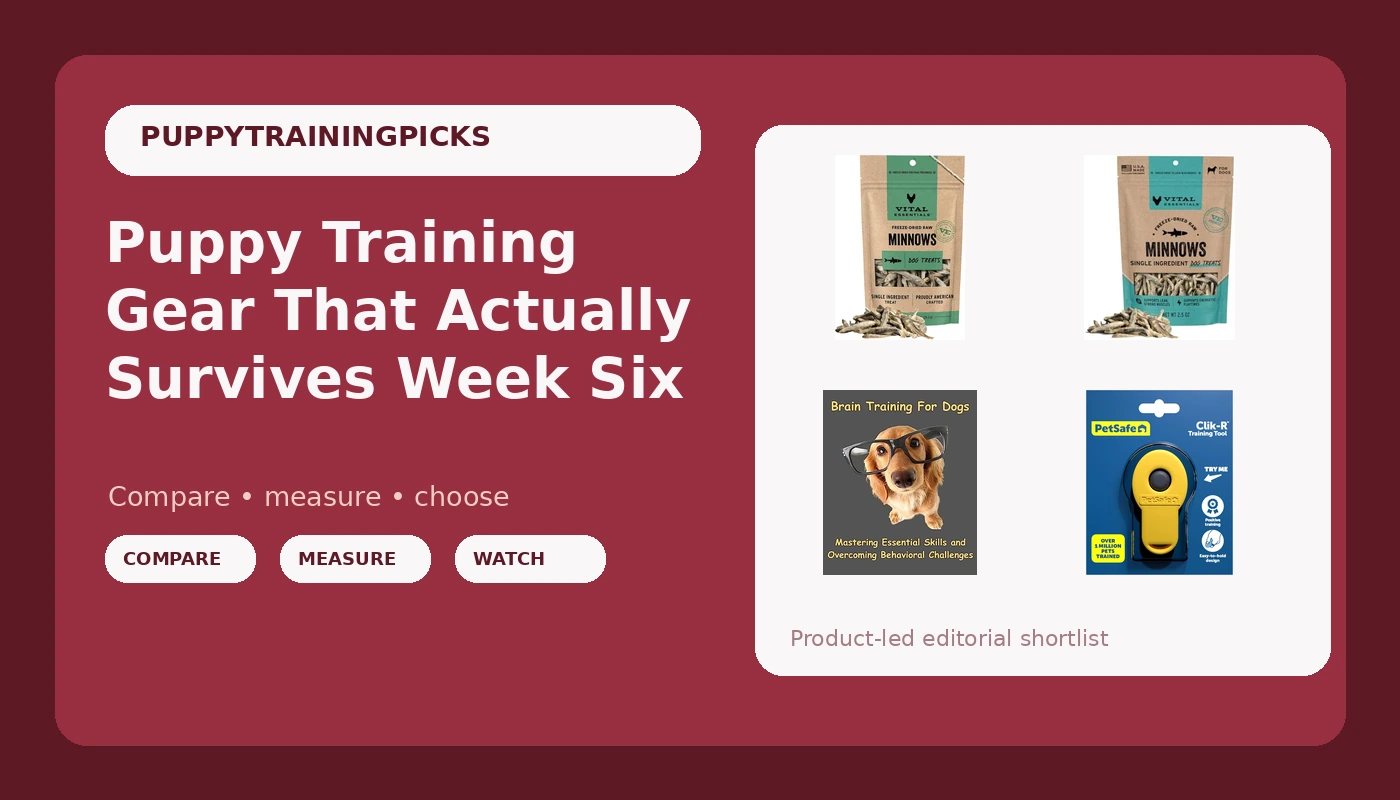
Most puppy training problems are not gear problems. A puppy who will not come when called is usually a puppy who has never been paid well enough for coming, and no harness on the market fixes that. But the right puppy training gear removes friction. It lets you mark a behavior at the exact moment it happens, pay the dog fast enough that the payment lands on the right behavior, and walk a puppy whose neck is still developing without choking him. The wrong gear adds friction, and some of it adds fear.
This guide covers six items that show up in the first eight weeks of a puppy program: a marking clicker, a no-pull harness and leash set, two sizes of the same freeze-dried treat, and two training books written for different readers. Nothing here relies on pain, startle, or fear, and nothing here promises results in seven days. Training is a timeline, not a promise.
Related: How to Start Clicker Training With an 8-Week-Old Puppy
Quick answer
The PetSafe Clik-R Dog Training Clicker is the strongest fit for starting marker-based training because a clicker produces the same sound every single time, which is what makes it a cleaner marker than your voice. Choose the SlowTon No Pull Dog Harness and Leash Set instead when the immediate problem is a puppy who drags you down the block.
Puppy training gear worth comparing
The list below is organized by the job each item does, not by price. A marker comes first because timing is the hardest skill for a new owner to learn. Rewards come next because a marker with nothing behind it is just a noise. Walking equipment comes after that, once the puppy is actually moving through the world. The books are reference material for the weeks when the plan stops working.
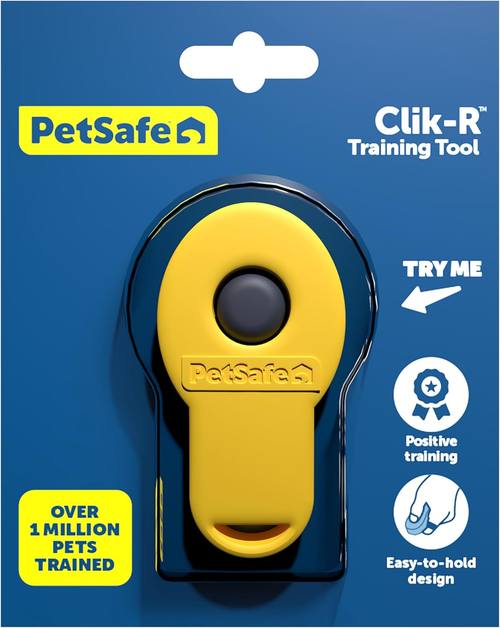
PetSafe Clik-R Dog Training Clicker
A handheld clicker built for marker training, giving you one consistent sound to mark the exact moment a behavior happens.
Visit on Amazon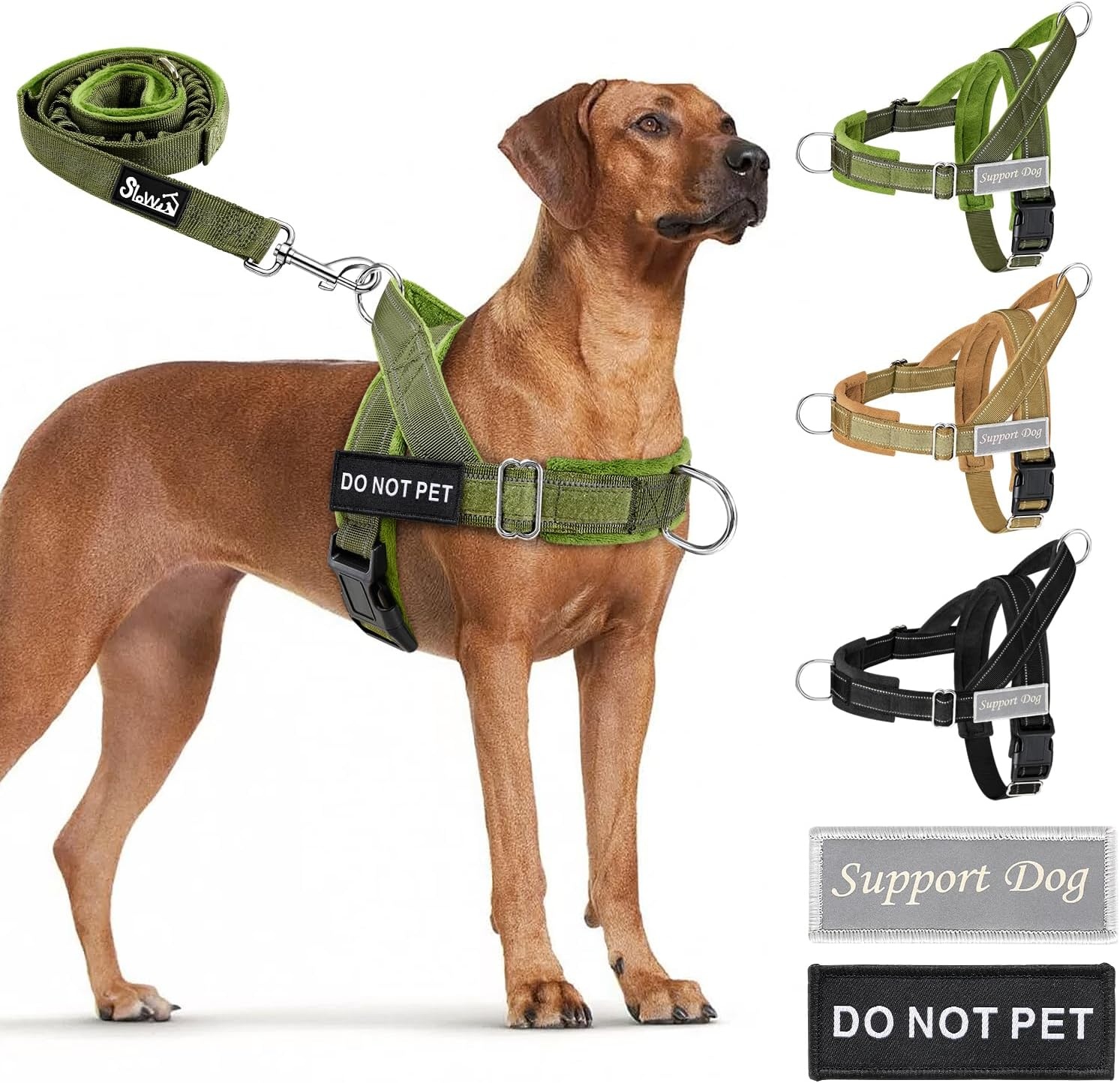
SlowTon No Pull Dog Harness and Leash Set - Heavy Duty, Soft Padded
A no-pull harness and leash set with padded straps and a heavy-duty build, sold as a matched pair for walk training.
Visit on Amazon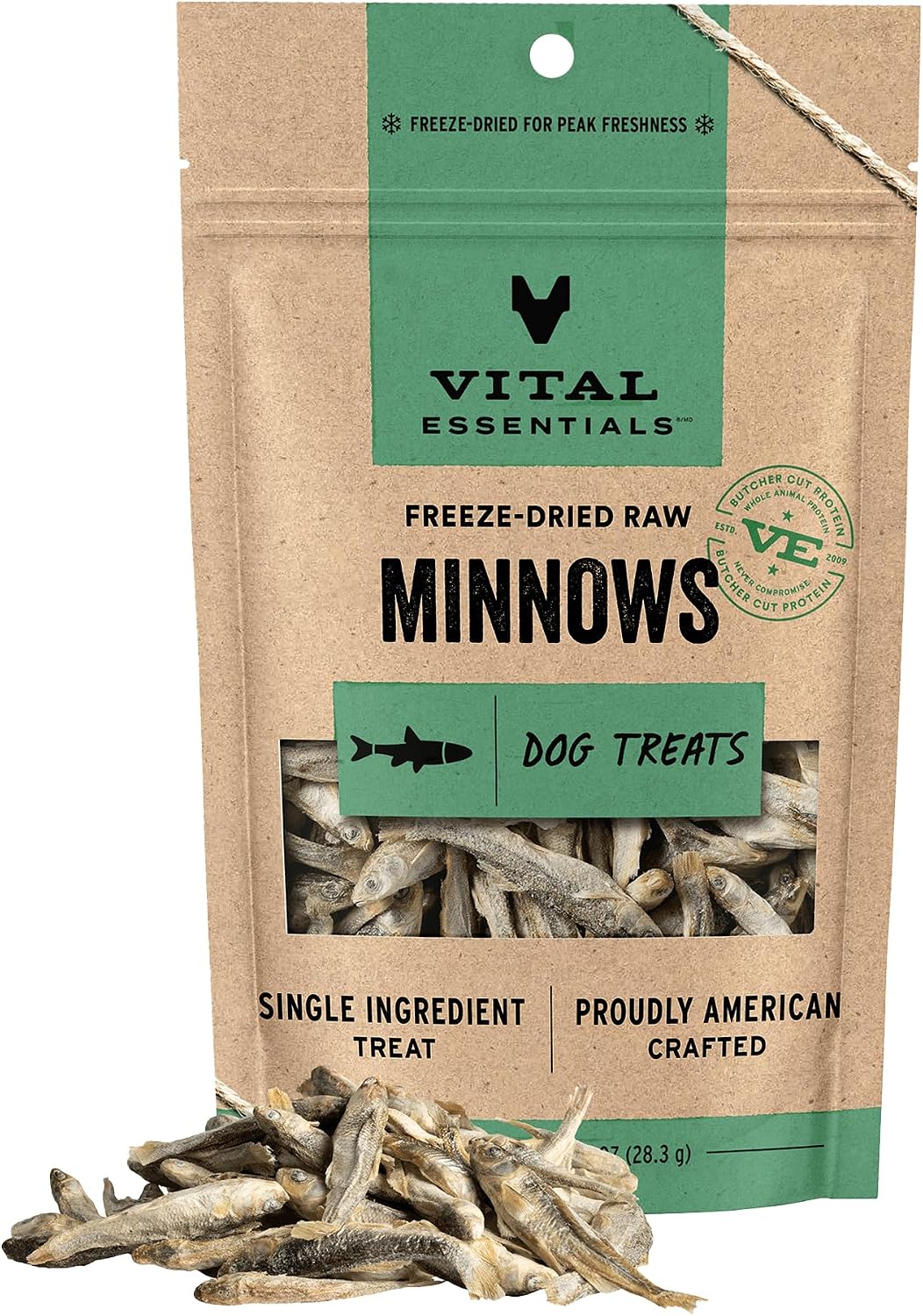
Vital Essentials Freeze Dried Minnows Dog Treats, 1 oz Bag
Freeze-dried minnows in a 1 oz bag, a fish-based reward that works well as a high-value payment during short sessions.
Visit on Amazon
Vital Essentials Freeze Dried Minnows Dog Treats, 2.5 oz Bag
The same freeze-dried minnows in a larger 2.5 oz bag, for owners who go through rewards quickly and want fewer refills.
Visit on Amazon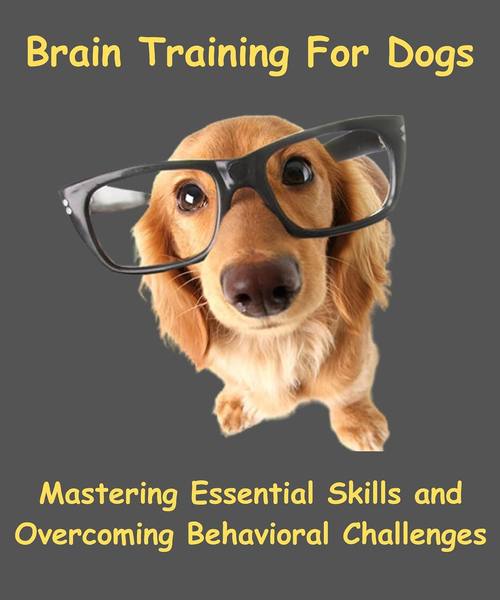
Brain Training For Dogs - Mastering Essential Skills And Overcoming Challenges
A book on essential skills and problem behaviors, structured as a progression of exercises rather than a list of party tricks.
Visit on Amazon
The Calm Puppy Training: Stress-Free Plan for Small Breed Dogs and Peace at Home (The Calm Dog Training Series Book 2)
A calm-focused training plan written for small breed puppies, with an emphasis on settling routines and peace at home.
Visit on AmazonPrices and availability may change. Check the retailer for current details.
How these products were compared
This guide compares what job each item actually performs in a training session, whether a first-time owner can use it correctly without a class, how the product fits into an eight-week puppy timeline, what the product description says is included in the box, and how much maintenance the item needs in normal use. Product names, images, and retailer links are matched by product code so that every card points to the product shown.
Nothing here is presented as hands-on testing of these specific listings. The comparisons are drawn from the products' own descriptions and from general force-free training practice. Do not print a current price in the article; readers should use the call to action to confirm current price and availability.
How to choose the right training tool
Start by naming the behavior you are trying to change. Almost every new puppy owner thinks their problem is leash pulling when the real problem is that the puppy has never been rewarded for being next to a human. Buy the tool that matches the behavior, not the tool that matches the symptom.
If you are at the very beginning, the clicker is the right first purchase. Marker training works because the marker is identical every time. Your voice is not: you say "yes" fast on Monday and slow on Thursday, and the puppy is marking whatever happened in between. A clicker fixes that problem for a few dollars, and the skill you learn using it, which is watching for behavior instead of waiting for it, carries over to everything else you will ever teach. Charge the clicker before you use it. That means clicking and treating, over and over, with no behavior required, until the puppy's head snaps toward you when he hears the click. Most owners skip this step and then blame the clicker.
If the behavior is pulling, choose equipment that takes pressure off a growing neck. A padded no-pull harness spreads load across the chest instead of the throat, and a matched harness and leash set means you are not guessing whether the hardware works together. Fit matters more than brand here: a harness that rubs the armpits raw is worse than no harness at all, because a puppy who is uncomfortable on a walk learns that walks are uncomfortable.
If the behavior is a puppy who cannot settle, that is usually a routine problem rather than a gear problem, which is where a calm-focused training book earns its place. And if you want a structured progression of skills to work through week by week, a general skills book does that job better than a collection of isolated tips. If you are still deciding how to introduce the marker itself, our walkthrough on starting clicker training with a young puppy covers the first three sessions in order.
Treats deserve their own decision. A reward only works if it is small enough to deliver quickly and good enough that the puppy cares. Freeze-dried minnows are a fish-based reward that most puppies find high value, and the two bag sizes here let you match supply to how often you train. Buy the small bag first if you are unsure whether your puppy will eat fish. Buy the larger bag once you know he will, because a training puppy goes through rewards faster than most owners expect.
PetSafe Clik-R Dog Training Clicker
The PetSafe Clik-R is a handheld clicker designed for marker training. Its whole value is consistency: the click sounds the same on the first repetition and the five hundredth, which is what allows you to mark a behavior at the exact instant it happens rather than a second or two afterward. That precision is the difference between a puppy who learns which behavior earned the reward and a puppy who learns that rewards appear at random.
The trade-off is that a clicker does nothing on its own. It is a marker, not a motivator, so it has to be paired with a reward the puppy actually wants and it has to be charged before it means anything. It also occupies a hand, which matters when you are holding a leash, a treat pouch, and a puppy at the same time. Owners who train in loud environments or who dislike carrying an extra object can use a verbal marker instead and get most of the benefit, though they will lose some timing precision. If you want the timing advantage without the extra object, a clicker with a wrist strap keeps it attached to you between repetitions, which is the practical reason this style of clicker exists.
Alternatives to consider
The SlowTon No Pull Dog Harness and Leash Set - Heavy Duty, Soft Padded is better suited to the puppy who is already walking and pulling, since it addresses the walk itself rather than the training session, and the set gives you a matched leash and harness rather than two separate purchases.
The Vital Essentials Freeze Dried Minnows Dog Treats, 1 oz Bag is a stronger fit when you are still finding out whether your puppy will work for a fish-based reward, while the Vital Essentials Freeze Dried Minnows Dog Treats, 2.5 oz Bag makes more sense once you know the answer and want fewer refills during a training block.
The Brain Training For Dogs - Mastering Essential Skills And Overcoming Challenges book, The Calm Puppy Training: Stress-Free Plan for Small Breed Dogs and Peace at Home, and the clicker cover different kinds of help. The first is a structured skills progression for owners who want a curriculum. The second is aimed at small breed puppies and at the settling and household-peace problems that come with them. The clicker is the tool you use while working through either one.
Day-to-day use and maintenance
Keep rewards small and count them. A training session that uses twenty rewards should not be twenty meals, so break treats into pieces roughly the size of a pea, and subtract that food from the day's meals if your puppy is on a measured diet. Store freeze-dried treats sealed and dry, and wash your hands after handling them, since fish-based rewards leave a smell that puppies find interesting and your furniture will not.
Inspect the harness before each walk. Check the straps for fraying, confirm the fit has not changed as the puppy grows, and make sure the leash attachment point is secure. A puppy should never be left unattended in a harness or on a leash, and a harness is not a substitute for supervision. Follow the manufacturer's cleaning instructions for the harness rather than assuming it can go in the washing machine.
Keep the clicker where you train, not in a drawer. The most common failure with marker training is not the tool, it is the owner using it for three days and then drifting back to repeating cues. Click, pay, repeat. The mechanics are simple, and the consistency is the hard part.
One more caveat worth stating plainly: skip anything marketed to puppies that relies on vibration, startle, or shock. There is no version of that which is appropriate for a puppy whose brain is still wiring itself, and the fallout usually shows up weeks later as a dog who stops offering behavior at all.
Buying checklist
- Measure your puppy's chest girth and check it against the harness size chart before ordering.
- Choose reward size based on how fast you can deliver it, not on what looks generous in the bag.
- Confirm that the harness set includes both the harness and the leash if you want a matched pair.
- Check whether the clicker style you are considering keeps the click consistent and is comfortable to hold for a full session.
- Read the cleaning and maintenance instructions for anything that touches the dog daily.
- Verify the current retailer price, availability, and return terms before you buy.
Final recommendation
Choose the PetSafe Clik-R Dog Training Clicker when you are starting marker-based training and want the cleanest possible timing on your rewards. Choose the SlowTon No Pull Dog Harness and Leash Set - Heavy Duty, Soft Padded when the immediate problem is a puppy who pulls, since a padded no-pull harness takes pressure off a neck that is still developing. Add the freeze-dried minnows in whichever bag size matches how often you train, and pick up one of the two books if you want a plan to follow rather than a pile of separate tips.