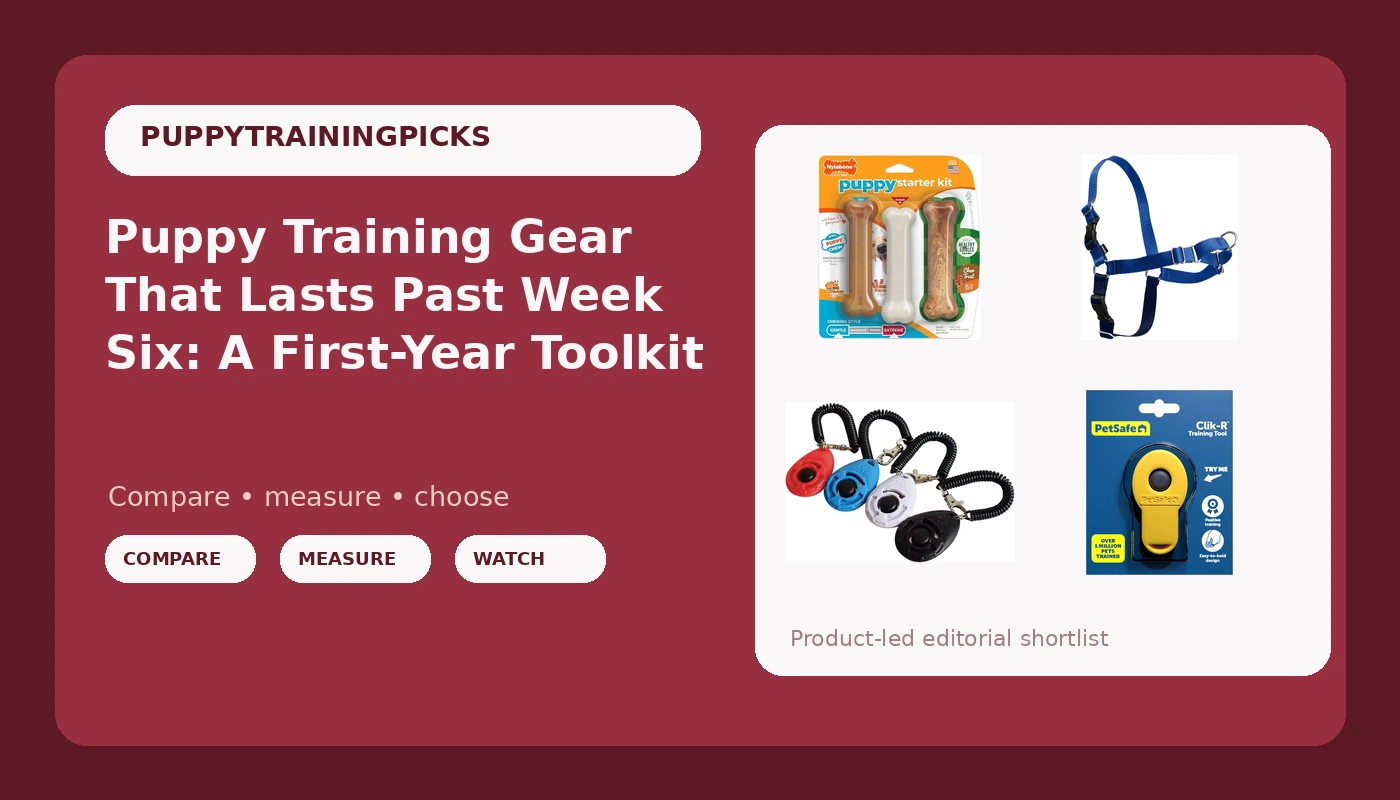
Most new puppy owners buy gear before they buy a plan. The result is a shelf of gadgets that get used twice, a leash by the door, and a puppy who is still pulling. The puppy training gear that survives a real household is boring: something that stops the pulling, something that marks the exact second your puppy gets it right, and something legal for the puppy to chew while you are on a work call.
This guide compares four tools that fit inside a positive-reinforcement training plan. Nothing here relies on pain or fear, nothing promises results in seven days, and nothing replaces the part of training that does the actual work, which is your timing and your consistency. The gear is the 10 percent. It just happens to be the 10 percent you can order tonight.
Related: How to Start Crate Training Without the Midnight Whining
Quick answer
The PetSafe Easy Walk Harness is the strongest fit for a puppy who turns every walk into a sled-dog event, because it redirects pulling at the chest instead of the throat and it is simple enough for a first-time owner to fit without a class. Choose the PetSafe Clik-R Dog Training Clicker instead when all you need is one dependable marker and you would rather not keep track of four.
Puppy training gear worth comparing
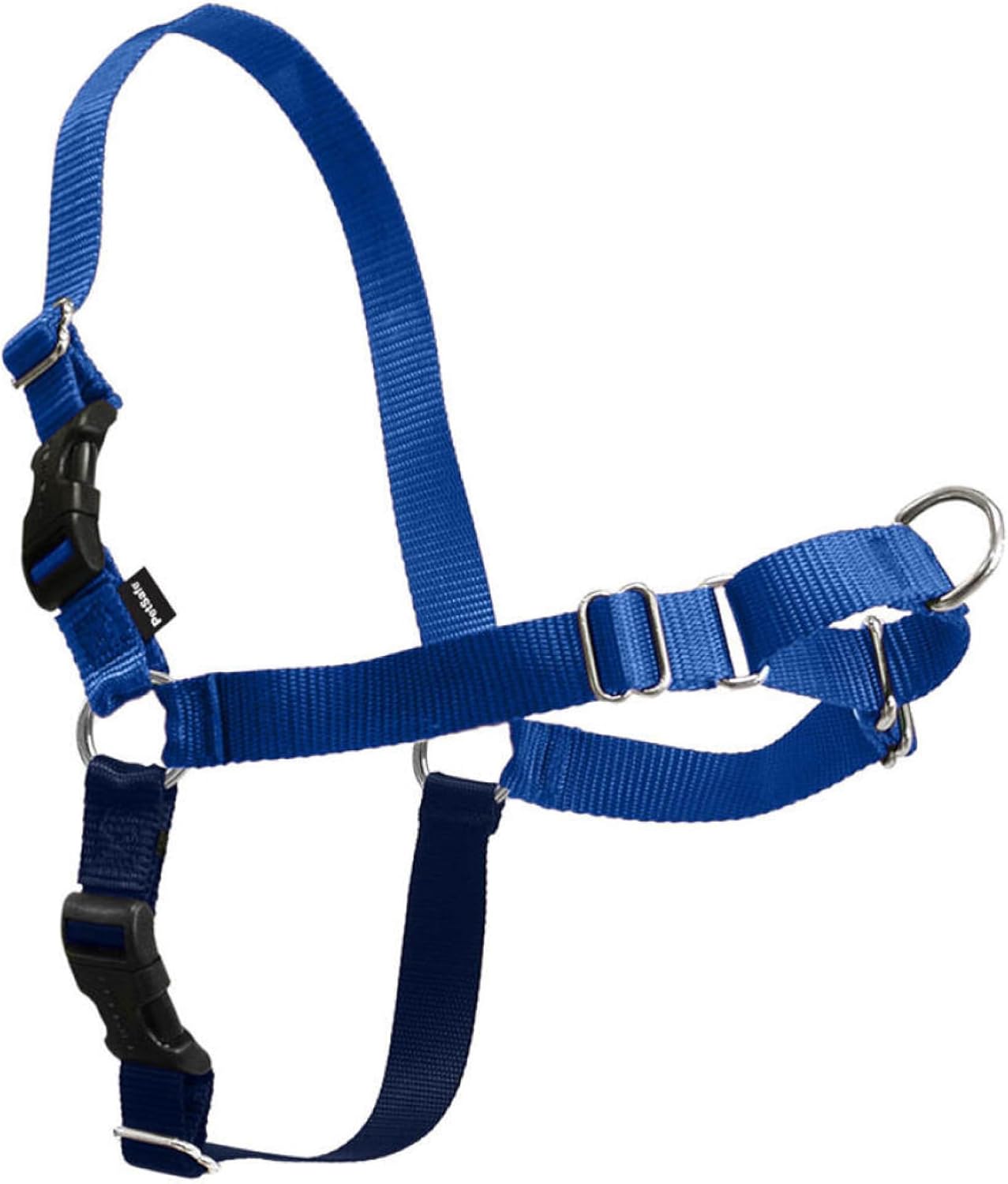
PetSafe Easy Walk Harness, No Pull Dog Harness, Royal Blue, Small/Medium
A front-clip no-pull harness in royal blue, sized small/medium, with a martingale loop across the chest. The front attachment turns a pulling puppy back toward the handler rather than pressing on the throat.
Visit on Amazon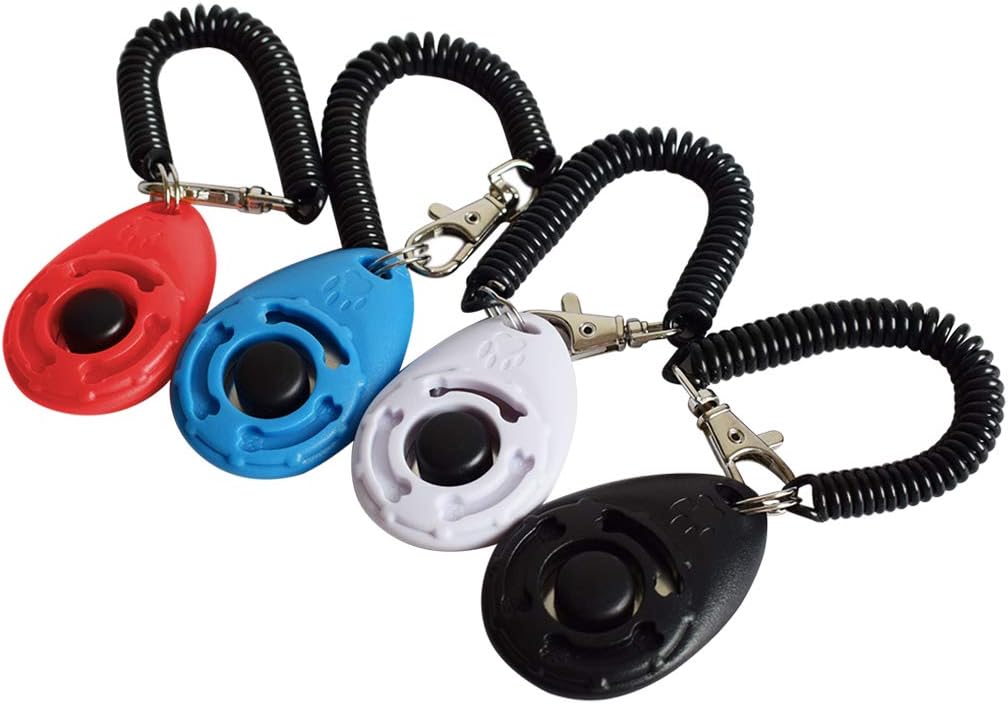
Ruconla- 4 Pack Dog Training Clicker with Wrist Strap, Pet Training Clicker Set
A four-pack of training clickers, each with a wrist strap. Spares can live in the training pouch, the car, and the jacket you actually wear on walks.
Visit on Amazon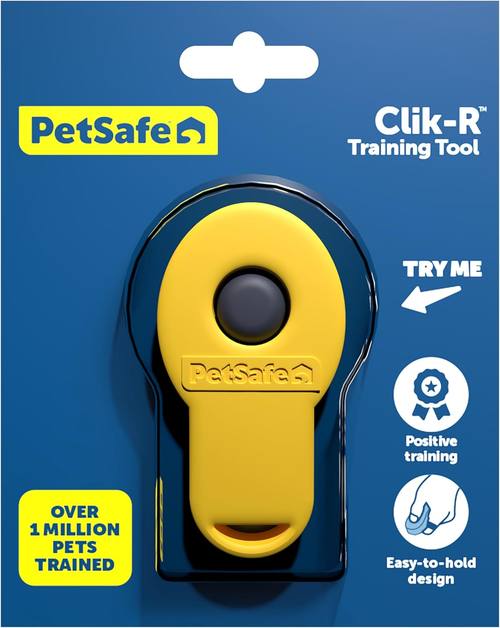
PetSafe Clik-R Dog Training Clicker
A single clicker from PetSafe, sold on its own for owners who want one reliable marker and no drawer full of extras.
Visit on Amazon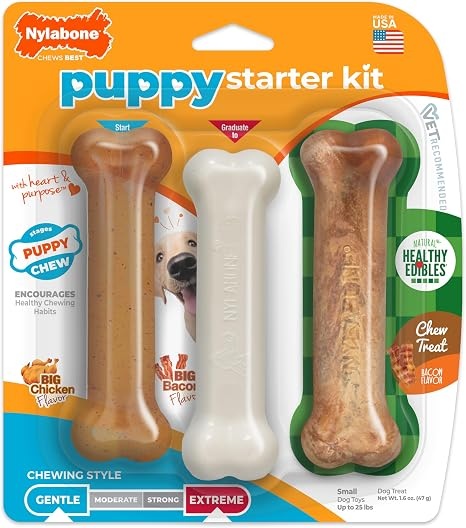
Nylabone Puppy Chew Puppy Starter Kit Dog Chew Toys & Treat, 3 Count, Small
A three-piece starter kit of small puppy chew toys with a treat included, sized for puppies and meant to give all that mouthing a legal target.
Visit on AmazonPrices and availability may change. Check the retailer for current details.
How these products were compared
This guide compares how well each item fits a puppy rather than an adult dog, how easily a first-time owner can use it correctly without a class, how it holds up through the teething months, how cleanly it slots into a marker-based training plan, and whether it asks the owner to do anything that could frighten or hurt the dog. Product names, images, and retailer links are matched to the same product record so that every card points to the item shown.
Nothing below is presented as a lab test or a timed trial. These are buying distinctions based on what each product is designed to do, what it includes, and where it tends to fall short. Use the link on each card to confirm current price and availability.
How to choose the right puppy training tool
Start with the problem you actually have this week, not the problem you read about online. If your puppy leans into the leash and drags you toward every tree, you need a harness. If your puppy offers behaviors you like and you keep missing the moment to reward them, you need a clicker. If your puppy is biting your forearms at 8 p.m. every night, you need a chew outlet and a nap schedule. Buying all three on day one is fine, but buying a head collar, a clicker, a harness, three kinds of treats, and a whistle before you have identified the problem is how people end up with a closet full of unused gear.
The second decision is fit and simplicity. A harness only helps if it sits correctly, so measure your puppy's girth behind the front legs and check the sizing chart instead of guessing from breed. A clicker only helps if it is within reach, which is the entire argument for a multi-pack over a single unit, or for a single unit if you know exactly where it lives. And a chew only helps if it is the right hardness for a puppy's teeth, which is why the puppy-specific kits exist in the first place.
If you have never used a marker before, the order matters more than the brand. Capture the behavior, mark it, pay it, then fade the food reward over weeks, not days. You can read more about that sequence in our marker training basics, because a clicker in the wrong hands is just a noisemaker.
PetSafe Easy Walk Harness
The Easy Walk is a front-clip harness, which means the leash attaches at the chest instead of the back. A loop across the front tightens slightly as the dog pulls, turning the shoulders back toward the handler rather than letting the puppy brace and drag. For a puppy, that matters: the neck and throat are still developing, and a flat collar puts pressure exactly where you do not want it when a puppy decides to test the leash.
What the harness does not do is teach loose-leash walking by itself. It buys you the two seconds you need to mark and reward a slack leash, and those two seconds are the whole game. Owners who buy a no-pull harness and then never reward the slack leash end up with a puppy who pulls comfortably instead of a puppy who walks politely.
The trade-off is fit. A front-clip harness that hangs loose slides sideways into the armpit, and one that is too tight restricts the shoulder. Measure, check the sizing chart, and refit as your puppy grows, which will be often. This harness is also one piece of a plan rather than the plan, so budget for the treats that do the actual teaching.
Alternatives to consider
The Ruconla- 4 Pack Dog Training Clicker with Wrist Strap is better suited to a household with more than one person training, or to an owner who wants a clicker in the kitchen, the car, and the training pouch at the same time, while the PetSafe Clik-R Dog Training Clicker is a stronger fit when you want one marker, one place to keep it, and no extras.
The Nylabone Puppy Chew Puppy Starter Kit covers the half of puppy training that never makes it onto a curriculum. Mouthing is not defiance, it is a puppy exploring the world with the only tool it has, and the fix is to make the legal option more interesting than your shoelaces. A three-piece kit gives you a rotation, so one chew can be retired while another comes out of the drawer and feels new again.
Between the two clickers, the practical difference is quantity, not function. Buy the single unit if you are disciplined about where it lives. Buy the four-pack if you have ever stood in a parking lot patting your pockets while your puppy stared at a squirrel.
Day-to-day use and maintenance
Rinse the harness when it gets muddy and check the chest strap and the armpit area after long walks, because a harness that rubs will make your puppy avoid the thing you are trying to make pleasant. Take it off indoors and never leave it on a puppy in a crate, where a strap can catch on a bar. Refit it every couple of weeks during the first six months, since a puppy's girth changes faster than the harness does.
Clickers need almost no maintenance, but they need a rule: one click, one treat, every time. A click that does not get paid teaches your puppy that the sound is meaningless, which is worse than never introducing it. Keep the clicker dry and out of your puppy's mouth, and check the wrist strap if you are using one outdoors.
Chews need supervision and rotation. Give them on a mat or in a crate with the door open, pick them up when the session ends, and retire any piece that has been worn down small enough to swallow. Replace rather than stretch, and keep the chew sessions short so the toy stays interesting.
Buying checklist
- Measure your puppy's girth behind the front legs and across the chest before choosing a harness size.
- Buy the size your puppy is now, and plan to refit or replace as it grows rather than guessing at adult size.
- Confirm that the exact listing includes the pieces you want, whether that is a single clicker or a four-pack.
- Check that any chew is labeled for puppies and sized for your puppy's current weight.
- Read the cleaning and care instructions for anything that goes on the body.
- Verify current retailer price, availability, and return terms before you order.
Final recommendation
Choose the PetSafe Easy Walk Harness when the leash is your biggest daily problem and you want a front-clip design that takes pressure off a developing throat. Choose the PetSafe Clik-R Dog Training Clicker when you are ready to start marking behavior and want the simplest possible version of that tool, or the Ruconla- 4 Pack Dog Training Clicker with Wrist Strap if you would rather have spares everywhere. Add the Nylabone Puppy Chew Puppy Starter Kit when the mouthing is the thing making everyone in the house miserable.
None of it works without the part you cannot buy: showing up, marking the right moment, and paying the puppy for the behavior you want to see again.