Related: Best Puppy Training Treats for Real Training Sessions
Most puppy training gear is either junk or a solution to a problem you don't have yet. I've run a puppy kindergarten program in Denver for four years, thirty-plus puppies a month, and I've watched a lot of gadgets go into the trash by week three. The puppy training gear that actually survives an eight-week program is a short list, and none of it is expensive.
Here's what I tell every owner in the first class: the tool is ten percent of the training. The other ninety percent is timing, consistency, and whether you practice between sessions. So when I recommend gear, I'm not looking for something that trains the dog for you. I'm looking for something that makes your timing sharper and your hands freer. That's the whole test.
The four items below are what I hand to owners on day one. A clicker, a leash, a crate, and a treat pouch. Nothing here relies on pain or fear, and nothing here promises results in seven days, because training is a timeline, not a promise.
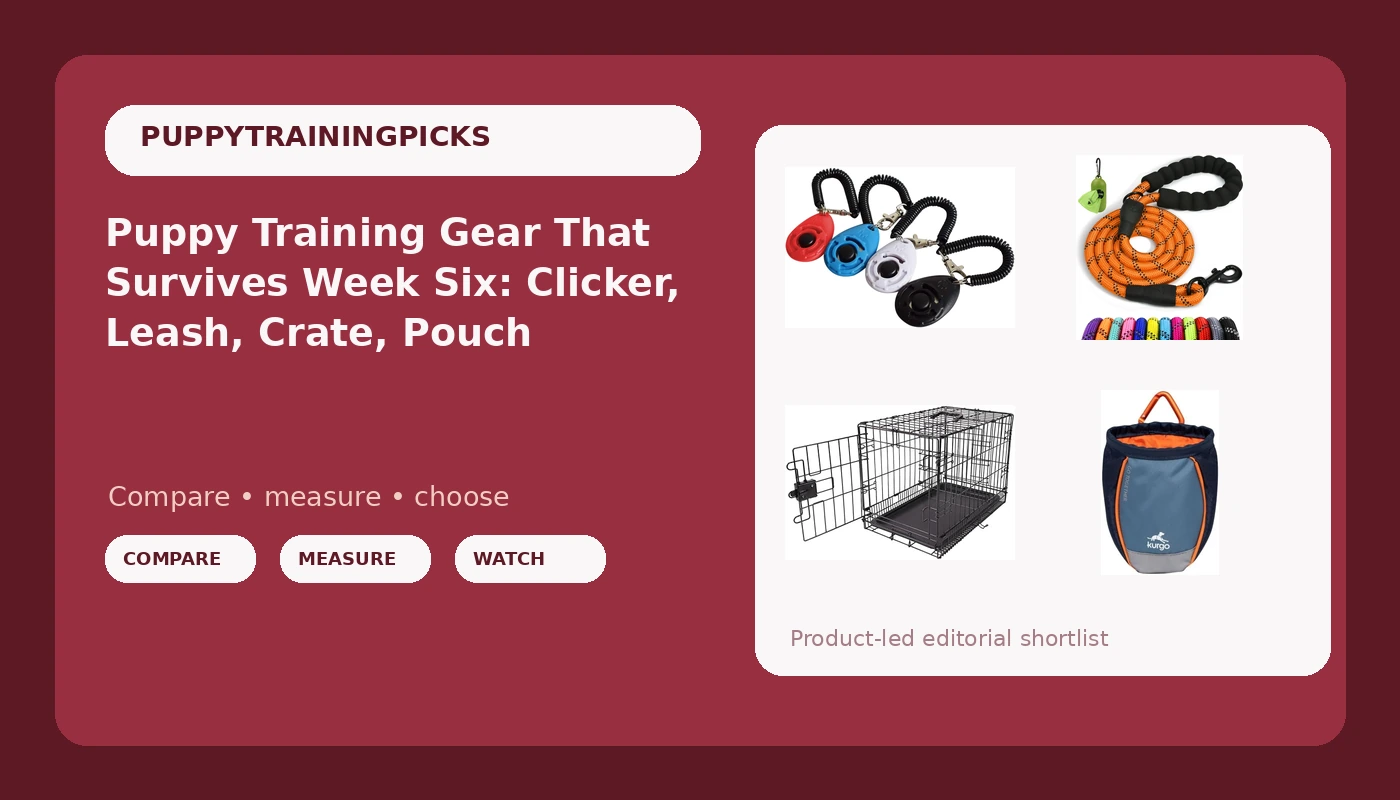
The Clicker: Ruconla 4 Pack Dog Training Clicker Set
A clicker is the best money you'll spend on training, and almost nobody uses it past day three. That's not the clicker's fault. Most clickers are sold without instructions, so people click randomly for a week, nothing happens, and the clicker ends up in a drawer next to a dust-covered lint roller.
The Ruconla set gives you four clickers with wrist straps. Four matters, because you will lose one in the couch, one in the car, and one in the grass at the park. The wrist strap matters because a clicker you have to dig for is a clicker that marks the wrong moment.
Here's how to actually use it. Charge the clicker first: click, treat. Click, treat. Ten reps, three times a day, for two days, until the sound means something. Then start capturing. The second your puppy sits on his own, you click, then you treat. The click marks the exact instant. The treat pays for it. Mark first, pay second, every single time.
A clicker is not a remote control. It's a camera shutter. It takes a picture of the behavior you want, and that picture is worth more than any amount of "good boy" delivered three seconds too late.
Keep it in your pocket during sessions. Click for one behavior at a time, or you'll muddy the meaning. And when the behavior is solid, fade the clicker and the treats down to praise. That's the step everyone skips, and it's the reason people insist their dog only listens when food is involved.
The Leash: Taglory Rope Dog Leash, 6 FT, Padded Handle
Six feet is the right length for training, and a rope leash with a padded handle is the version that survives a puppy who suddenly decides a squirrel is worth dying for. The padding earns its keep in month four, when a loose-leash walk turns into a series of lurches, and the rope itself doesn't slice your palm the way a flat strap does when a forty-pound adolescent hits the end of it.
This one is built for medium and large dogs, which is exactly the size range where pulling gets genuinely hard to manage. If you have a toy breed, it'll feel like a boat rope, and that's worth admitting. For everyone else, the orange is a real feature, not a color preference. A leash you can see across a parking lot is a leash you can find, and a leash you can find is a leash you'll actually grab on the evening walk when you're tired.
One note on length. Six feet gives your puppy room to make a mistake and room for you to teach him what to do about it. Retractable leashes teach the opposite lesson. They reward pulling with more freedom, and freedom is the thing your puppy wants most. Skip them.
The Crate: Amazon Basics Foldable Metal Wire Crate with Divider
Crate training isn't cruel. It's a den. The cruel thing is leaving a puppy loose to eat your drywall and then getting angry at him for doing exactly what puppies do.
This crate is 30 x 19 x 21 inches, single door, folds flat, with a removable tray and a divider panel. The divider is the feature that matters most, and it's the reason this is the crate I'd buy first. A puppy should start in a space small enough to feel like a den, not a gymnasium, and you move the divider back as he grows. Buy the crate that fits the adult dog, then shrink it down with the divider. That's how you avoid buying three crates in eight months.
The removable tray is the second thing. Puppies have accidents, and a tray you can pull out and hose off in the yard is the difference between a crate you keep using and a crate that ends up in the garage next to the holiday decorations.
A few crate rules I give every class. Feed meals in the crate with the door open. Never use the crate as punishment. Build duration in minutes, not hours, and don't ask a four-month-old to hold it through a workday. The crate is a nap zone, not a jail.
The Treat Pouch: Kurgo Go Stuff It Dog Treat Bag
The treat pouch is the least glamorous item on this list and the one that changes the most. If your treats live in a plastic bag in your jacket pocket, your reward arrives four seconds late and your hand is in your pocket instead of on the leash. Timing is the whole game, so the pouch is not a convenience item. It's a timing device.
The Kurgo Go Stuff It wears on the waist, hands-free, with reflective trim, a carabiner, and MOLLE-compatible webbing. Navy blue. The carabiner is what I use when the waist strap is overkill, clipped to a belt loop or a backpack strap. The reflective trim earns its keep on evening walks in Denver, where the sun drops behind the mountains before your puppy has finished sniffing one bush.
What I like most is that it keeps treats on your body and out of your hand. You reach, you pay, you keep walking. No fumbling, no stopping the session to unzip a pocket. Treats are not bribes. They're payment for work already done, and payment should be fast.
How I tested
I don't test gear in a single afternoon with one cooperative puppy. That tells you nothing. Everything here went through an eight-week structured program with real puppies, real distracted sidewalks, and real owners who don't practice between sessions.
That last part is the honest part. A tool can be excellent and still fail if a first-time owner can't use it correctly without a class. So the question I ask about every item is simple: can someone who has never trained a dog pick this up and get the timing right in week one?
I also run everything to week six on purpose. Week six is when the cute phase ends and the adolescent phase starts. That's when the leash gets yanked, the crate gets tested, and the clicker gets lost. Gear that survives week six is gear I'll recommend. Gear that doesn't, I don't mention at all.
Analysis and test results
Four tools, four different jobs, and one thing in common: they all make your timing better instead of replacing it.
The clicker is the precision instrument. Nothing else marks a behavior at the exact instant it happens, which is why it's the first thing I hand out and the first thing people abandon. If you take one thing from this article, take this: charge the clicker, capture the behavior, then fade the reward. In that order.
The leash is the control layer. Six feet of rope with a padded handle doesn't teach loose-leash walking by itself. What it does is give you a grip you can hold while you teach it, at the threshold where your puppy notices a distraction but can still think. Training starts outside that threshold, not inside it. If your puppy is lunging and screaming, you're too close, and no leash fixes that. You back up and try again.
The crate is the management layer. Management isn't training, and people confuse the two constantly. The crate doesn't teach your puppy to hold it. It prevents the accident while you do the real work of taking him out every hour and rewarding him outside.
The pouch is the delivery layer. Reward timing is the most common failure I see in class, and it's almost always a logistics problem, not a knowledge problem. Treats in a pocket means treats arrive late. Treats on your waist means treats arrive on time.
The combination is what matters. A clicker with no treats is a noise. Treats with no marker are confusion. A crate with no schedule is a box. None of these items trains your dog. They make your training possible, which is a smaller claim and a more honest one.
Puppy training gear reference table
This is the quick version, the same way I'd write it on the whiteboard before class. Use it as a shopping list, not a syllabus.
| Gear | What it does | When to use it | Notes |
|---|---|---|---|
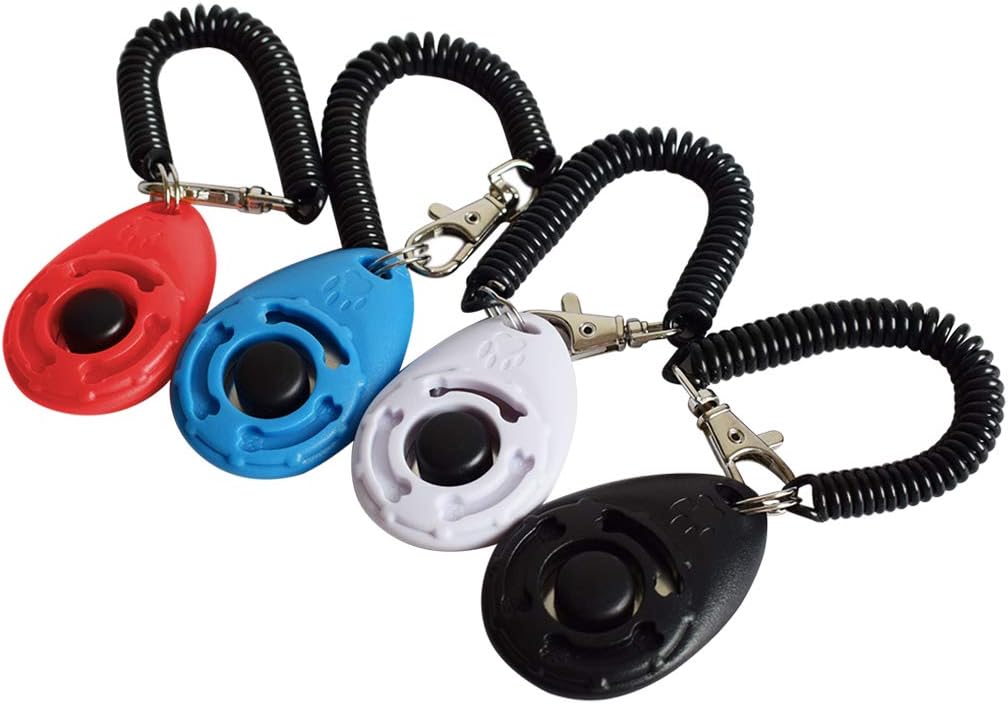 Visit on Amazon → Ruconla 4 Pack Dog Training Clicker Set |
Marks the exact instant a behavior happens | Every session, day one through week six | Buy four. You will lose three. |
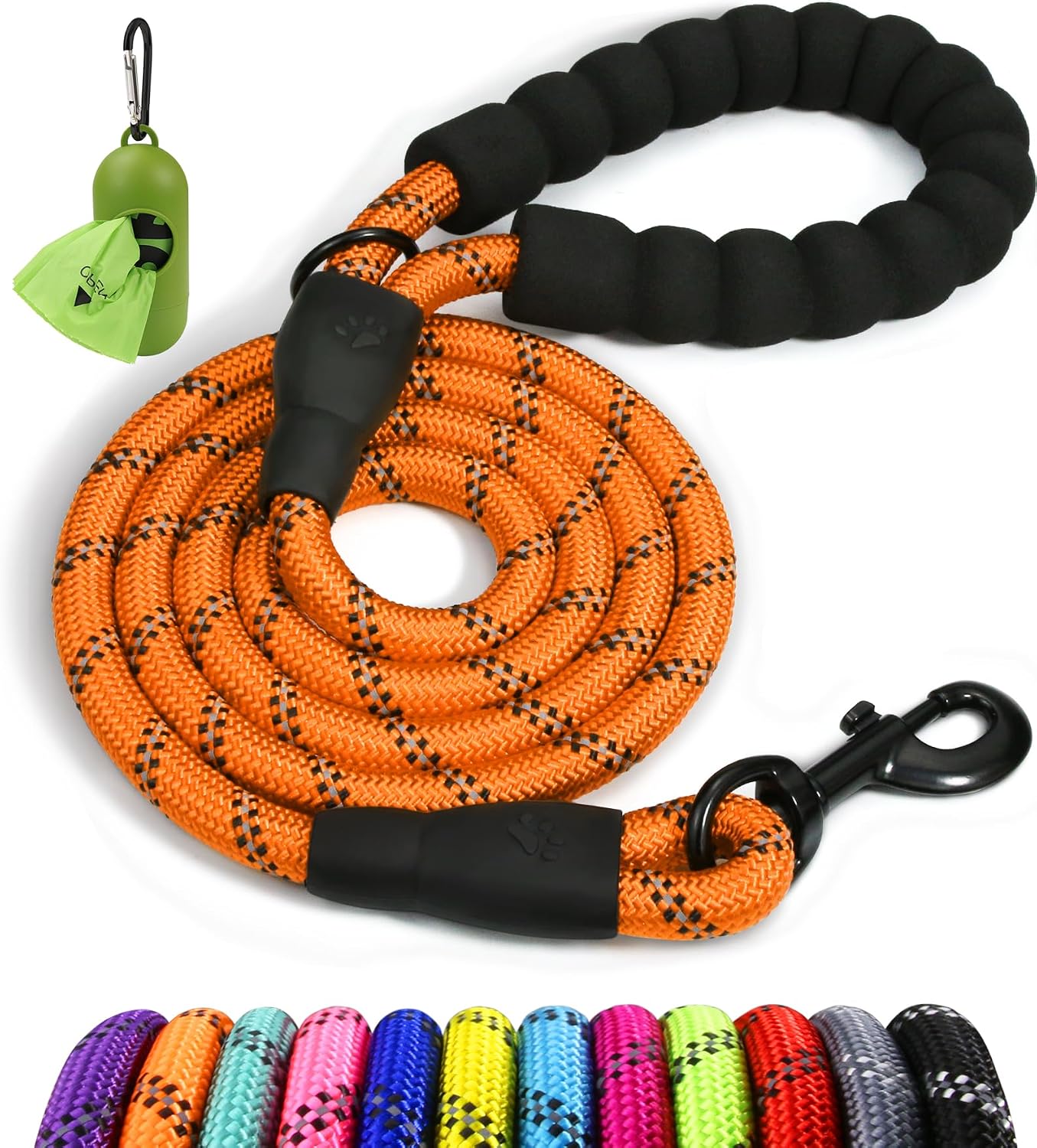 Visit on Amazon → Taglory Rope Dog Leash, 6 FT, Padded Handle |
Gives you a grip while you teach loose-leash walking | Every walk, including the short ones | Retractable leashes teach pulling. Skip them. |
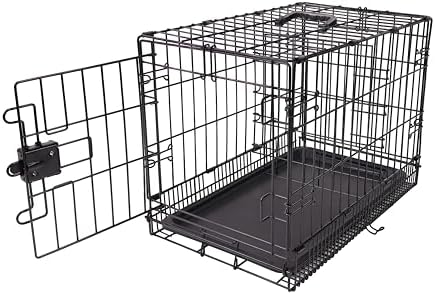 Visit on Amazon → Amazon Basics Foldable Wire Crate with Divider |
Creates a den and prevents accidents while you train | From the first night home | Move the divider back as the puppy grows. |
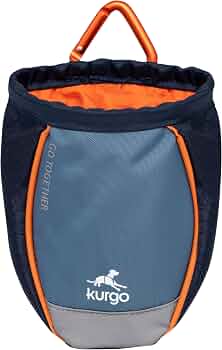 Visit on Amazon → Kurgo Go Stuff It Dog Treat Bag |
Keeps rewards on your body and delivers them fast | Any session where you use food | Treats are payment, not bribes. |
The table is the summary. The sections above are the reasoning. If you're buying one thing today, buy the clicker.
Should you buy the Ruconla clicker set?
Yes, and it's the first thing on this list for a reason. Four clickers with wrist straps means one is always within reach, and reach is everything when you're marking a behavior. The only real complaint is that it doesn't come with instructions, which is why the how-to section above exists. Charge it, capture with it, fade it. Do those three things and this set outlasts three leashes and two crates.
Should you buy the Taglory rope leash?
Yes, if you have a medium or large puppy. The padded handle is the part that matters in month four, the orange is the part that matters in the dark, and six feet is the right amount of room for teaching. It won't fix pulling on its own, because no leash will. What it does is give you a grip you can hold while you fix it, and that's the whole job.
Should you buy the Amazon Basics wire crate?
Yes, and buy it with the divider panel. Get the size that fits your dog as an adult, then use the divider to make it den-sized while he's small. The removable tray is the detail that keeps the crate usable after the inevitable accident. Crate training is a den, not a punishment, and a crate with a divider grows with your puppy instead of needing to be replaced.
Should you buy the Kurgo Go Stuff It treat bag?
Yes, if you're doing any real training with food, which you should be. The waist strap keeps it hands-free, the carabiner lets you clip it when you don't want the strap, and the reflective trim helps on evening walks. Treats in your pocket arrive late. Treats in a pouch arrive on time. That difference is most of your training.