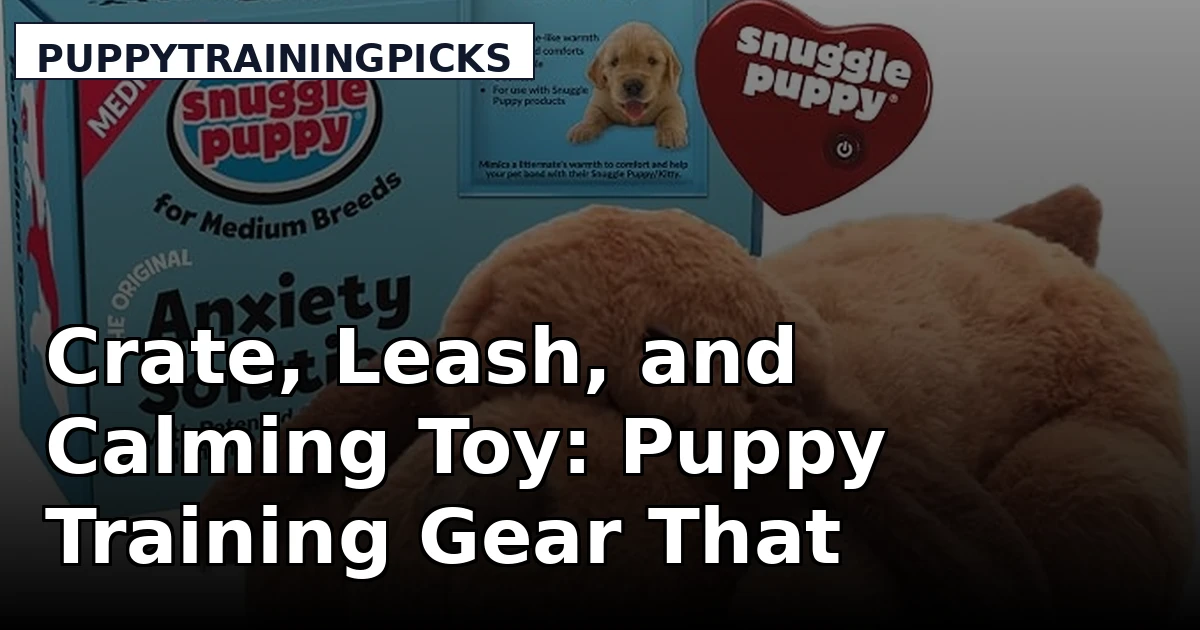
My first puppy kindergarten class of the year graduated 31 puppies, and every piece of gear that survived to graduation night fits in one plastic bin. That is the premise behind this comparison of puppy training gear: four items, judged by what they do across an eight week program with a real puppy and a real owner who forgets to practice between sessions. I have run that class out of a church basement in Denver for four years. I have watched more gadgets fail by week six than I can count. These four did not fail. They are also not interchangeable, and two of them come with caveats I would rather say out loud than bury in a footnote.
Related: Crate Training Schedule For The First Two Weeks
The best first purchase for most people is a crate, and the DONORO double door crate is the one I would start with, because a puppy that sleeps in a den is a puppy whose owner sleeps too. The rope leash is the second buy. The calming toy is a sleep tool, not a training tool. The retractable leash is the one I would make you argue for.
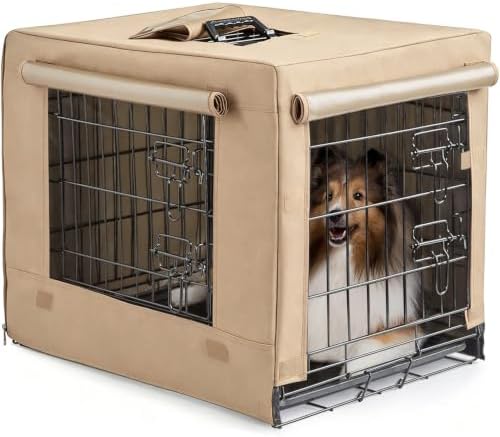
DONORO Double Door Dog Crate
The second side door lets a nervous puppy walk in on his own, and the frame collapses flat for storage
Sized for small and medium puppies, so a large breed owner will end up buying twice
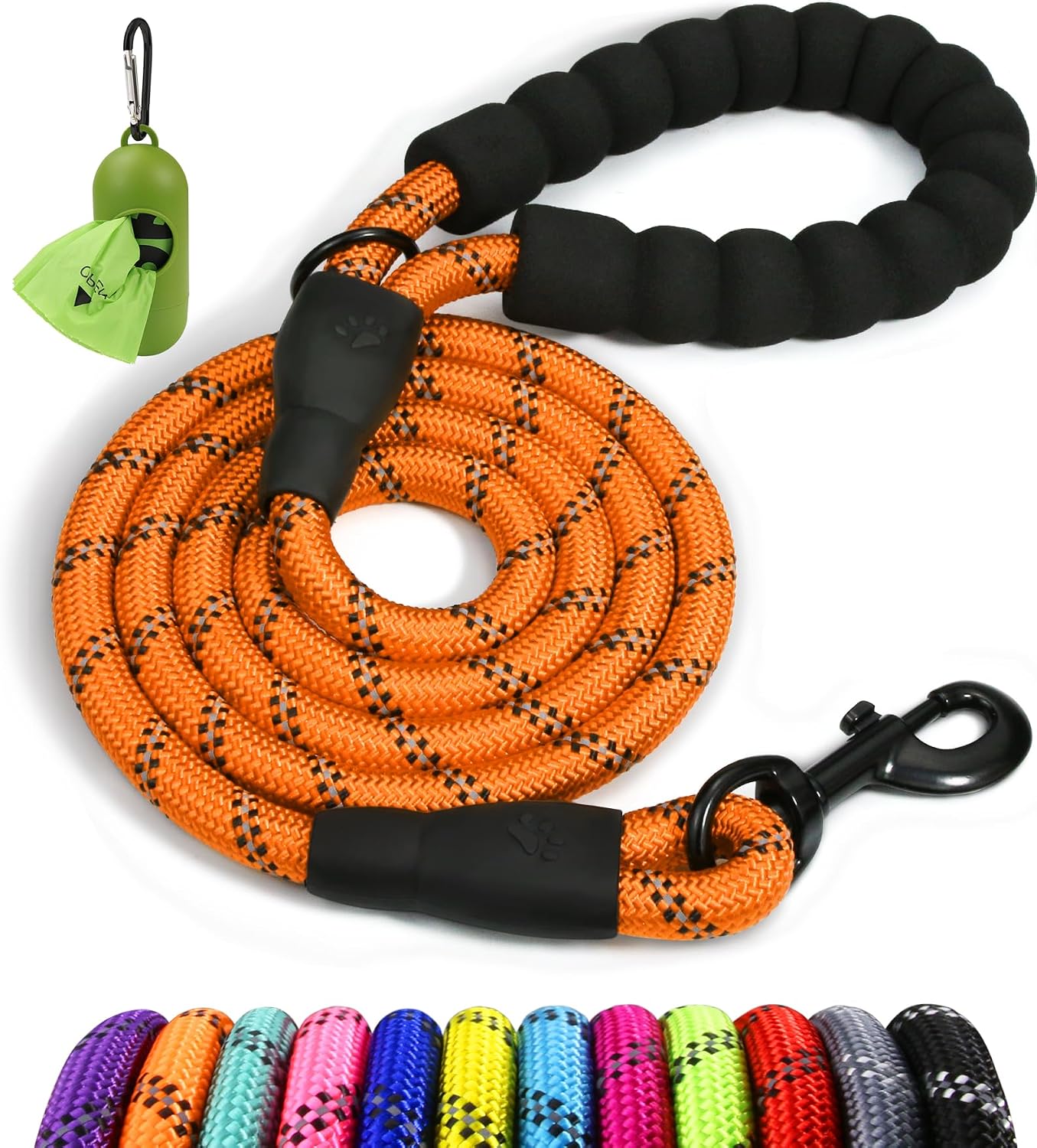
Taglory Rope Dog Leash, 6 FT Padded Handle
Six feet is the working length for loose leash practice, and the padded handle survives a lunge
Rope holds mud and water, and it will never look new again
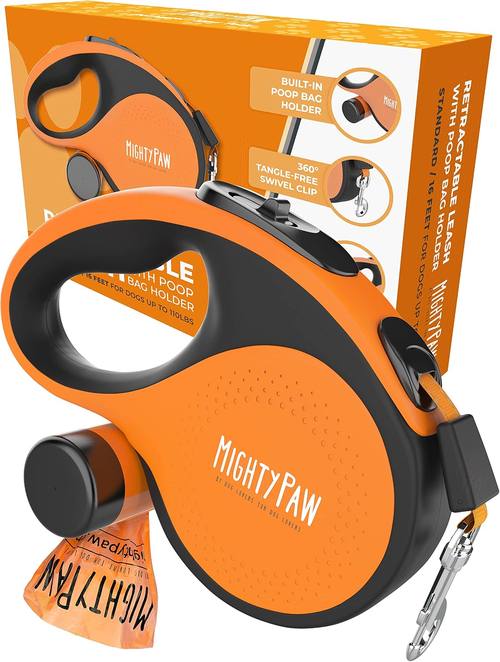
Mighty Paw Retractable Dog Leash, 16 ft
Reflective tape and 16 feet of length make distance recall work possible in open space
Rated for 50 to 110 pound dogs, so it is not a puppy leash, and it teaches tension on a sidewalk
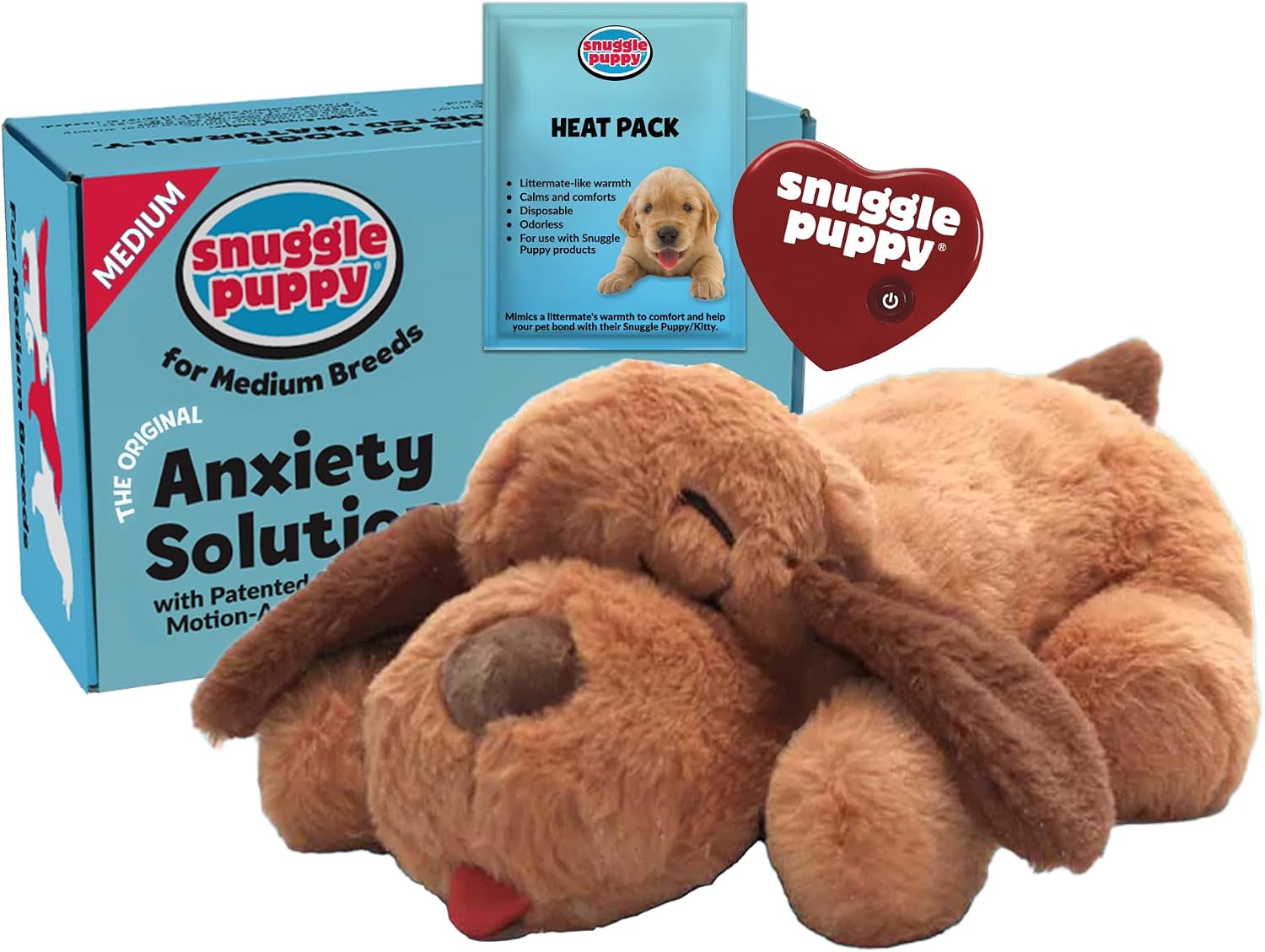
Snuggle Puppy Heartbeat Toy
The heartbeat gives a puppy something to settle against on the first nights home
It is comfort rather than training, and a determined chewer will find the unit inside
Prices and availability were captured from Amazon Creators API and may change.
How I judge gear in a class of 30 puppies
Every product I recommend has to pass four questions before it gets near my class. Does it rely on pain or fear? That is a hard no, at any age, for any dog. Can a first time owner use it correctly without me standing over their shoulder? Does it still work in week six, when the puppy is 40 pounds of opinion and has stopped being cute on command? And would I hand it to a client in front of the other owners without apologizing for it?
That last question eliminates more products than you would expect. Puppy gear is sold to people in the first flush of new dog love, and a lot of it is designed to look good in a photo rather than hold up in a hallway. The four items below cleared the bar. What separates them is what they are actually for, because a crate, a leash, and a plush toy do three completely different jobs.
Crate first: the DONORO double door crate
Start with the crate, because everything else in this article depends on a puppy that can settle. The DONORO double door crate is the one I would hand a first time owner, and the reason is the second door. A puppy that panics when the front gate closes has an exit at the side, which means you can sit beside the crate, feed through the side panel, and let the puppy choose to walk in rather than be placed in. That single design choice turns crate training from a containment exercise into a shaping exercise, and it is the difference between a puppy who tolerates the crate and a puppy who puts himself to bed.
The unit measures 30 inches long by 19 wide by 21 tall, which puts it squarely in small to medium territory. That is a real limitation. A Labrador or a German Shepherd puppy will be too tall for it before his first birthday, and I would rather tell you that now than have you buy twice. If you have a large breed puppy, treat this as a starter crate and plan on a bigger one.
The collapsible frame matters more than it sounds. I keep two in the trunk of my car for class nights, and they fold flat enough to stack. Metal construction, brown finish, and a footprint that fits beside a bed without eating the whole room. What it does not do is train your puppy for you. The crate is a den, not a babysitter, and the owners who struggle are almost always the ones who leave the puppy in it for six hours on day two.
The rope leash: 6 feet of honesty
Six feet of rope is the most underrated piece of puppy training gear on this list. The Taglory rope dog leash is exactly that, a 6 foot rope leash with a padded handle, and it is the length I want in my hand during loose leash practice. Four foot leashes put you too close to the puppy, so every step you take drags him sideways. Eight and ten foot leashes give a puppy enough slack to build speed before he hits the end. Six feet is the working window where you can reward a loose leash without the puppy wandering into traffic.
The padded handle is not a luxury. When a 35 pound adolescent hits the end of a leash because a squirrel exists, a thin nylon strap cuts into your hand, and you flinch. Flinching teaches nothing useful. A padded loop lets you hold your ground without yelping. Orange is a genuinely practical color for a puppy leash, because drivers and cyclists see it before they see you.
The trade-off is rope itself. It collects mud, it holds moisture, and it will look like a farm tool by October. If you want a leash that stays pretty, this is not it. If you want a leash that tells you exactly where your hand is and survives being dragged across a parking lot, this is the one.
The retractable leash: two situations where it earns its place
Now the argument. I do not put retractable leashes on puppies, and I will not pretend otherwise. The Mighty Paw retractable dog leash is a 16 foot reflective nylon tape rated for dogs between 50 and 110 pounds, which tells you two things right away: your eight week old puppy is not the target audience, and 16 feet is a lot of freedom to hand a dog who has not learned to come when called. On a sidewalk, a retractable leash teaches a puppy that tension is how you get more room to explore. That is the exact opposite of the lesson a 6 foot rope teaches.
There are two places where I do like it. The first is a fully fenced field with an adult dog working on distance recalls, where the extra length lets the dog make a real choice and still stay attached. The second is a hiking trail with a dog who already walks politely on a flat leash. The reflective tape is a real feature for early morning walks, and tape is less prone to the cord burn that braided retractables cause.
The honest summary is this: buy it for the dog you will have in two years, not the puppy you have in September. If you buy it now, keep it in the closet until loose leash walking is boring.
The calming toy: for the first three nights, not forever
The Snuggle Puppy heartbeat toy is the item people ask about most, and it is the one I have to explain carefully, because it is not a training tool. It is a settling tool. The heartbeat gives a puppy something that feels like a littermate to lean against, and the first three nights in a new house are when crate training gets abandoned. An owner who gets four hours of sleep is an owner who keeps showing up to class. That is the entire case for it, and it is a good case.
The medium breed size is the right call for most puppies in my program, and the biscuit color hides the kind of stains a puppy produces. Here is the caveat. Some puppies chew. A plush toy with a heartbeat unit inside is a plush toy with a hard box inside, and a determined chewer will find it. If your puppy is a shredder, this becomes a supervised, first two weeks only item, and then it goes on a shelf.
The other thing to be clear about: it does nothing for obedience. It will not teach your puppy to sit, it will not fix crate whining at week four, and it is not a substitute for the crate work. It buys you sleep at the start, and sleep is what keeps the whole program alive.
The trade-offs, stated plainly
Here is the short version, without the sales language. The crate is the only item on this list that changes behavior, because it changes the environment. Everything else is a tool you hold in your hand.
The rope leash gives you control and feedback at the exact distance where a puppy can still learn. The retractable leash gives you distance and takes away control, which is why it is a two year tool and not a September tool. The calming toy gives you a night of sleep and asks nothing in return, but it is comfort, not curriculum.
Cost-wise, the crate is the biggest single purchase and the one I would make first. The rope leash is the cheapest of the four and probably the best value per dollar in the entire bin, which is not a sentence I get to write often. The retractable leash is a fair price for a tool you will not use much in year one. The calming toy is the one people hesitate over, and I understand why. I would still buy it, because a puppy who cries for three hours a night is a puppy whose owner is too tired to practice, and practicing is the only thing that actually works.
The order I would buy them in
If you are buying one thing, buy the crate. If you are buying two, add the rope leash, because you cannot run a single training session without a leash in your hand. If you are buying three, add the calming toy, and buy it before the first night rather than after the third night of no sleep. Add the retractable leash last, and only if you have a fenced field or a hiking habit.
The order matters more than the total. An owner with a crate, a flat leash, and a bag of small soft treats will out-train an owner with every gadget on this page and no routine. That is not a knock on the gear. It is just what my class looks like every single session.
What I am testing next
I have two things on the bench for the fall. A long line, which is a 15 foot flat leash, is the tool I keep recommending instead of a retractable for distance work, and I want to compare the two directly with the same dogs. I am also running a treat size test on this fall's litters, because the number one thing that ruins a training session is a reward too big to repeat. That write-up will be shorter and blunter than this one.