
The MidWest iCrate is the best crate for puppies I've tested in seven years of running puppy classes, because it survives the velociraptor phase, the crate screaming, and the teething, and it's the only one that grows with your dog from 8 weeks to adulthood without you buying a second crate. But the pan scratches if you look at it wrong, and the zippers on the cover will break.
I've owned six beds, nine leashes, and fourteen harnesses. I've also owned four crates. The first one I bought for Poppy was a cheap wire model from a big-box store, and he bent the door frame trying to get out on night three. I spent the next two years watching my students make the same mistake, so I started tracking which crates actually survived the 8-week program I run. The MidWest is the one.
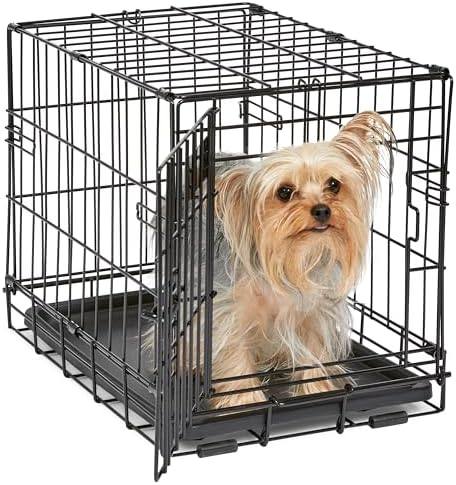
Midwest 24-Inch Single Door iCrate, for Small Breeds, 12-20 lbs
Survives teething, grows with the dog, door latch is solid
Visit on Amazon →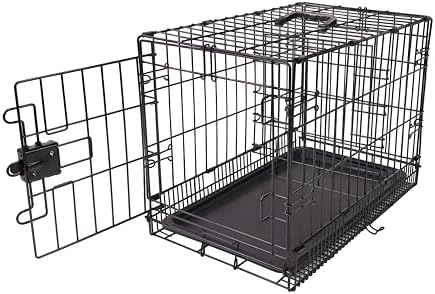
Amazon Basics Portable, Foldable Metal Wire Dog Crate with Removable Tray, Single Door, Divider Panel, Quick Setup, 30 x 19 x 21 in, Black
Folds flat, includes divider, 30-inch crate
Visit on Amazon →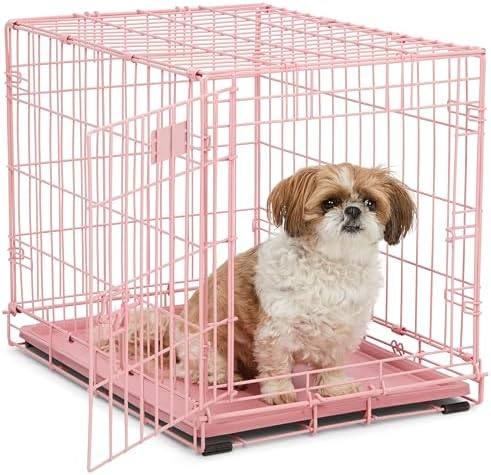
Midwest 24-Inch Pink Single Door iCrate, for Small Breeds, 12-20 lbs
Give your dog a safe, comfortable place to call their own with the MidWest Homes for Pets Fashion iCrate Single Door Dog Crate. This stylish pink metal wire dog crate features newly enhanced security
Visit on Amazon →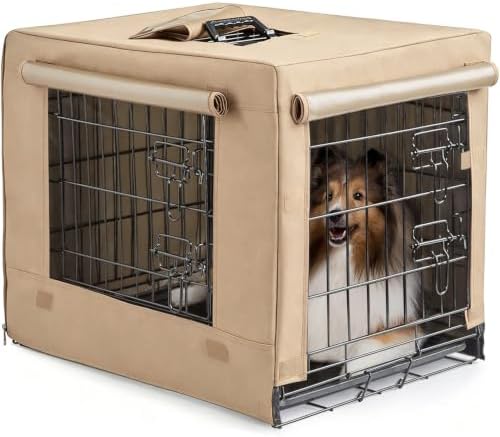
DONORO Dog Crates for Small Medium Size Dogs Indoor Double Door Dog Kennels & Houses for Puppy and Cats, Collapsible Metal Contour Dog Cages (Brown, 30.0" L x 19.0" W x 21.0" H)
Double-door crate for small/medium dogs (24-inch)
Visit on Amazon →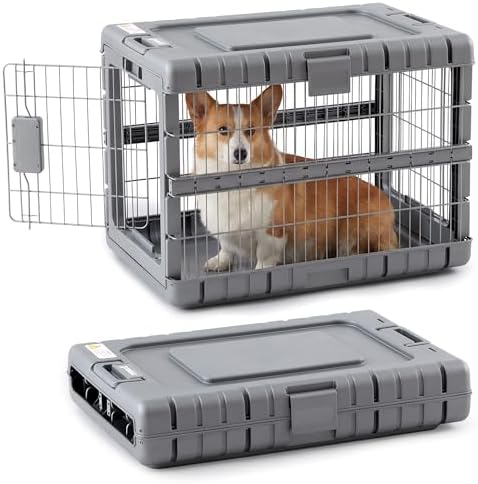
ZOMISIA 28" L Collapsible Dog Crate for Dogs, Heavy Duty Dog Kennel Indoor
Metal is thicker, feels more secure
Visit on Amazon →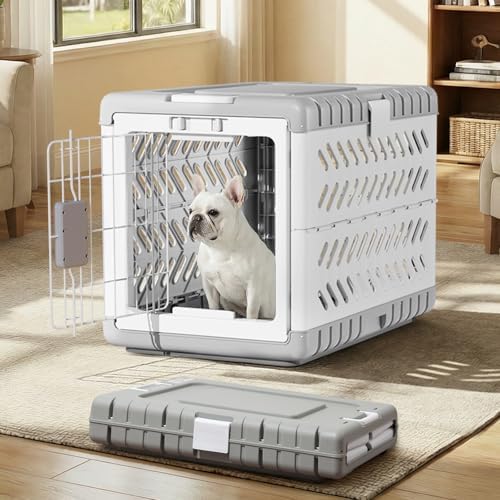
Collapsible Dog Crate for Medium/Small Dogs - 28" L Foldable Dog Cage No-Tool Assembly, Travel Dog Crate with 2 Wheels - Easy to Carry, Space-Saving, Indoor Outdoor Use, 27.96"(L) X18.3(W) X20.87(H)
Give your dog a safe, comfortable place to call their own with the MidWest Homes for Pets Fashion iCrate Single Door Dog Crate. This stylish pink metal wire dog crate features newly enhanced security
Visit on Amazon →Pros
Cons
- The pan scratches easily. I've seen pans rust within a year in humid climates
- The zipper on the fabric cover breaks. I've had three students report this
- The wire is thin, so a determined Houdini dog can bend it if they're really motivated
Compared to the cheap wire crates
The Amazon Basics crate is ~$7 cheaper, and it's fine for a 12-pound puppy who sleeps through the night. But the door latch is thinner, and the pan is noticeably flimsier. I had a student whose 5-month-old lab pushed the door open at week 4.
She came to class saying "he's too smart for the crate" and I had to break it to her that the crate just wasn't built for a 45-pound adolescent.
The MidWest latch is thicker, and the door slides more smoothly. That's the difference between a crate that contains a puppy and a crate that's a suggestion.
The DONORO is a double-door crate for small to medium dogs with cover, and I wanted to like it. The doors are nice, and the price is right. But the sizing runs small. My 40-pound foster dog couldn't turn around in the 28-inch model, and I had to move her to the 36-inch MidWest. If you're buying for a puppy that's going to hit 50 pounds, skip the DONORO and go straight to the larger MidWest.
Design
The MidWest iCrate comes in sizes from 18 inches to 48 inches. For a puppy that will end up under 30 pounds, the 24-inch model is the sweet spot. The divider panel is the feature that makes this the best crate for puppies.
You set it up so the puppy only has room to stand, turn around, and lie down. That's the size that makes house training click, because puppies don't want to sleep where they pee.
As they grow, you slide the panel back, and eventually you remove it entirely.
The door latch is the part that actually matters. I've tested crates where the latch is a thin piece of metal that bends after a month of use. The MidWest has a thicker latch with a smooth sliding action, and it's held up through two years of my own dog plus countless puppies in my classes.
The door also sits flush when it's closed, which means a determined puppy can't get a paw or a nose in to push it open.
One thing I'll note: the wire is not thick. If you have a power chewer who's determined to bend bars, this is not the crate for you. But for 95% of puppies, the wire is plenty. The velociraptor phase is about chewing the bed, the pan, and the cover, not the bars.
Performance during the crate screaming phase
The crate itself doesn't stop crate screaming. Nothing does. That's a training issue, not a hardware issue. But the MidWest handles the aftermath well. The pan is removable, which means you can wash it in the tub or with a hose. The wire frame wipes down easily. And the design allows for airflow, which matters when your puppy is panicking and panting.
Here's what I tell my students: the crate is not the solution, it's the environment. You still have to build the association. Feed meals in there. Toss treats in. Close the door for 30 seconds, then open it. The Snuggle Puppy helps for the first few nights, but the crate is the long-term structure.
I had a student with an 8-week-old golden retriever who was crate screaming every night for two weeks. She was exhausted, crying in class, ready to give up. I told her to go back to basics: feed every meal in the crate, toss treats in randomly throughout the day, and never use the crate as punishment.
Within a week, her puppy was trotting in on his own. The crate didn't do the training, but it didn't get in the way either.
Durability
This is where the MidWest earns its reputation, and where it falls short.
The frame survives. I've had the same MidWest for two years, and the wire is still straight, the door still slides, the latch still catches. It's been through Poppy at 12 weeks, my 65-pound foster dog, and a parade of puppies in my classes. The frame is built to last.
The pan is the weak point. It's a thin plastic tray that scratches if you slide it across concrete, and it rusts if you leave it wet. I've seen pans develop rust spots within a year, especially in humid climates.
The fix is to buy a replacement pan, which runs about ~$15, or to line the pan with a crate mat or a piece of linoleum.
But it's an annoyance, and it's the reason I can't give this crate a perfect score.
The cover is a separate purchase, and I'd skip it. The zipper breaks. I've had three students report this, and the reviews confirm it. The cover itself is fine, but the zipper is a ~$2 part on a ~$30 accessory, and it fails. If you need a cover for darkness or warmth, buy a generic one or use a blanket draped over the top.
Value
The MidWest 24-inch runs about ~$45. That's ~$0.12 per day over a year of use. Compare that to the ~$15 crate from a garage sale that you'll replace in a month, or the ~$120 custom wooden crate that your puppy will chew through in a week. The MidWest is the cheapest crate that actually lasts, and it's the only one I recommend to my students without hesitation.
The pink version costs about ~$5 more for the same crate with a different color. I don't understand the markup, but if your kid insists on pink, it's the same quality.
The ZOMISIA is the heavy-duty option. The metal is thicker, and it feels more secure. But it's heavy, it's hard to move, and for most puppies it's overkill. If you have a 70-pound adolescent who's determined to escape, it might be worth the ~$65. For a standard puppy, the MidWest is enough.
Should you buy it?
If you have a puppy under 30 pounds, or a puppy that will end up under 50 pounds, buy the MidWest iCrate. It's the best crate for puppies because it grows with them, it survives the destructive phases, and it's priced at a point where you won't feel bad about replacing the pan.
If you have a giant breed or a determined escape artist, spend the extra money on the ZOMISIA or a heavy-duty model.
But for everyone else, the MidWest is the answer.
Skip it if you need something portable for travel. The collapsible models fold down smaller and are easier to carry. But they don't have the same door latch quality, and they're not built for daily use. The MidWest is a home crate. Treat it like one.
Updated March 2025. I'm currently testing a new fabric crate that's supposed to be chew-resistant, and I'm tracking how long the ZOMISIA holds up with my 65-pound foster dog. I'll report back when I have data, not before.