
I've been running a puppy kindergarten program for four years out of a church basement in Denver, and we graduate more than 30 puppies a month. That means I see the same training gear fail over and over: treat pouches that spill the moment you bend down, potty bells that fall off the door by day two, crates that collapse mid-week and send a terrified puppy scrambling under the couch. This guide to puppy training gear is the one I hand to every new owner who walks into my class, because I've tested these four items with real puppies, real distracted sidewalks, and real owners who don't practice between sessions. I'm not here to sell you a fantasy. I'm here to tell you what survives.
Related: Crate Training a Puppy: The Step-by-Step Method I Use in Class
The best treat pouch for most owners is the Wilderdog because the magnetic closure snaps shut silently and the waist strap stays put. The best potty bells are the BLUETREE because they're loud enough to hear from the kitchen. And the best starter crate is the Amazon Basics because the divider panel lets it grow with your puppy. But the short answer only gets you so far. Here's the long version, including the trade-offs that make each of these the right call for a specific kind of owner.
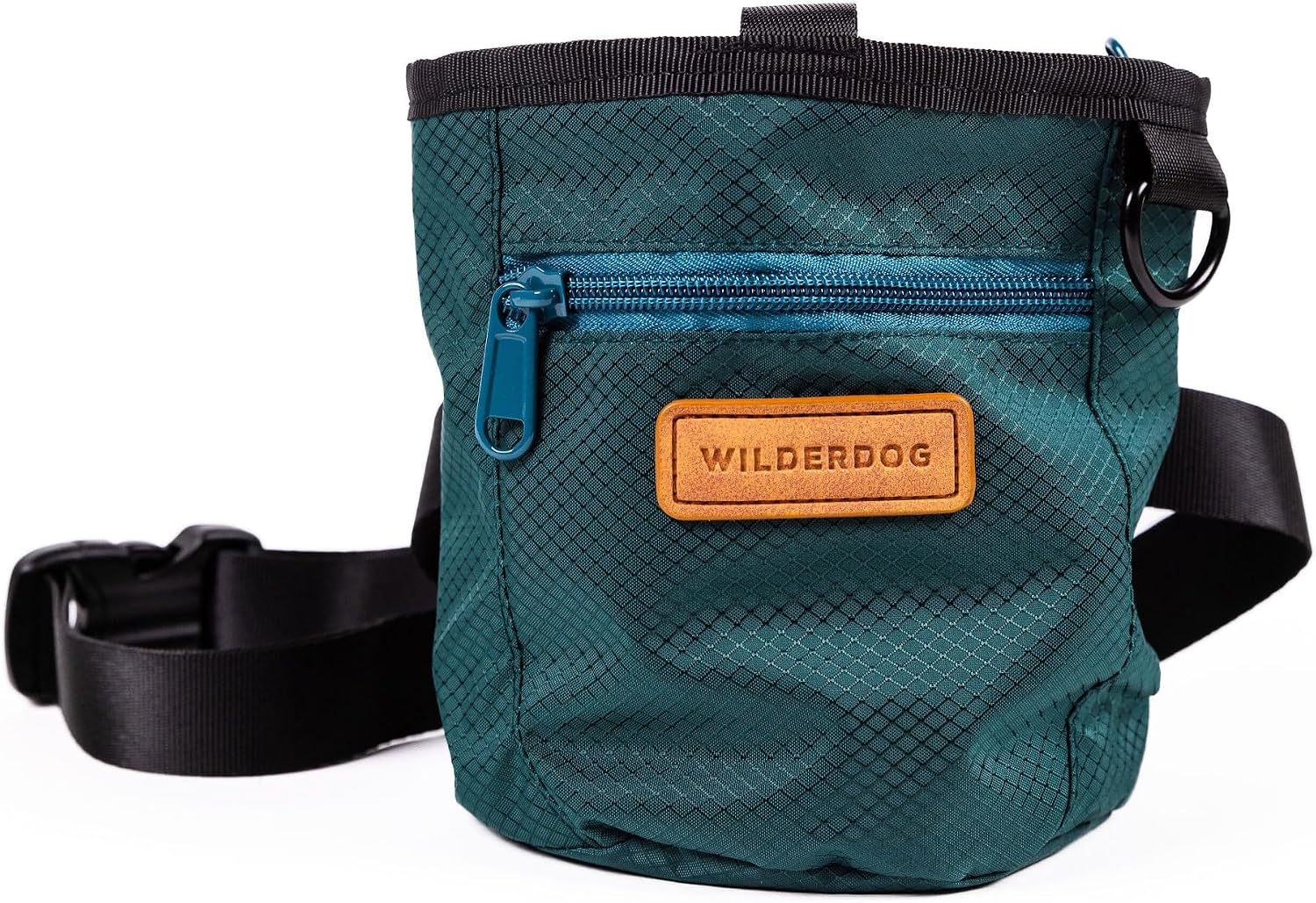
Wilderdog Dog Training Treat Pouch
Magnetic closure snaps shut silently, carabiner attached, adjustable waist strap that stays put
Pricier than the Kurgo, and the zipper pocket is tight for big hands
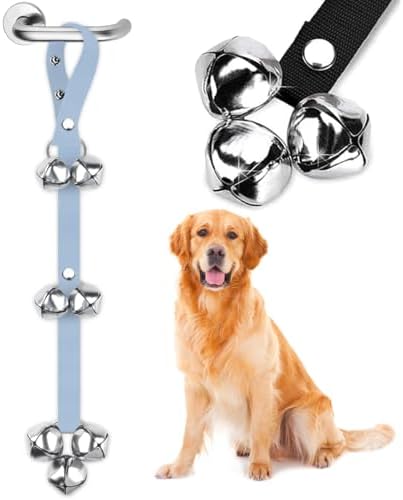
BLUETREE Dog Doorbells
Seven extra-large bells that are genuinely loud, adjustable strap fits any door
Hanging bells can be a chew hazard for determined puppies
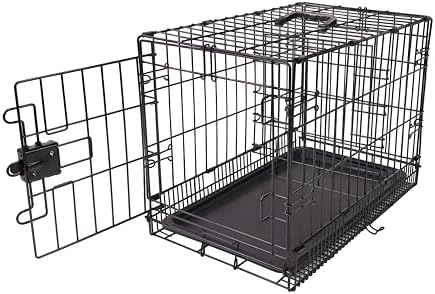
Amazon Basics Portable Wire Dog Crate
Divider panel grows with your puppy, removable tray makes cleanup fast, quick setup
Single door limits where you can place it in a room
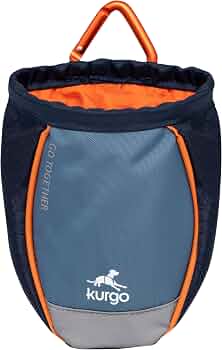
Kurgo Go Stuff It Dog Treat Bag
MOLLE-compatible, reflective, carabiner included, cheaper than the Wilderdog
Roll-top closure needs two hands to open, which is a problem mid-walk
Prices and availability were captured from Amazon Creators API and may change.
How I test puppy training gear
Every piece of gear that comes through my program gets at least eight weeks with real puppies. That means it has to survive week one, when the puppy is still figuring out what the crate is for and treats are the only thing keeping the world from falling apart. It has to survive week four, when the puppy is testing boundaries and the treat pouch is getting yanked at by a set of razor-sharp baby teeth. And it has to survive week six, when the adolescent brain kicks in, the puppy suddenly forgets everything it learned, and the gear either holds up or it doesn't.
I test with the same standards I'd use for my own dogs. Does the treat pouch stay closed when I'm fumbling for a leash with one hand and a poop bag in the other? Do the potty bells stay on the door when a 40-pound adolescent slams into them at full speed? Does the crate survive a puppy who decides the tray is a chew toy? If a product fails any of those tests, it doesn't matter how good the marketing is. It's out.
I also test with the owners, not just the puppies. The gear has to work for someone who has never trained a dog before, someone who is tired, someone who is holding a coffee in one hand and a leash in the other. If a product requires a degree in operant conditioning to use correctly, it fails. The best gear is the gear that removes friction from training, not the gear that adds to it.
The crate: your puppy's den
Crate training isn't cruel. It's a den. The cruel thing is leaving a puppy loose to eat your drywall, your shoes, and your baseboards. The Amazon Basics wire crate is the one I recommend to most of my clients because it does the two things a first crate needs to do: it gives you a safe space, and it grows with your puppy.
The divider panel is the feature that sells it. You start with the crate set to just big enough for the puppy to stand up, turn around, and lie down. That's the rule: if the crate is too big, the puppy will use one end as a bathroom and the other end as a bedroom, and you'll be cleaning up accidents for months. As the puppy grows, you slide the divider back, a few inches at a time. By the time the puppy is full grown, the crate is full size. That's a crate that lasts the entire first year, and that's real value for the money.
The removable tray is the other thing that matters. In week two, every puppy has an accident. It's not a failure, it's a developmental stage. The tray slides out, you rinse it in the sink, and you're done in thirty seconds. A crate without a removable tray is a crate you'll hate by day three, because you'll be on your hands and knees with a spray bottle and a roll of paper towels, trying to clean the corners.
The setup is genuinely quick. The crate folds flat for storage, and the assembly takes about two minutes with no tools. I've timed it. That matters when you're bringing a puppy home for the first time and you're already exhausted before the crate is even out of the box.
The trade-off is the single door. If you need to place the crate in a corner or against a wall, a single door limits your options. You'll be reaching over the top to get the puppy out, or angling the crate awkwardly to make the door accessible. For most owners that's fine. For anyone who wants maximum placement flexibility, the double-door version is worth the extra money.
One more thing about crate sizing: the 30 x 19 x 21 inch size works for small to medium breeds. If you have a large breed puppy, a Golden Retriever or a German Shepherd, you'll want the next size up. The divider panel only helps if the crate is big enough to grow into.
Potty bells: teaching your puppy to ask
Potty training is the number one reason people call me. And the BLUETREE doorbells are the best tool I've found for teaching a puppy to ask to go outside. The concept is simple: you hang the bells on the door, you ring them every time you take the puppy out, and eventually the puppy learns to ring them on their own. It's a form of communication that gives the puppy a voice, and it cuts down on the accidents dramatically.
The BLUETREE set has seven extra-large bells, and they're loud. That matters more than you'd think. If the bells are too quiet, you won't hear them from the other room, and the puppy learns that ringing doesn't get a response. That's how you end up with a puppy who gives up on the bells and just pees on the rug. These bells are loud enough that I can hear them from my office with the door closed, and that's the difference between a tool that works and a tool that just hangs there looking cute.
The adjustable strap fits any door, which sounds minor until you try to hang bells on a door with a weird frame or a handle that's too small for a standard strap. The strap wraps around the handle and the door itself, so it stays put even when a puppy slams into it on the way out. I've had these on my own door for six weeks now, and they haven't budged.
The trade-off is that hanging bells are a chew hazard for determined puppies. If your puppy treats anything within reach as a toy, the bells might not survive. I've had clients whose puppies chewed through the strap in a week. For those puppies, a bell that mounts higher on the door, out of reach, or a completely different signal like a button on the floor, might be the better call.
Here's the training method I use with the bells. Every time you take the puppy out, ring the bells with your hand first, then open the door. Do this every single time, even at 2 a.m. After about a week, the puppy starts to associate the bells with going outside. Then you start waiting for the puppy to touch the bells on their own. The first time they do, you open the door immediately, even if it's a false alarm. You want the puppy to learn that touching the bells gets the door open. That's the whole game.
Treat pouches: the ones that survive
Treat pouches are the gear I'm most opinionated about, because I've seen so many fail. The cheap ones spill when you bend over, scattering kibble across the sidewalk and teaching the puppy that food appears on the ground for free. The flimsy ones fall off your belt mid-walk, and you don't notice until you reach for a treat and grab nothing. The ones with velcro closures sound like a gunshot every time you open them, which terrifies a puppy who's already nervous about the vacuum cleaner and the mailman.
The Wilderdog pouch is the one I reach for in class. The magnetic closure snaps shut silently, which is huge when you're working with a puppy who startles easily. The carabiner is attached, so you don't lose it in the couch or leave it on the kitchen counter. And the adjustable waist strap stays put, which is more than I can say for most pouches I've tested. I've had pouches that slide down my hip mid-walk, pouches that flip upside down, pouches that just fall off. The Wilderdog doesn't do any of that.
The one-handed open is the feature that matters most. In training, timing is everything. A treat delivered on time reinforces the behavior. A treat delivered three seconds late reinforces whatever the puppy is doing at that moment, which is usually something you don't want. The Wilderdog's magnetic closure opens with one hand, so you can deliver a treat while the leash is in your other hand and the puppy is looking at you. That's the difference between a training session that works and a training session that frustrates everyone.
The Kurgo Go Stuff It is the budget pick, and it's genuinely good. It's MOLLE-compatible, so it attaches to a backpack or a belt if that's your setup. It's reflective, which matters if you're walking at dawn or dusk in the winter. And it's cheaper than the Wilderdog, which matters when you've just spent $400 on a puppy, another $200 on shots, and you're looking at the treat pouch and wondering if you can skip it. You can't skip it. But you can buy the Kurgo.
The trade-off is the roll-top closure. The Kurgo uses a roll-top that needs two hands to open, and that's a problem mid-walk when you've got a leash in one hand and a puppy lunging at a squirrel in the other. You end up juggling, and by the time you get the pouch open, the moment is gone. The Wilderdog's magnetic closure opens with one hand, and that single difference is why I recommend it over the Kurgo for anyone who is serious about training.
How the gear works together
The real magic is in how these four pieces work as a system. The crate gives the puppy a safe space to sleep and settle. The potty bells give the puppy a way to ask to go outside. The treat pouch gives you a way to reward the puppy the instant they do something right. And together, they cover the three biggest challenges of the first year: house training, crate training, and basic obedience.
Here's what a typical day looks like with this system. The puppy sleeps in the crate at night, and the first thing you do in the morning is take them straight outside, ringing the bells on the way out. When they do their business outside, you mark it with a word and deliver a treat from the pouch. When you come back in, the puppy gets some supervised time in the house, and the crate becomes the place they go when you can't watch them. By week three, the puppy is ringing the bells on their own, running to the crate when they're tired, and sitting for a treat without being asked.
The gear doesn't train the puppy. You do. But the gear makes it possible for you to train the puppy, because it removes the friction that stops most owners from being consistent. The pouch that's annoying to open means you skip the treat. The bells that are too quiet mean you miss the signal. The crate that's hard to clean means you leave the puppy loose. Every piece of friction in your gear is a reason to skip a session, and every skipped session is a step backward.
What actually matters in puppy training gear
Here's the thing I tell every owner who asks me what gear to buy: the tool is 10% of training. The other 90% is timing, consistency, and an owner who actually practices. A $100 treat pouch won't train your puppy. A $20 one that you actually use every day will. The best gear in the world is useless if it stays in the drawer.
That said, the gear matters more than you'd think, because the gear determines whether you actually train. If the treat pouch is annoying to use, you'll skip sessions. If the crate is a pain to clean, you'll leave the puppy loose. If the bells are too quiet, you'll miss the signal and the puppy will learn that peeing on the floor is faster than asking. The best gear is the gear that removes friction from training, and that's exactly what these four products do.
I also want to say something about treats themselves. The pouch is only as good as what's inside it. I use Zuke's Mini Naturals in my classes, because they're soft, small, and my puppies go through bags of them weekly. A treat the size of a golf ball is not a training treat, it's a meal. You'll blow your calorie budget in one session and end up with a puppy who is too full to care about the behavior you're trying to reinforce.
What I'm testing next
I've got two new treat pouches on my bench right now, both from brands that claim to have solved the one-handed-open problem. One of them has a magnetic closure that's even stronger than the Wilderdog's, which sounds great until you try to open it with a leash in your hand and discover that it takes more force than you expected. I'll have a full report in a few weeks.
I'm also testing a new crate that claims to fold down to the size of a briefcase. If it actually works, it'll be a game-changer for owners who travel with their puppies. If it doesn't, well, I'll tell you that too. That's the deal with everything I review: I test it with real puppies, in real training sessions, with real owners who don't practice between classes. If it survives, it gets my recommendation. If it doesn't, it gets the truth.