I run a puppy kindergarten out of a church basement in Denver that graduates more than 30 puppies a month, and the chew and treat line in my supply budget is the one I defend hardest every quarter. Seven years in, the question I get most from new owners is not about sit or stay. It is which puppy teething chews and training treats are actually worth buying, and how many of each they need before week six. Most people buy one bag of something oversized, watch their puppy lose interest, and conclude the puppy is picky. The puppy is not picky. The format was wrong for the job.
The honest short answer: buy training treats and chews as two separate purchases with two separate jobs. Pupford Freeze Dried Training Treats are the best training payment for most puppies because they are light, breakable, and high value. N-Bone Puppy Teething Rings are the best first edible chew for a teething puppy because the ring shape reaches the back molars and one ring lasts a session. Everything below is how I sort the four products I actually keep in the class bin.
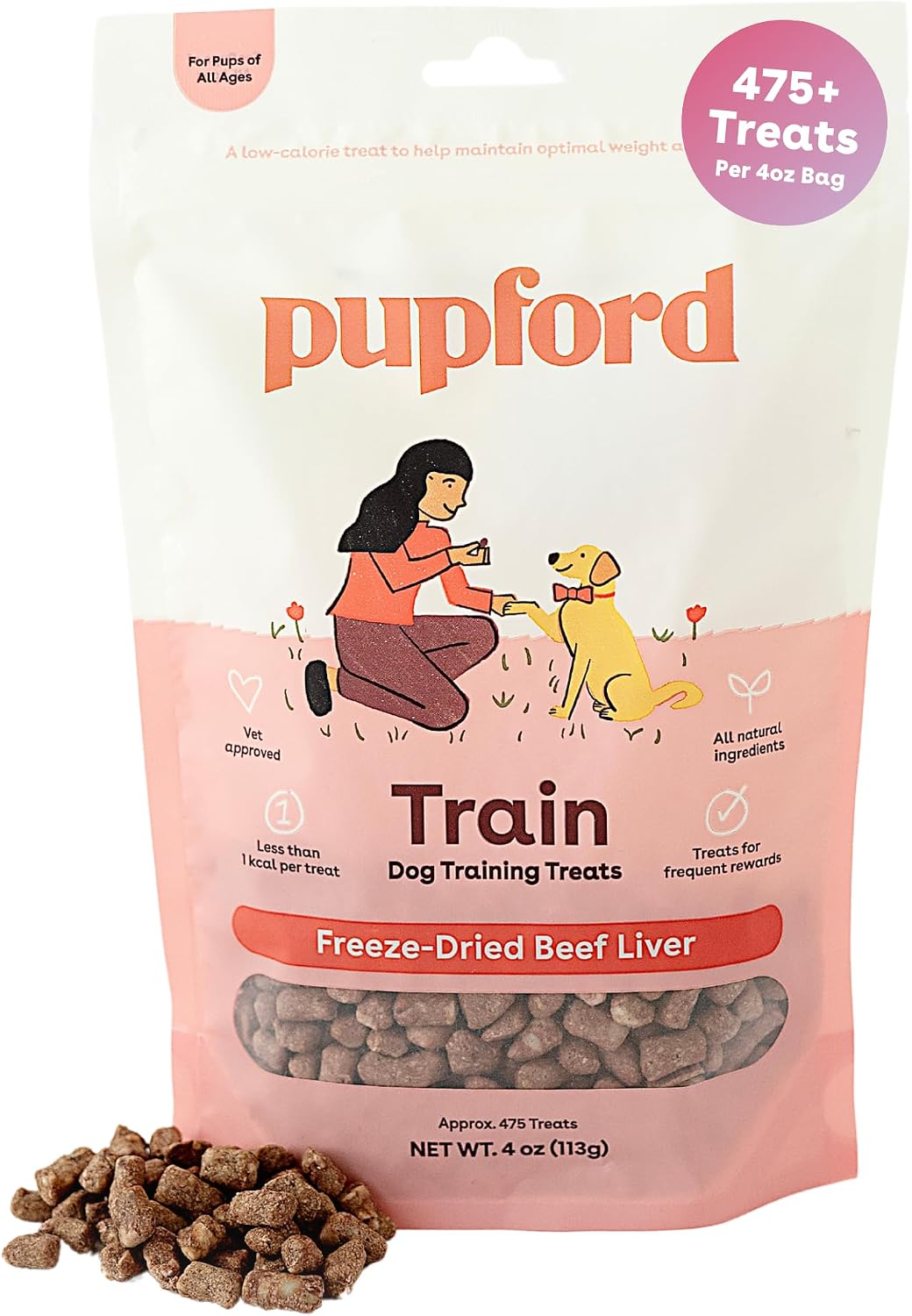
Pupford Freeze Dried Training Treats for Dogs & Puppies (Beef Liver, 4 oz)
Single ingredient, crumbles into pea sized pieces, high enough value for a distracted sidewalk
Freeze dried texture turns to dust in a pocket, and beef liver is too rich for some puppies
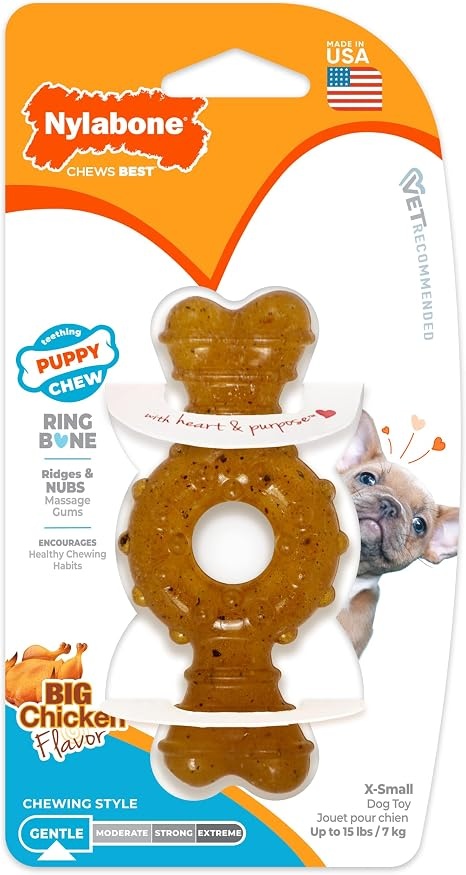
Nylabone Puppy Chew Teething Ring Bone Dog Toy, Chicken Flavor, X-Small
Non-edible, so it is a supervised teething outlet that does not add calories
X-Small is genuinely small, and a determined chewer will shred it
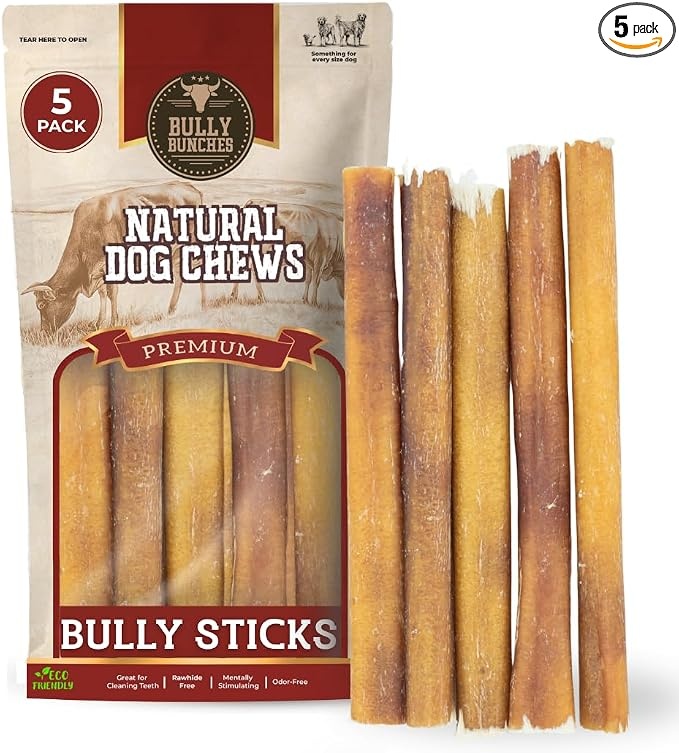
Bully Bunches Premium (6" Standard - 5 Pack) Odor-Free Bully Sticks for Small to Medium Dogs & Puppies
The longest lasting chew here, and the odor-free claim is the reason I keep them in the house
Not a training treat, and you cannot leave a puppy alone with one
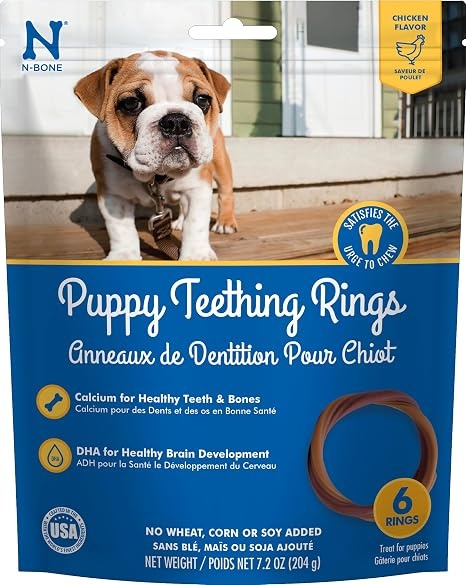
N-Bone Puppy Teething Rings, Chicken Flavor, Natural Puppy Teething Chews & Chew Treats, 6 Rings
Edible, calcium enriched, and the ring shape hits the molars a puppy cannot reach
Edible means it counts toward daily calories, so you budget for it
Prices and availability were captured from Amazon Creators API and may change.
How I sort a chew from a treat
My prediction engine for any puppy product is four questions. Does it rely on pain or fear? Can a first time owner use it correctly without a class? Does it survive week six, when the puppy has teeth and opinions? Would I hand it to a puppy in my own class? Nothing on this list fails question one, which is more than I can say for half the teething gadgets sold in pet stores.
The harder split is between treats and chews, because owners treat them as interchangeable and they are not. A training treat is payment for a behavior. It needs to be small, it needs to be delivered fast, and it needs to be gone in two seconds so the puppy can get back to the work. A chew is an activity. It needs to hold attention for ten or twenty minutes, and its whole purpose is to give a teething puppy something legal to destroy.
Confuse the two and you get the two most common failures I see. The owner who uses a long lasting chew as a reward, so the training session stops every time the puppy gets paid. And the owner who hands a puppy a fistful of soft treats during a chewing fit, which is not a chew, it is a snack that ends in four seconds.
Training treats: Pupford freeze dried beef liver
The Pupford bag is the one I restock most often. It is a single ingredient freeze dried beef liver, four ounces, and the reason it wins is texture. Freeze dried liver crumbles between your fingers, which means you control the size of the payment. A puppy working on name recognition in a quiet kitchen gets a crumb. The same puppy working on loose leash walking next to a busy park, which is a much harder ask, gets a bigger piece.
That control matters more than any flavor claim. My rule for training treats is that they should be roughly the size of a pea, because a puppy doing thirty repetitions in ten minutes should not consume a meal's worth of calories. Most training treats on the shelf are the size of a golf ball, and owners hand them over whole because breaking them feels stingy. Pupford's format removes that excuse.
The trade-offs are real. Freeze dried treats do not survive a pocket. They turn to powder by the time you reach the park, so I keep them in a small silicone pouch and refill it mid-session. Beef liver is also a rich protein, and a small number of puppies get loose stools from too much of it in one day. If your puppy has a sensitive stomach, drop the payment size and watch the next twelve hours.
One more thing, and it is the part almost everyone skips: fade the treats. Payment is not bribery, but it is also not forever. By week six you should be paying on a variable schedule, sometimes with a treat, sometimes with praise and a quick game of tug, so the behavior does not depend on your pocket. The trainers who never fade are the ones whose dogs stop listening the day the bag runs out.
Edible teething chews: N-Bone Puppy Teething Rings
The N-Bone rings are the product I recommend to owners who ask what to give a puppy that is chewing the baseboards. They are chicken flavored, calcium enriched, and they come six to a pack. The shape is the whole trick. A teething puppy's discomfort is worst at the back of the mouth, where the molars are coming through, and a ring gives the puppy a way to reach that area without you holding anything.
Because they are edible, they count as food, not as a toy. That is both the strength and the limitation. The strength is that a puppy actually finishes one, which is satisfying in a way a rubber toy is not. The limitation is that you now have to think about the day's total intake. I tell owners to subtract a ring from the day's food, not add it on top, or the puppy gains weight while you are congratulating yourself on good chewing habits.
Edible also means supervision. I do not hand any edible chew to a puppy and walk out of the room. I want the puppy on a towel or a mat near me, where I can hear and see what is happening, and I take the last nub away when it gets small enough to swallow whole.
Non-edible chews: Nylabone Puppy Chew Teething Ring
The Nylabone teething ring is the opposite tool. It is a chicken flavored chew toy, not food, so it adds zero calories and can sit in the toy bin between sessions. For a puppy who is already carrying a little extra weight, or one whose stomach is easily upset, that is a meaningful advantage.
The X-Small sizing is the catch. This is a genuinely small chew, sized for small breed puppies and the early weeks of a larger breed's life. If you bring home a labrador, this is a two or three week product, not a month long one. Buy it knowing that.
The other thing to know is that non-edible chews wear down. I check every chew toy in my bin the way I check a leash for fraying, running a thumb along the edges and looking for chunks coming loose. When the texture gets rough or pieces start peeling, it goes in the trash. That is not a defect in the product. That is what "non-edible" means, and the owners who get in trouble are the ones who leave the same worn chew in the bin for six months because the puppy still picks it up.
Long chews for crate time: Bully Bunches bully sticks
The Bully Bunches pack is five six inch bully sticks, standard size, marketed as odor-free and consistently sized, and made from 100% beef. This is the chew I reach for when I need twenty quiet minutes, which in a puppy household usually means crate time, a phone call, or a shower.
Consistent sizing is the underrated part of that description. A five pack where every stick is the same length and thickness means the puppy gets the same experience every time, and you stop guessing whether this one is a two minute snack or a twenty minute project. The odor-free claim is the reason these live in my kitchen instead of the garage. Anyone who has spent an evening with a standard bully stick knows exactly what I mean.
The limits are firm. A bully stick is not a training treat, so it does not belong in a session. It is also the chew most likely to cause a problem if you leave a puppy unsupervised, because a softened end can break off. I hold the last two inches myself, or take it away, and I never leave a puppy alone in a crate with one until I know how that specific puppy chews. That is a rule about the puppy, not the brand.
The trade-offs, stated plainly
If you buy only one thing, buy the training treats. Behavior is built with payment, and a bag of crumbly liver will do more for your puppy's education than any chew on this list.
If your puppy is actively teething and miserable, buy the N-Bone rings. They address the actual problem, which is gum pain at the back of the mouth, and they are the easiest of the four to use correctly on the first try.
If you need quiet and you need it daily, buy the bully sticks. They are the longest lasting option here and the one I would hand a friend who is hosting a puppy and a dinner party in the same evening.
If your puppy has a sensitive stomach or you are watching weight, buy the Nylabone ring. Zero calories, zero mess, and it survives being left in the toy bin.
The mistake is buying all four at once. A new owner with four chews on the floor creates a puppy who samples and abandons, and then you cannot tell which one is actually working. Start with one treat and one chew, run them for two weeks, and add the next thing when you can describe what the first one did.
What I am testing next
I have two things on the bench right now. The first is whether freeze dried treats hold their value in a real distraction test, the kind where a puppy has to walk past a busy park entrance without losing its mind. The second is a rotation schedule for teething chews, alternating edible and non-edible across a week, to see whether it cuts down on the evening chewing fits that owners report most. I will have notes on both once the current kindergarten class hits week six. Until then, the four products above are what is actually in my class bin, and they are there because they earned it.