Related: Crate Training a Puppy: The First Two Weeks
I run a puppy kindergarten out of a church basement in Denver, and about thirty puppies a month come through it. That means I see a lot of puppy training starter kit purchases, most of them made at eleven at night by an exhausted owner who is out of ideas. By week three, half of that gear is in a drawer.
The tool is maybe ten percent of training. The other ninety percent is timing, consistency, and an owner who actually practices between sessions. But the ten percent matters, because the wrong treat pouch or the wrong chew will cost you the exact sessions you needed. This is the short list. Four items, all of them things that live in my class bag, all of them things that survive week six, which is when your puppy turns into a teenager and starts testing every rule you thought you had taught.
Best Overall: Dog Training Kit
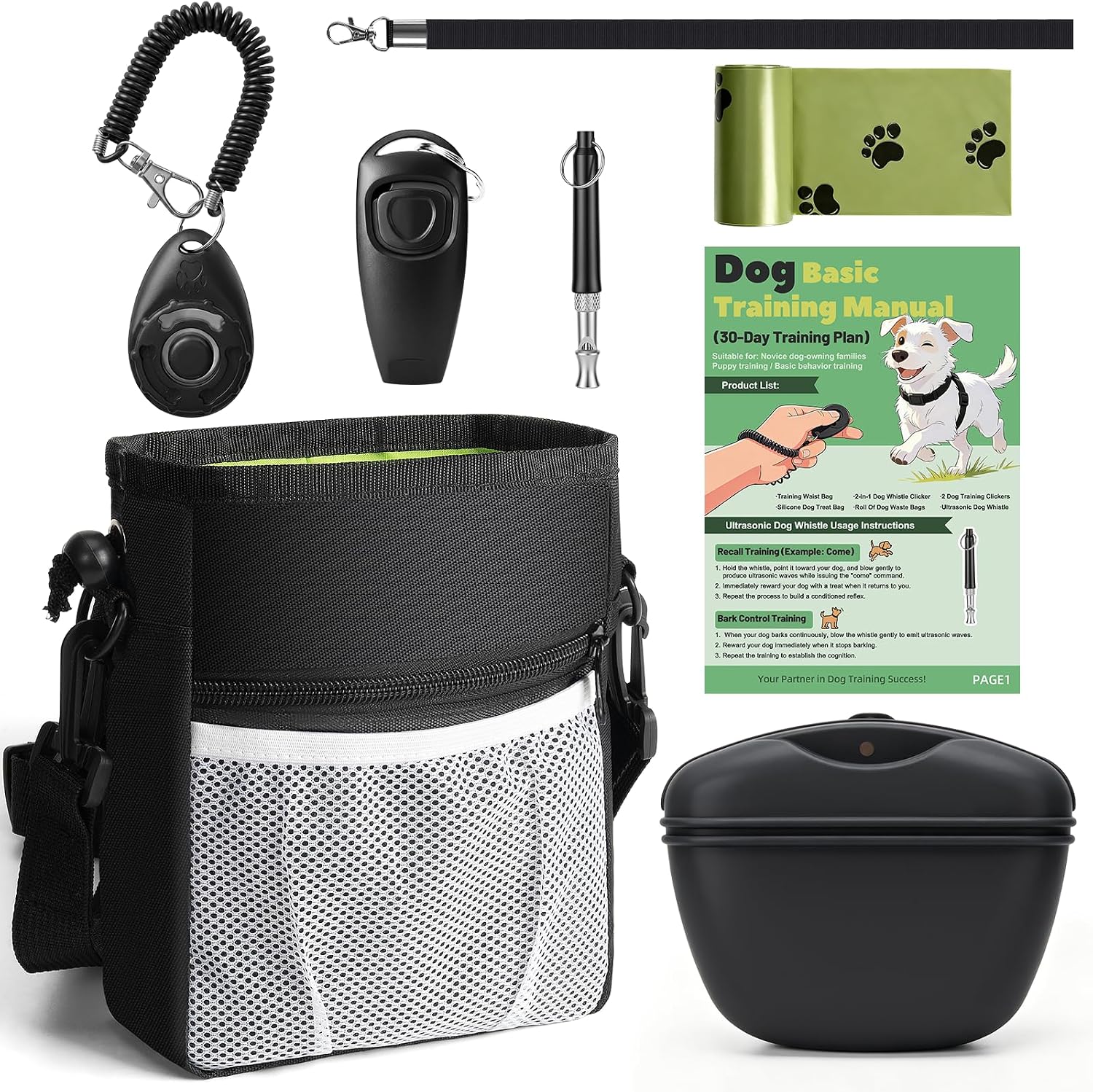
This is the one purchase on this list that replaces four separate ones: a training waist bag, a treat pouch, a poop bag holder, and a clicker. It also throws in a 2-in-1 whistle clicker and an ultrasonic silent whistle, plus spare puppy training clickers. For an owner building a first kit, that bundling is the whole argument.
Here is why the waist bag matters more than it sounds like it should. A reward has to land within about a second of the behavior you are marking, and a second is shorter than most people think. If you are digging a treat out of a jacket pocket while your puppy is sitting there being brilliant, you are not rewarding the sit. You are rewarding whatever he does next, which is usually standing up. A pouch on your hip with a magnetic closure means the treat is already in your hand. The magnet is the detail I care about. Zippers cost you a beat, and a beat is the entire behavior.
The clicker is the best small purchase in dog training, and almost nobody uses it past day three. That is a shame, because a click marks the exact instant of the behavior and buys you the second or two it takes to deliver food. My pet peeve is clickers sold without instructions, which is why I like that this kit keeps the clicker and the rest of the reward loop in one place. Charge the clicker first: click, treat, click, treat, twenty reps, no behavior required. Then start marking sits.
The ultrasonic silent whistle is the honest caveat here. It is a distance recall tool, and some dogs respond to it and some look at you like you have lost your mind. Use it as a backup, not as your primary recall cue, and practice it in the house before you try it in a park. The bag itself is not enormous. If you carry a full meal of treats plus a phone plus keys, it gets tight.
Best for Crate and Alone Time: Snuggle Puppy Heartbeat Toy
Crate training is not cruel. A crate is a den, and the cruel version is leaving a puppy loose to eat your drywall while you are at work. But the first two nights are genuinely hard on a puppy, because he has spent his whole life in a pile of warm siblings and now he is alone in a box in a strange house.
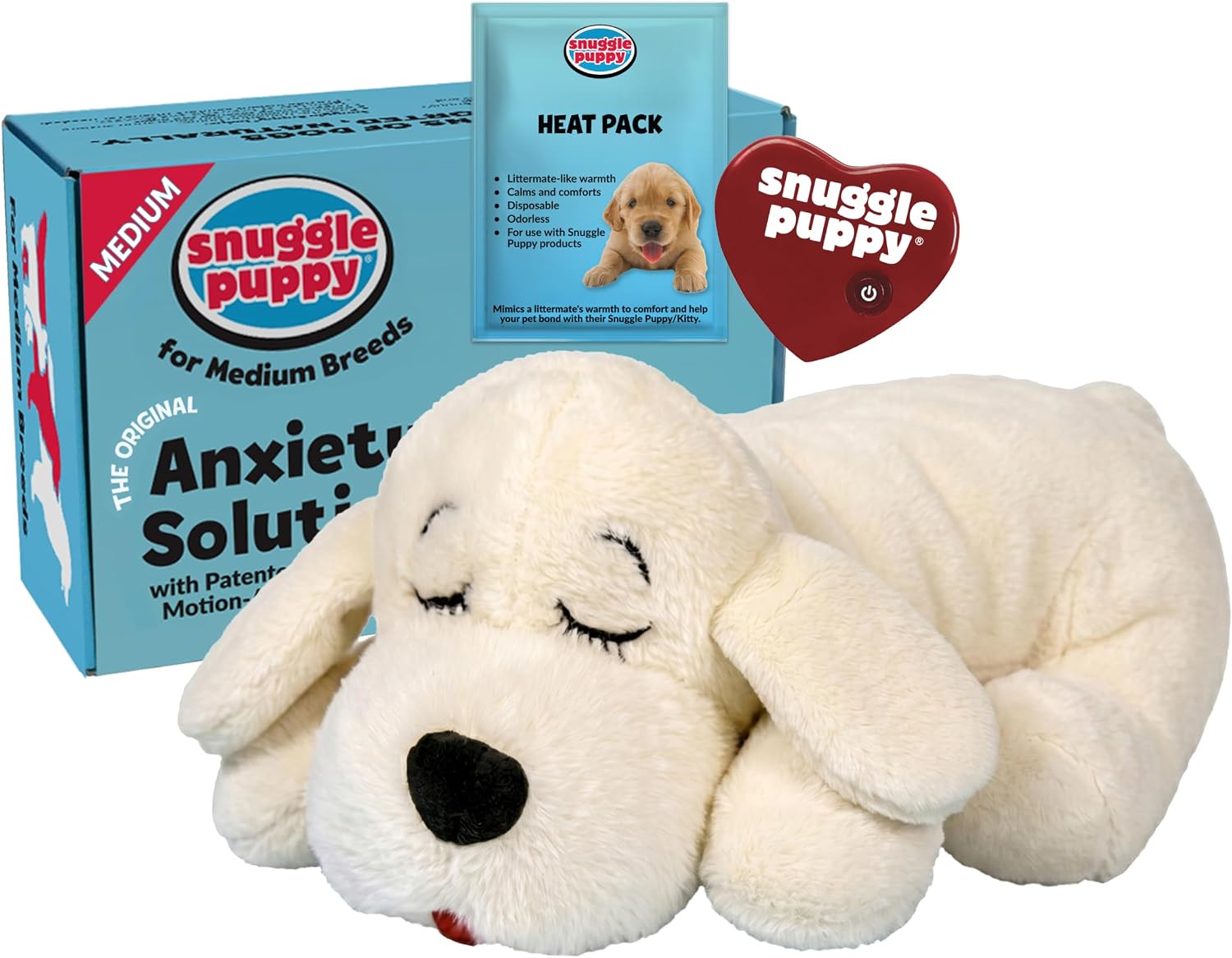
That is the gap this toy fills. It has a heartbeat, and it comes with a warmth element, so a puppy has something to curl against that mimics the litter he just left. Put it in the crate from night one so it smells like home base instead of a new object you introduce on night four.
Two things I tell every class. First, a crying puppy at two in the morning is not always lonely. He may need to pee, and if you skip that trip outside you are teaching him to soil the crate. Second, remove anything he is shredding. A comfort object is not comfort if it becomes a choking hazard, so check the seams and the heat pack regularly and follow the instructions that come with it.
Some puppies ignore this thing completely and sleep fine without it. The ones who do not ignore it are the reason I keep recommending it. For those puppies, it is the difference between a night of screaming and a night of sleep, and a night of sleep is what makes the rest of training possible.
Best Food for Training Sessions: Purina Pro Plan High Protein Dry Puppy Food
Treats are not bribes. They are payment. The problem was never that people use treats, it is that people never fade them out and wonder why the dog stops listening at month six.
The other problem is size and volume. A lot of owners buy training treats the size of golf balls and blow the puppy's entire calorie budget in one fifteen minute session, then wonder why dinner is untouched. The fix is boring and free: measure out part of the daily ration, use that as your reward, and subtract it from the bowl. The puppy works for his dinner, which is exactly what you want, and the food value stays high because he is a little bit hungry.
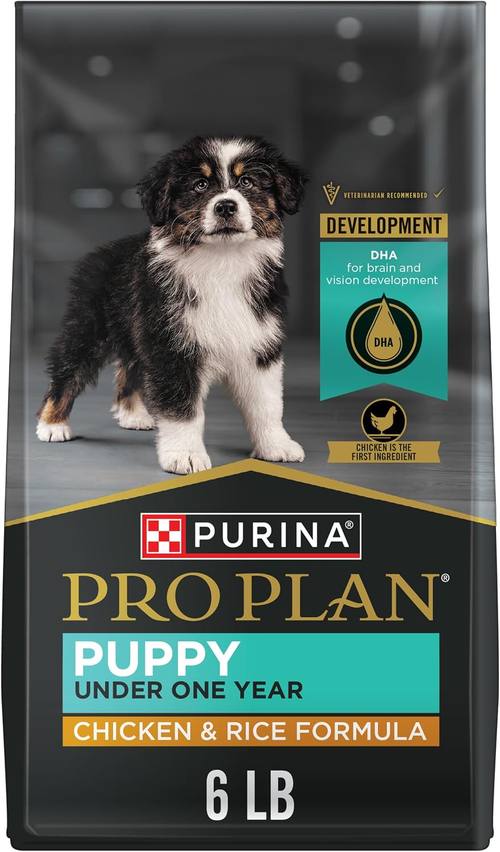
That is why a good puppy kibble belongs in a training kit. This one is a high protein chicken and rice formula in a six pound bag, and the kibble is a reasonable size for a puppy mouth, so you are not breaking biscuits in half with one hand while your other hand holds a leash. Keep a handful in the waist bag and the rest in the bowl.
One caution: if your puppy is on a vet prescribed diet, do not switch foods to make training easier. Use the food your vet told you to use, in smaller pieces, and add a couple of higher value rewards for the hard stuff like recall.
Best Cheap Chew: Nylabone Puppy Chew Teething Ring Bone
Puppies chew. They chew because they are teething, because they are bored, and because the world is interesting and their mouth is how they investigate it. You cannot train a puppy out of a developmental need. You redirect it.
This is the cheapest item in this guide and the one that saves your baseboards. It is a puppy specific chew in chicken flavor, x-small, which makes it a fit for small breed puppies and for the early weeks of a medium breed. Puppy chews are deliberately softer than the adult versions, because puppy teeth and jaws are still developing. That softness also means they wear out faster, so buy a couple and keep them in rotation.
Rules, and I mean these. Supervise chewing until you know how your puppy treats the object. Replace it once it is worn down or has chunks missing. If your puppy is a serious power chewer, size up and check it daily. And do not use a chew as a substitute for a potty break, a walk, or a training session. A chew buys you twenty quiet minutes, not a trained dog.
How I tested
Everything I recommend has to pass four questions before it earns a spot in the class bag.
Does it rely on pain or fear? If yes, it is out, for any age of dog. No vibration collars, no shock collars marketed to puppies, no exceptions.
Can a first time owner use it correctly without a class? If a tool only works in the hands of someone who already knows what they are doing, it is not a beginner tool.
Does it survive week six? That is when the puppy stops being a potato and starts being a teenager with opinions. A treat pouch that pops open in a down stay, or a chew that disintegrates on day two, fails here.
Would I use it in my own class? This is the last filter and the harshest one. I run an eight week structured program with real puppies, real distracted sidewalks, and real owners who do not practice between sessions. If a tool cannot survive that room, it does not get recommended.
Analysis and test results
The pattern across all four items is the same, and it is worth naming. Gear that works removes a step between the behavior and the reward. Gear that fails adds a step, or adds fear.
The waist bag removes a step. The clicker removes the gap between the mark and the payment. The kibble as payment removes the step where you go find treats. The chew removes the step where your puppy invents his own entertainment on your furniture. None of these are clever. They are just friction removed at the right moment.
The gear that fails tends to fail in one of three ways. It adds pain or fear, which shuts dogs down instead of teaching them. It rubs, which is the most common harness problem, and armpit chafing turns a walk into a fight. Or it assumes a level of skill the buyer does not have yet, which is what happens with clickers sold without instructions.
One more thing about fading. Every reward on this list is temporary. You use the clicker and the treats to build the behavior, then you thin the food out and replace it with praise, play, and life rewards like going outside. The step everyone skips is the fading, and skipping it is why people tell me their dog only listens when they have food. That is not a dog problem. That is a timeline problem.
The puppy training gear reference table
| Gear | Role in training | When to use it | Notes |
|---|---|---|---|
 Visit on Amazon → Dog Training Kit |
Reward delivery, marking, recall | Every session, from day one | Magnetic closure keeps treats one-handed |
 Visit on Amazon → Snuggle Puppy Heartbeat Toy |
Crate and alone time comfort | First nights, then naps | Not a substitute for a potty schedule |
 Visit on Amazon → Purina Pro Plan Puppy Food |
Daily ration used as payment | Every session, measured from the bowl | Subtract from meals, do not add |
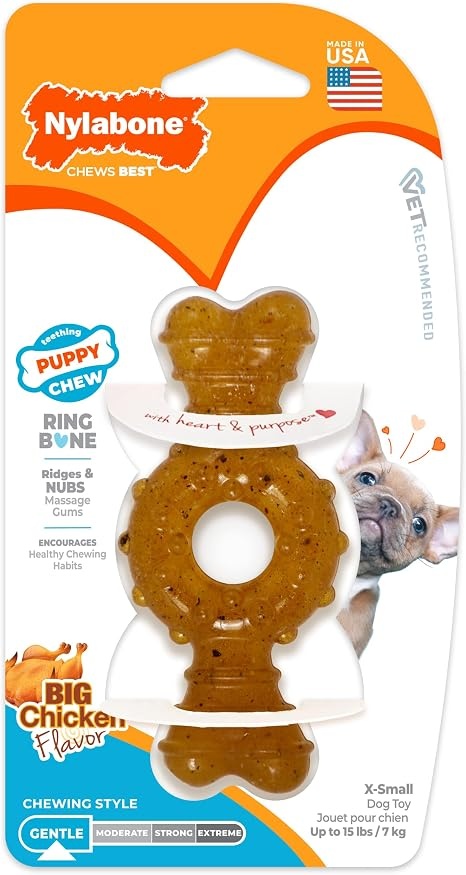 Visit on Amazon → Nylabone Puppy Chew Ring |
Teething outlet and redirection | Whenever mouthing starts | Supervise, replace when worn |
What I would leave on the shelf
Pee pads. If your goal is outdoor potty training, pee pads teach your puppy that indoors is a bathroom, and then you have to untrain that. Take him out on a schedule instead, every hour on the hour for a young puppy, and reward the second he finishes.
Anything marketed to puppies that vibrates, shocks, or sprays. There is no version of that I am willing to put on a puppy, and I keep a prong collar from my early career in a drawer as a reminder of what I used to not know.
Treats the size of golf balls. If you have to break a treat into four pieces, it was not a training treat.
Should you buy the Dog Training Kit?
Yes, if you want one purchase that covers the reward loop instead of four. The waist bag keeps treats and poop bags on your hip, the magnetic closure gets a reward into your hand before the behavior fades, and the clickers come with instructions rather than bare. A first time owner can use this correctly on day one, which is the test that matters most.
It is not perfect. The bag gets tight if you carry your whole life in it, and the ultrasonic whistle is a bonus tool that some dogs ignore. For the price of a couple of bags of fancy treats, you get the hardware that makes the treats land on time. That is the trade, and it is a good one.
Should you buy the Snuggle Puppy Heartbeat Toy?
Yes, for the first nights in a crate. The heartbeat and the warmth give a puppy something to settle against at the exact moment he has been separated from everything he knew. It will not train your puppy for you, and it will not replace a two in the morning potty trip, but it can turn a night of screaming into a night of sleep.
If your puppy ignores it, that is fine. Plenty do. But if you are bringing home an eight week old puppy next week, this is the one item on the list I would buy before he arrives, not after the first sleepless night. Check current Amazon price before you commit, and set it in the crate the day you bring him home.